

The argument started over a meatloaf dinner and was still going three weeks later. A neighbor of mine, retired from driving a truck, had inherited a Morgan dollar from his father. His brother-in-law took one look at it and announced it was common as dirt. His sister said the opposite, that it was the piece their father had always talked about. Neither of them owned a book. What they had was memory and volume, and volume was winning.
I have been collecting United States coins since my grandfather handed me a coffee can of wheat pennies when I was twelve. I am sixty-seven now, retired from teaching shop, and I have a spare bedroom in Toledo that my wife Carol calls the coin room. I have opinions about most things. About coins I have learned to keep the opinion in my pocket until I have checked it against something printed. The thing I check is the Red Book from Whitman, and it has been the same book since my grandfather's day, redone every year.
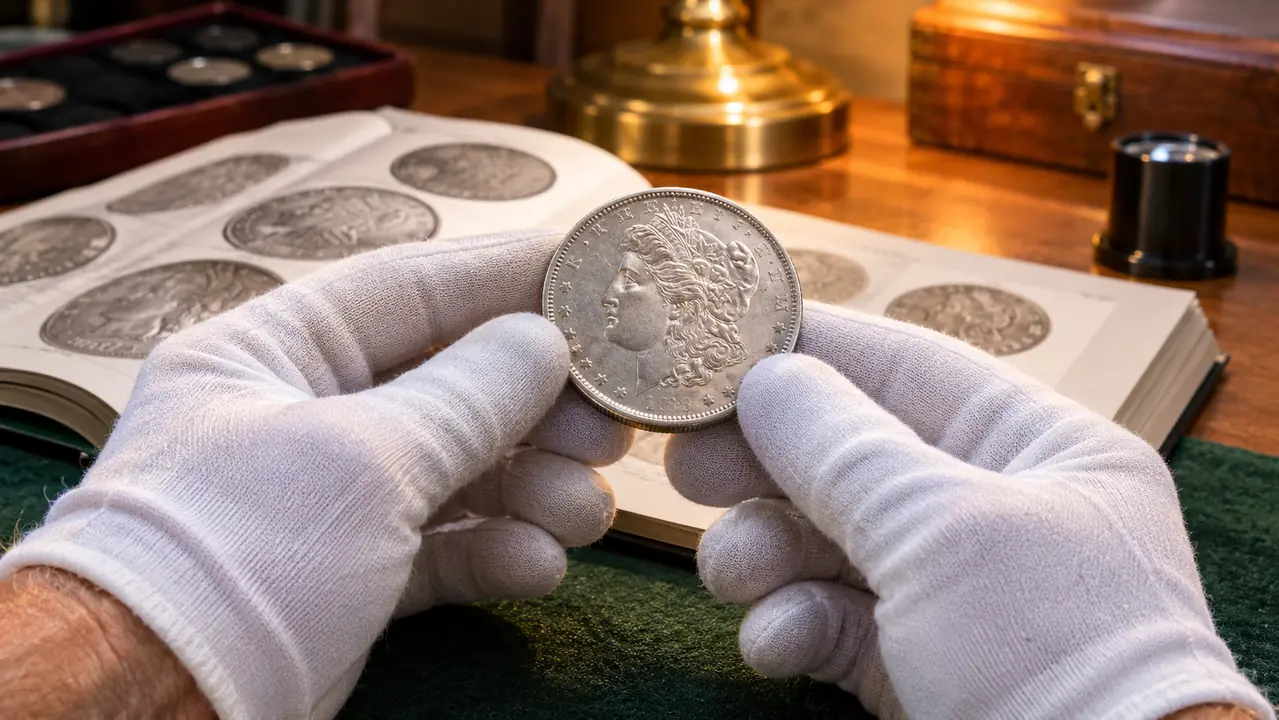
He brought the dollar over on a Saturday, in a sandwich bag, and set it on my kitchen table like it was evidence. I put on nitrile gloves, moved it onto the felt pad, and switched on the desk lamp. Then I pulled the Red Book off the shelf and turned to the Morgan section. The date and the mint mark are the whole conversation with a Morgan dollar. The mint mark sits on the reverse, just above the letters in the wreath, and once you have the two together the mintage figure is on the same page.
That figure ended the argument in about ninety seconds. Not because the number was dramatic. Because it was printed, and both of them were looking at the same page at the same time. An opinion you cannot check is just a loud noise. A figure in a book is something two stubborn people can agree on, even if neither of them likes it.
Here is what that number did not tell him. A mintage figure is how many were struck. It is not a promise that anyone will hand you anything for the coin in the bag. The Red Book reports values, it does not appraise, and I said so out loud twice, because people hear what they want to hear at a kitchen table.
An opinion you cannot check is just a loud noise. A printed figure is something two stubborn people can read at the same time.
The page that ends the argument, sitting on your shelf
The 2026 Red Book, 79th edition, from Whitman. Every United States series with dates, mint marks, mintage figures and reported values. 484 pages, 9 by 6 inches, 1.65 pounds.
Amazon Check Today's Price on Amazon →What is actually in the 79th edition is the reason it stays on my shelf instead of in a drawer. It runs 484 pages and works through the United States series in order, colonial pieces on to the modern issues. Each series gets its own stretch of pages with the dates, the mint marks, the mintage figures, the varieties collectors argue about, a photograph of the coin, and the values reported for each grade. It is the 2026 edition, published in April 2025. Whitman has been putting this out for generations and the format has not needed to change much, because the coins have not.
The publisher lists the reading age as eight and up. My grandson Tyler is ten, and he sorts pocket change with me on Sunday afternoons. He can find a date in the Red Book faster than I can, mostly because he is not slowed down by what he already thinks he knows. That is the whole case for a book over a hunch.
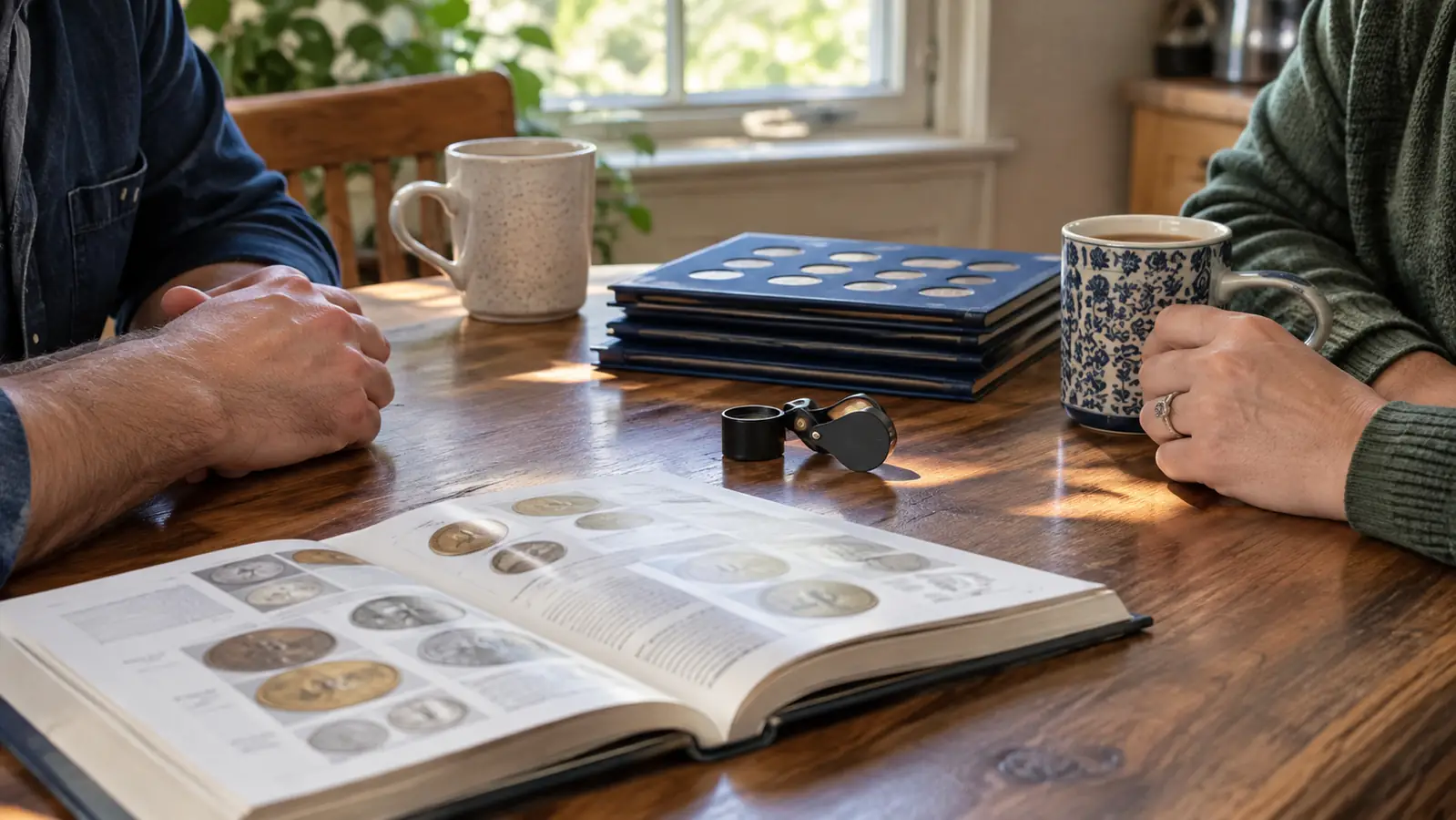
Now the limits, because a review with no limits is a sales pitch. The book will not tell you what a dealer across the table will pay you on a Tuesday. It will not grade your coin for you. It will not tell you whether to buy anything, and I would not take that advice from a book anyway. The values inside are reported figures, they are a starting point for a conversation, and they are a year behind the moment the next edition lands. What it will do is keep you from being the loudest wrong person in the room, which is a service.
My neighbor went home with his dollar in the same sandwich bag and a photocopy of the page. I told him to get the coin out of the bag and into a cardboard holder, and to stop carrying it in his pocket to show people at restaurants. Silver is soft. Every time it slides against a set of keys it loses a little of what a grader would call surface, and no book can put that back. He rolled his eyes at me, then he did it.
I keep a pencil in the coin room for the margins. When I check a date I write the date I checked it, small, on the edge of the page. Nine years of that and my copy has become a record of what I was looking at and when, which is worth more to me than the book cost me. A reference you write in is a working tool. A pristine one on a shelf is furniture.
What I'd Tell You If We Were Sitting at My Kitchen Table
If you have one question about a coin and you are sitting across from me, here it is. Get the current edition, not your father's. A copy from the nineties will give you nineties numbers and you will say something at a club meeting that makes the room go quiet in the wrong way. Buy the year you are actually collecting in, and replace it when the new one comes out. It is a paperback-sized book and it takes up nine by six inches of shelf, so there is no space argument to be made.
And use it the way a shop teacher would tell you to use a manual. Look up one thing at a time. Handle the coin by the edges while you do it. If you disagree with a figure in the book, go find the page that says otherwise and bring that page to the club meeting, because that is a real conversation. The other kind, the kind that started at a meatloaf dinner, is not.
Get the edition from the year you are collecting
Whitman's 2026 Red Book, 79th edition. 484 pages, 9 x 6 x 1.3 inches, listed for readers eight and up, which is about right. It fits beside the felt pad and it outlasts the argument.
Amazon See the Current Listing on Amazon →