
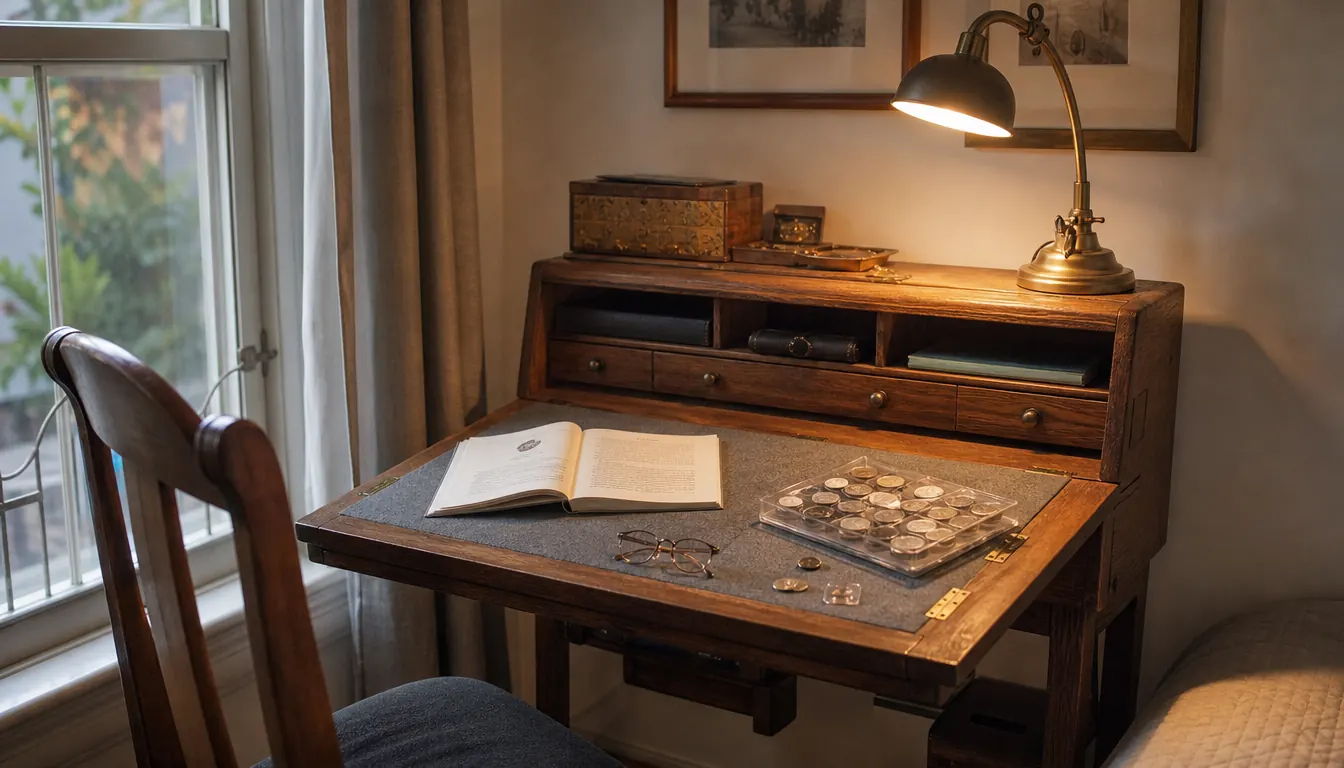
My grandfather handed me a coffee can of wheat pennies and old nickels when I was twelve. I spent that first winter sorting them on my bedroom floor without any idea what I had. The sorting was the fun part. The not knowing got old fast. Fifty-five years later I still collect, still mostly Lincoln cents and Jefferson nickels, and I still start most evenings the same way: I pull the Whitman Red Book off the shelf before I touch a single coin.
This is not a pitch for a hobby that will make anybody rich. It will not. What it is, is a case for one hardback reference sitting within arm's reach of your desk, and ten specific reasons I keep one there. The 2026 edition from Whitman runs 484 pages and covers the whole range of United States coinage. Mine is the 79th edition and it lives three inches from my desk lamp, which is the highest compliment I can pay a book.
Before you ask what a coin is worth, have somewhere to look
The 2026 Red Book, 79th edition. 484 pages, hardback, published April 2025. The reference most US collectors keep on the desk, not the shelf.
Amazon Check Today's Price on Amazon →It stops you overpaying on a coin you already decided to buy
Every collector has done this. You pick up a coin at a show, turn it under the lamp, find yourself nodding, and by the time the dealer says a number you have already decided. A price guide is the only thing in the room that was not emotionally involved in that decision. I look up the date and mint mark before I ask, not after. It has kept me out of two bad buys this year alone, and both times the coin was still pretty.
It tells you which dates in the coffee can are the common ones
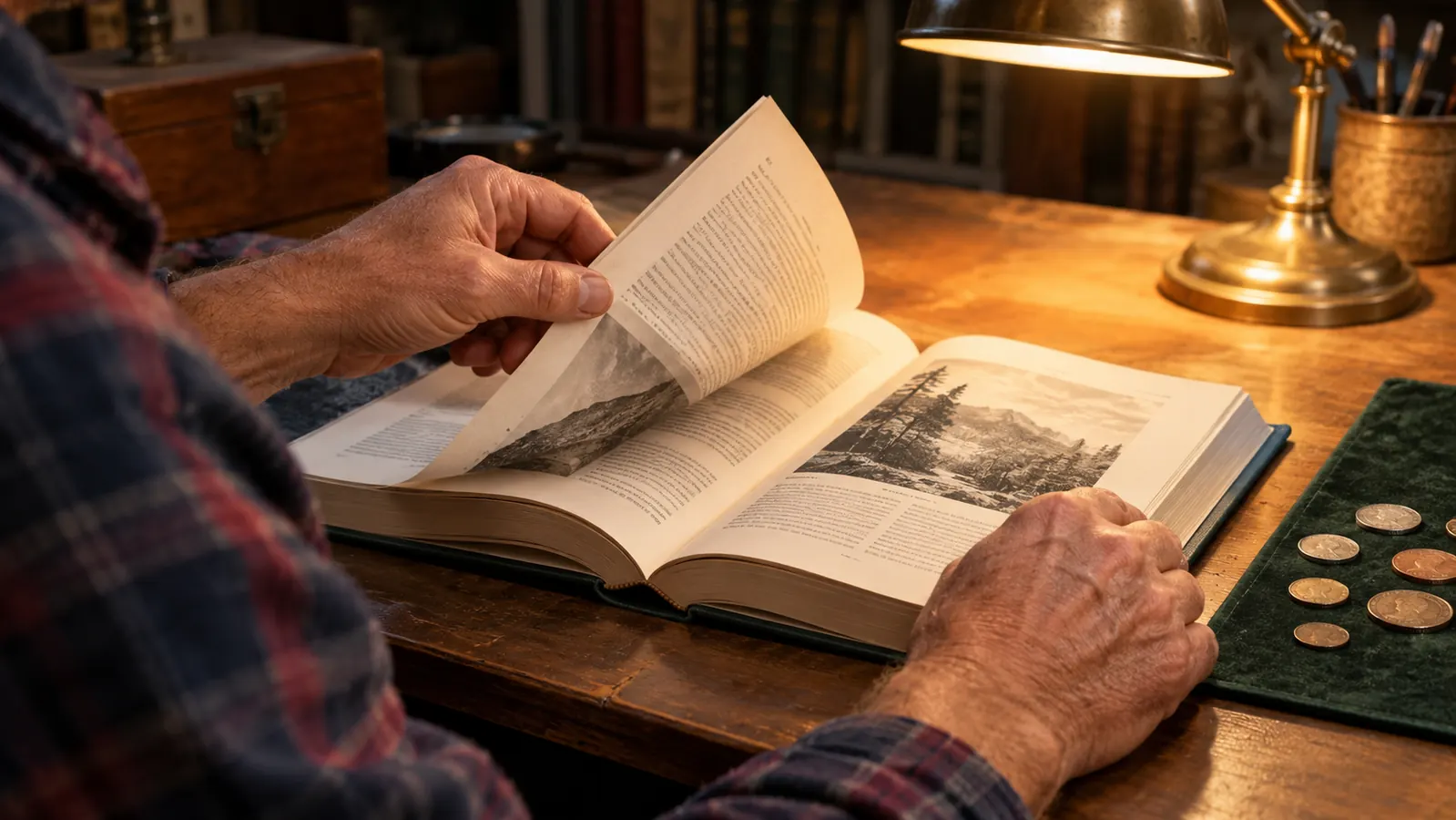
A coffee can is mostly common dates. That is not an insult, it is arithmetic. The problem is that a worn common date and a worn better date look nearly identical to a beginner, and I was a beginner once. The listings separate them by mint mark, which is the part most people miss. Now when Tyler and I sort, the ordinary ones go in the tray and the ones worth a second look go on the felt pad, and I am not guessing.
It settles a disagreement at the club table without anyone losing face
At the club meeting last month two fellows spent ten minutes disagreeing about a date and a mint mark. Nobody was lying. They were both remembering something slightly wrong. I brought the book out, we found the page, and the conversation moved on to coffee. That is what a reference is for. It does not make you right. It makes the question answerable, and it does it without anyone having to back down in front of the room.
It gives a ten-year-old a real job at the kitchen table
Tyler is ten. On Sunday afternoons he spreads pocket change across the kitchen table and I hand him the book and a job: find the date, find the mint mark, read me the line. The listing shows a reading age of eight and up, and that matches what I see. He is not learning to grade coins. He is learning that there is a place to look things up, which is a habit worth more than any single coin in my collection.
It keeps your want list honest before you walk into a show
I write a want list before every show. Left to my own devices it says things like a nicer 1938 for the folder, which is not a list, it is a mood. Sitting down with the guide turns that into a date, a mint mark and a grade range I can actually ask for. Dealers respond better to a specific request. So do I. I walk in with four lines on an index card instead of a vague feeling and a pocket full of cash.
It is 484 pages and a pound and a half, and it has never once guessed at a number to make me feel better about a coin.

It makes you a sharper buyer of the ordinary coins you actually buy
Most of what any of us buys is ordinary. Common cents, common nickels, the quarters that come through the till. The margins on ordinary coins are thin, and thin margins are exactly where a reference earns its place on the desk. Knowing that one date carries a small premium in circulated grades and the one next to it does not changes what you will pay for a whole group. I buy fewer lots on impulse now, and the lots I do buy are better chosen.
It shows you what finishing a set actually asks of you
Completing a run of Lincoln cents sounds like a beginner's project until you sit down and count the holes. The book shows the whole span in one place, date by date and mint mark by mint mark, and suddenly the project has a shape. I am not telling anybody a set is an investment. I am saying that knowing how many coins stand between you and finished is the difference between a plan and a drawer full of duplicates.
It still works when the show floor has no signal
Show floors are terrible for phones. Concrete buildings, hundreds of people, and my battery always seems to be at nine percent by the second aisle. A hardback needs no signal, no login and no update. It measures nine by six by 1.3 inches, weighs a pound and a half, fits in the outside pocket of my bag, and works in a church basement in February. That sounds like a small thing until the day the small thing is the only thing.
It explains why grade moves a number, without pretending to grade for you
The listings are laid out in columns by grade for a reason, and reading across those columns teaches you why the gap between a cleaned coin and an untouched one is so wide. What it does not do is grade your coin for you. Nobody can do that from a photograph, and I would be suspicious of anyone who offers. Use the columns to understand the gap, then get an opinion from somebody who has the coin in hand under good light.
It answers the same question a hundred times without getting tired
I have looked up the same handful of dates more times than I can count. The spine is soft, the corners are rounded, and the pages fall open at the Lincoln section because that is where my thumb goes. Four hundred and eighty-four pages hold up to that kind of use. A website would have asked me to accept cookies four hundred times by now. The Whitman book just opens, and the answer is where it was last Tuesday.
What I'd Skip
Two things I would skip. First, do not buy the companion volumes before this one is worn out. There are specialty references for every series and most of them are good, but a man who owns six books he has not read is worse off than a man who owns one he has. Second, do not expect a price guide to tell you that a coin is rare. It tells you what is listed, not what is sitting forgotten in somebody's attic. If you want a book to confirm a find, you will be disappointed. If you want a book to keep you honest when you are standing at a dealer's table with your wallet already open, this is the one. I have replaced my copy three times since the nineties, and that tells you what I think of it better than any recommendation could.
One book, three inches from the desk lamp
Ten reasons in, the case is simple. A reference you actually open beats a shelf of them you do not.
Amazon See the 2026 Red Book on Amazon →