
Short answer first, because that is what you came for. If you are still learning your way around a coin and you want to read dates, mintmarks and the tiny lettering on a worn Lincoln cent, buy the JARLINK 30X 60X. If you have spent a few years looking at coins under decent glass and you want to judge a surface, buy a 10X triplet loupe and keep a high-power loupe in the drawer for the two or three times a year you need to read something nearly worn away. These two tools are not really competing for the same job, and the mistake I see at club meetings is a new collector buying the wrong one first and then deciding magnification is useless.
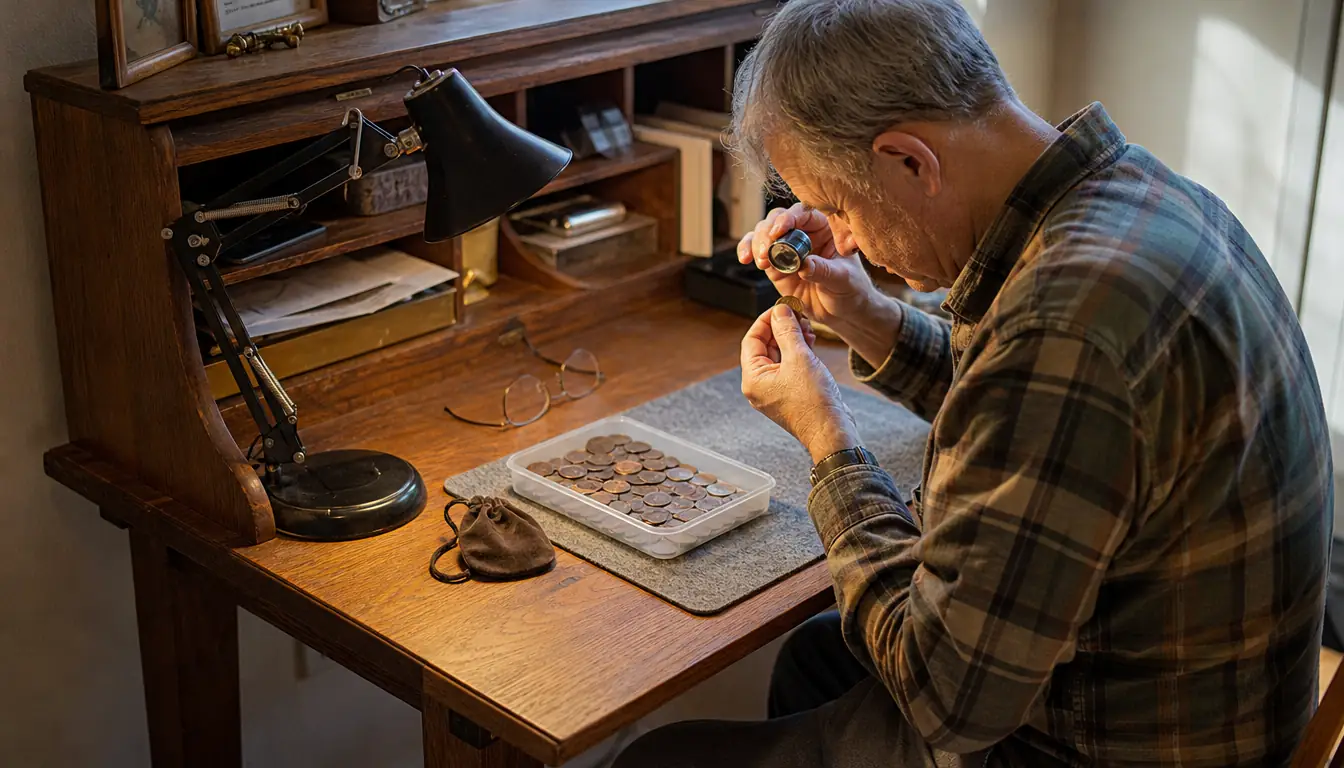
I keep both within arm's reach. The JARLINK lives in its fabric bag beside the felt pad on my folding oak desk, and the triplet rides in my shirt pocket on meeting nights. My grandfather left me a coffee can of wheat pennies when I was twelve, and for the next thirty years the best magnification I owned was a plastic magnifier from a drugstore. After I retired I finally had time to sit with a roll of cents, so I bought the loupe with the biggest number on the box first. One afternoon of squinting taught me what 30X and 60X do to a copper surface, and why the men doing the real grading were carrying fixed 10X glass in a metal barrel. That lesson cost me a little pride and not much else.
How I Compared Them
I did this the slow way, with my own coins, over about a month of Sunday afternoons. I picked five cents I knew well: a common 1944, a worn 1919 with a filled date, a 1955 with a rim ding, an uncirculated 1964 still in a flip, and one corroded zinc cent from a parking lot. I looked at all five through the JARLINK at 30X, then at 60X, then through the triplet, and wrote down what I could and could not answer each time. That is the only test that matters to me. Not which lens is sharper in the abstract, but which question gets answered.
Before I settled on those five, I tried a shortcut that did not work. I lined up twenty pennies in a row and went down the line under the 60X in one sitting. By the eighth coin my eyes had stopped registering the difference between a die chip and a fleck of grime, and I wrote down two notes I crossed out the next morning. Twenty coins in twenty minutes is not inspection. Five coins with a written line beside each one is.
The other thing I tracked was how long I could look before my eyes tired. That sounds like a small concern until you spend forty minutes trying to work out whether a mark on a Morgan dollar is a bag mark or a scratch. Comfort is not a luxury in this hobby. It is the difference between a careful look and a hurried one, and hurried looks are how people talk themselves into a bad purchase.
| JARLINK 30X 60X | 10X Triplet Loupe | |
|---|---|---|
| Magnification | 30X through a 22mm primary lens, plus a 60X supplementary 12mm lens | Fixed 10X, one lens, nothing to switch |
| Lens material | Resin lenses | Three-element ground glass |
| Edge sharpness | Sharp in the center, softens toward the rim, and 60X shows color fringing on bright copper | Flat field rim to rim, colors stay true |
| Built-in light | LED aimed down at the coin, runs on three LR1130 button batteries | None, you supply the lamp |
| Size and weight | 1.6 inches by 2 inches, 27.22 grams, drops in a shirt pocket | Small enough for a pocket too, but it wants two steady hands |
| Long viewing sessions | You get very close to the coin, so your eyes tire after a while | Wide comfortable view, easy to sit with for an hour |
| Reading a worn date | 60X makes a filled date legible when nothing else will | 10X is not enough for the last digit on a slick cent |
| Judging surface and hairlines | Enough to spot a line, not enough to judge how deep it runs | Where you want to be for luster breaks, abrasions and hairlines |
| Batteries to worry about | Three LR1130 button cells, spares in the box | None needed |
| Best for | Sorting, variety hunting, reading mintmarks | Buying raw coins and judging grade |
Where the JARLINK 30X 60X Wins
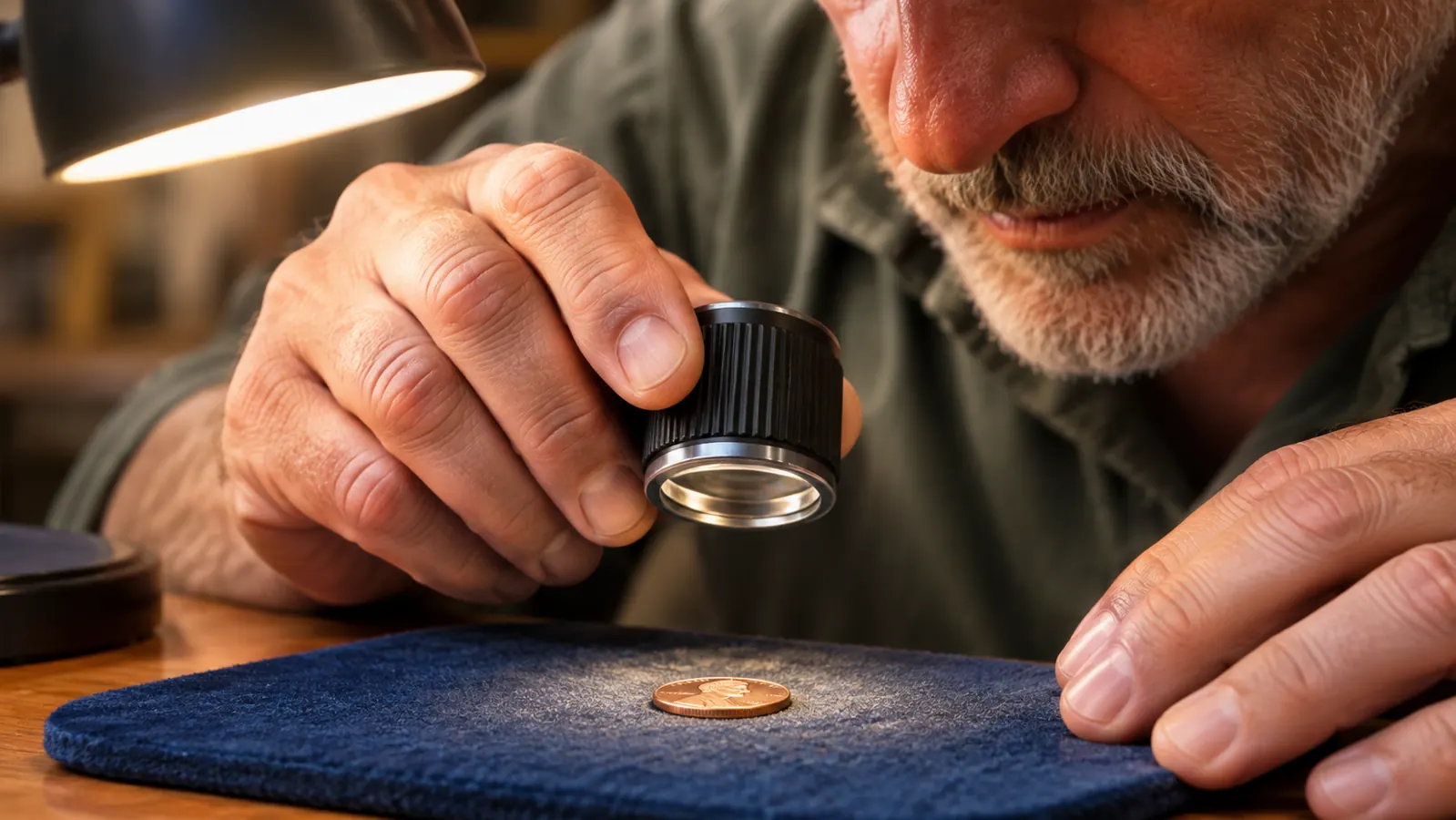
Two lenses in one small body, and no standing up. The primary lens is 30X at 22mm, the supplementary is 60X at 12mm, and the whole loupe measures 1.6 inches by 2 inches and weighs 27.22 grams. It disappears into a shirt pocket. On Sunday afternoons my grandson Tyler and I sort a roll of pocket change onto the felt pad, and I use the 30X to read a date at a glance, then flip to the 60X when the date is filled and I want to know whether a 1922 is the plain variety or just tired. Carrying one small tool instead of two means I actually check things instead of promising myself I will check them later.
Last March I bought a roll of circulated 1944 pennies at a club auction for the fun of it. At the desk with the 30X, one date sat a little high and left of where I expected, so I switched to the 60X and settled the question in under a minute. With two separate tools and a lamp to reposition each time, that would have been an hour's job put off to another day.
The built-in LED is the feature I did not expect to use. My desk lamp sits over my left shoulder, which is where it belongs, but the loupe body blocks some of that light the moment I lean in close. The LED shines down at the coin from the angle you need, and it runs on three LR1130 button batteries. The package includes spares, a fabric bag, a small screw and a manual. In a dim club hall, on a dark copper planchet, that little light is the difference between reading a mintmark and guessing at one. Guessing is how people end up paying attention to the wrong detail.
Where a 10X Triplet Wins
The JARLINK uses resin lenses, and the specifications say so plainly. That is a sensible choice for a loupe that has to stay light and easy to own, but resin and glass do not render a coin the same way. A triplet has three ground glass elements in a barrel, and the corrections built into that arrangement keep the field flat and the colors honest from edge to edge. Under the JARLINK at 60X, a bright copper cent shows color fringing near the rim and the outer field goes soft. Under the triplet, the edge looks like the middle. That matters when you are deciding whether a line runs across the whole field or stops halfway, because that is usually the entire question.
A fixed 10X also keeps your judgment honest. The grading guides settled on 10X for a reason: it shows a hairline without turning an ordinary bag mark into a catastrophe. When I first had high magnification on the desk, I called marks on coins that turned out to be nothing, and I passed on coins that were better than I thought. A wide, comfortable, fixed view trains your eye to separate what is actually on the coin from what the lens is exaggerating. If you ever plan to send coins in for grading or buy raw coins at a show, that training is worth more than any zoom.
The loupe I hand to new collectors on club night
Two lenses, a built-in LED, a fabric bag and three spare button cells. Small enough to live in a shirt pocket, bright enough to read a mintmark in a dim meeting hall. It is the one I keep on the desk next to the felt pad.
Amazon Check Today's Price on Amazon →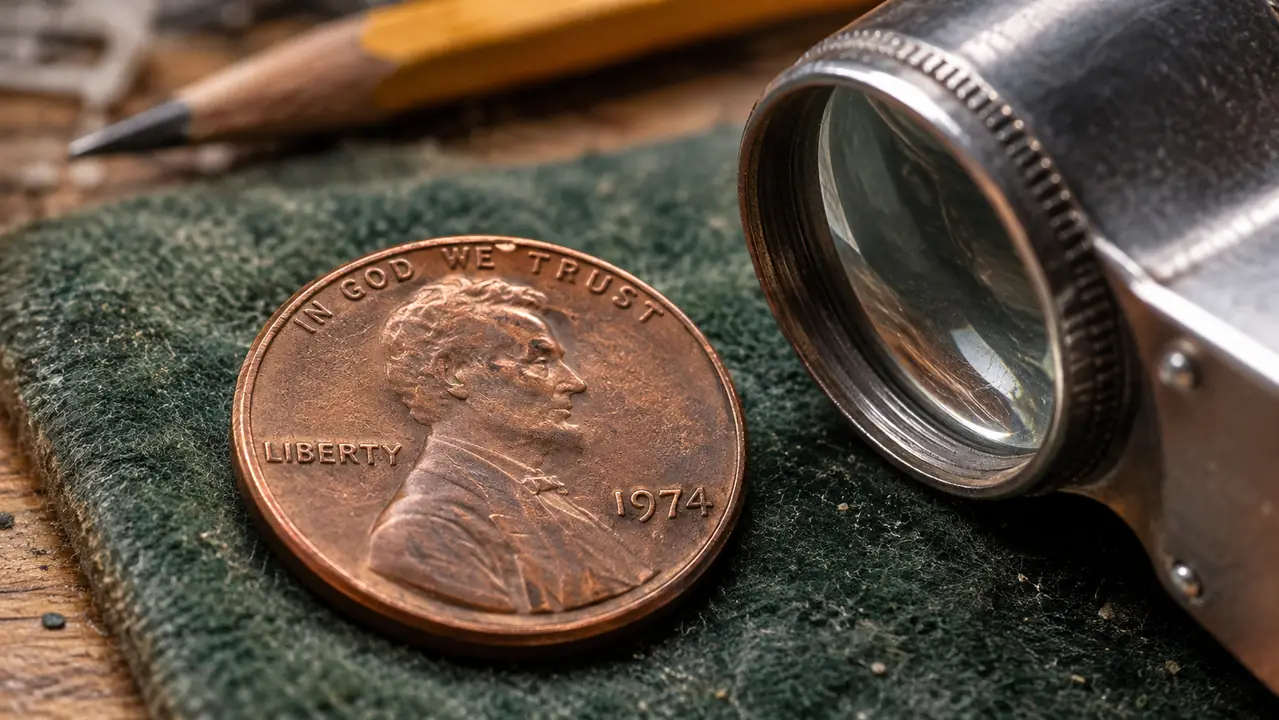
What 30X and 60X Actually Do to a Coin
At 30X you are looking at a coin the way you would look at a paragraph through a reading glass. The date, the mintmark, the designer's initials on the truncation of Lincoln's shoulder, all of it becomes readable without eyestrain. At 60X you are nearly touching the coin with the lens, and the lens itself shadows the surface unless the light comes from the side. The patch you can see is small. What you gain is the ability to tell a die chip from a speck of dirt, or a repunched mintmark from a stain on the planchet.
The 60X lens is 12mm across, so the circle you look through is smaller than a dime. When I checked the rim ding on my 1955 penny at that power, I could see the metal had been pushed up rather than cut away, which is a different injury than a nick. At 30X that ding just looked like a shadow sitting on the rim, and I would have let it go.
The trap is assuming more magnification always means a better inspection. At 60X everything looks damaged. A coin that seems perfectly acceptable in the hand can look like a wreck under that much power, and a coin with a real problem can look fine because you are staring at one square millimeter and calling it the whole surface. I use 60X for a specific question, then I back off. What is the last digit of that date. Is that a mintmark or a plating bubble. Is that line raised or cut into the metal. Those are questions with answers. Grade is not one of them.
The 10X triplet answers the other questions. It shows the whole surface at once, flat and honest, so you can watch how light rolls across a field, where the luster breaks, and whether a mark is a scratch or a flaw in the planchet. That is why the two tools sit next to each other on my desk instead of one replacing the other. One reads. The other judges.
At 60X I read the last digit of a worn 1919 date. At 10X I could see the hairline running under it, and that told me more about the coin than the date did.
Handling Habits That Matter More Than the Loupe
Neither tool will save you from bad handling. I hold everything by the edges, and I wear cotton gloves for anything uncirculated, which is not fussiness. A fingerprint on a bright field is a permanent change to the coin, and no amount of magnification undoes it. When I look at a coin I set it on the felt pad, not on the oak desk, and the plastic tray catches the ones I have already sorted. Tyler learned the edge rule before he learned the difference between a mintmark and a stain, which I think is the right order.
Light is the other habit. A desk lamp over the shoulder, not in front of your face, keeps glare off the surface and shows you the relief the way it is meant to be seen. The JARLINK's LED is a good fallback when the room is dim, but a steady lamp and a felt pad will improve your inspection more than any jump in magnification. I mention it because people ask me which loupe to buy when the honest answer is often that their light is in the wrong place.
What I Liked
- Two magnifications in one pocket-sized body, so you stop carrying two loupes
- Built-in LED lights the coin at the angle you actually need in a dim room
- Ships with a fabric bag, three LR1130 batteries, a spare screw and a manual
- Light enough and small enough that you bring it instead of leaving it home
Where It Falls Short
- Resin lenses soften toward the edges, and 60X shows color fringing on bright copper
- At 60X you have to get close enough that the lens shadows the surface
- Not the tool for judging grade, and it will make you think every coin is damaged
Who Should Buy Which
Buy the JARLINK first if you are new to this. One small tool covers both the reading job and the close-look job, and the built-in light means you can use it in a folding chair at a club meeting as easily as at your desk. It is also the right choice for anyone who sorts a lot of pocket change, hunts varieties, or reads mintmarks on a roll of quarters. Tyler uses mine more than I do, mostly to find the oldest penny in the jar, and I do not flinch when he sets it down on the table.
Buy a 10X triplet when the questions you ask change. If you are buying raw coins at a show, building a registry set, or deciding whether a coin is worth the trouble of submission, you need the flat honest view. The triplet is heavier, it has no light, and it does not zoom. What it does is show you the coin, all at once, without flattery. At the last regional show I watched a dealer work through a tray of raw Morgan dollars with a triplet and nothing else. He gave each coin fifteen seconds or so, set it on one of two piles, and never took a light out of his case. When I asked him about it, he said the zoom shows him what he wants to see, and he would rather see what is there. Most of the people I respect at my monthly meeting carry one and nothing else, and they have been at this a good deal longer than I have.
For most people the honest answer is both, eventually. Start with the loupe that reads, add the glass when you start judging. If you only ever do one thing with your coins, sorting and reading dates, the JARLINK covers it and you can stop there without feeling like you are missing something.
Start with the loupe that reads the date, then add glass when you start grading
The JARLINK 30X 60X is the tool I would hand a new collector before anything else in the coin room. Read the date, check the mintmark, spot the variety. Judge the surface later, when you have the glass for it.
Amazon Check Today's Price on Amazon →