
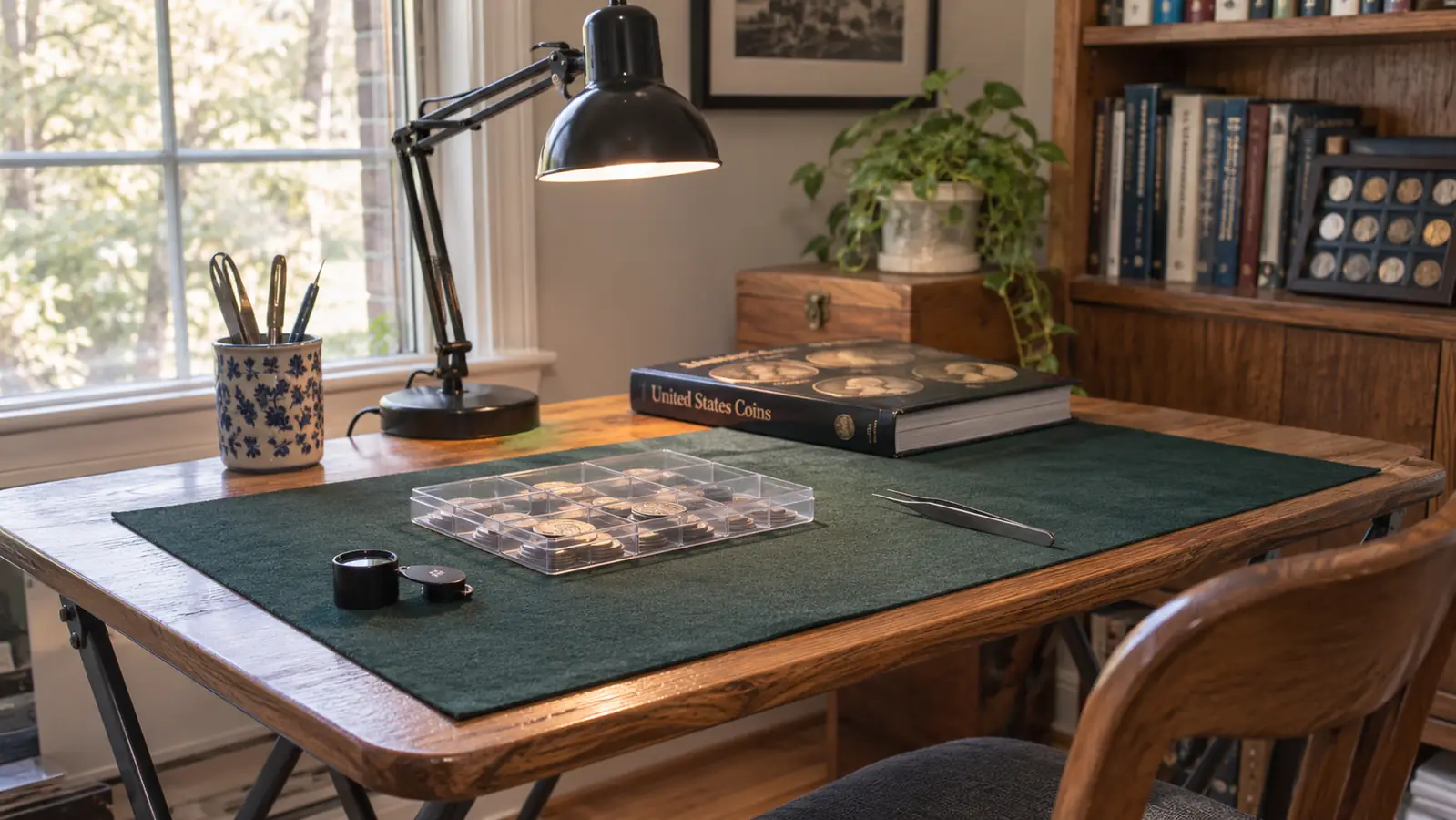
I inherited a coffee can of wheat pennies and old nickels from my grandfather when I was 12. Sixty years later that can still sits in the coin room, and I still get a knot in my stomach when I cannot tell a 1944 steel cent from a plated copy. For years I used a cheap plastic magnifier from a hardware store, the kind that fogs if you breathe on it. Then I set the JARLINK 30X 60X Illuminated Jewelers Loupe Magnifier on the folding oak desk next to my felt pad. I have used it for months now, mostly on Lincoln cents and a modest run of Morgan dollars, and this is what I found.
I am Arnie Szabo. I am 67, retired from teaching high school shop, and I live in Toledo with my wife Carol. I collect US coins, nothing rare enough to make the news. My routine is simple: desk lamp on, felt pad down, coins by the edges, gloves for anything uncirculated. The JARLINK loupe has become part of that routine. It is not a grading service and it will not make a common coin rare. It is a way to see what is already in front of me.
The Quick Verdict
A light, bright dual-lens loupe that earns its place beside the felt pad, as long as you accept the narrow view at 60X and the tiny batteries.
Amazon Check Today's Price →Put the 30X lens on the next coin you cannot quite read
The JARLINK loupe is the tool I reach for before a coin goes into a flip. It sits by the felt pad and comes out for every roll I open.
Amazon See the JARLINK loupe on Amazon →How I've Used It
I started with the 30X lens on a roll of Lincoln cents I bought at the monthly coin club meeting. The primary lens is 30x22mm, which gives a wide enough view to take in a whole cent, including the rim and the date, without moving the coin around. I hold the loupe maybe an inch above the coin and let the LED do the work. The first thing I noticed was how much easier it is to check the mintmark and the designer's initials when the light hits the right angle. The second thing I noticed was how often I had been looking at glare instead of detail.
The 60X supplementary lens is 60x12mm. That is a much smaller window. On a Morgan dollar I use it to look at the edge lettering and the fine lines in the hair, but I do not try to see the whole coin through it. On a Lincoln cent I use it for the steps on the Memorial reverse or the details in the wheat stalks. It takes patience. If I move the loupe a quarter inch, I lose the spot. That is not a defect. It is what 60X means.
I have used the JARLINK loupe on maybe 40 rolls of cents, a few rolls of nickels, and the silver dollars I keep in flips. I have not dropped it, but I have knocked it off the felt pad once. It weighs 27.22 g, so it does not hit the desk like a paperweight. The fabric bag that comes in the package is where it lives when I am not using it. I keep the bag in the desk drawer with the extra batteries.
What the 30X Lens Does Best
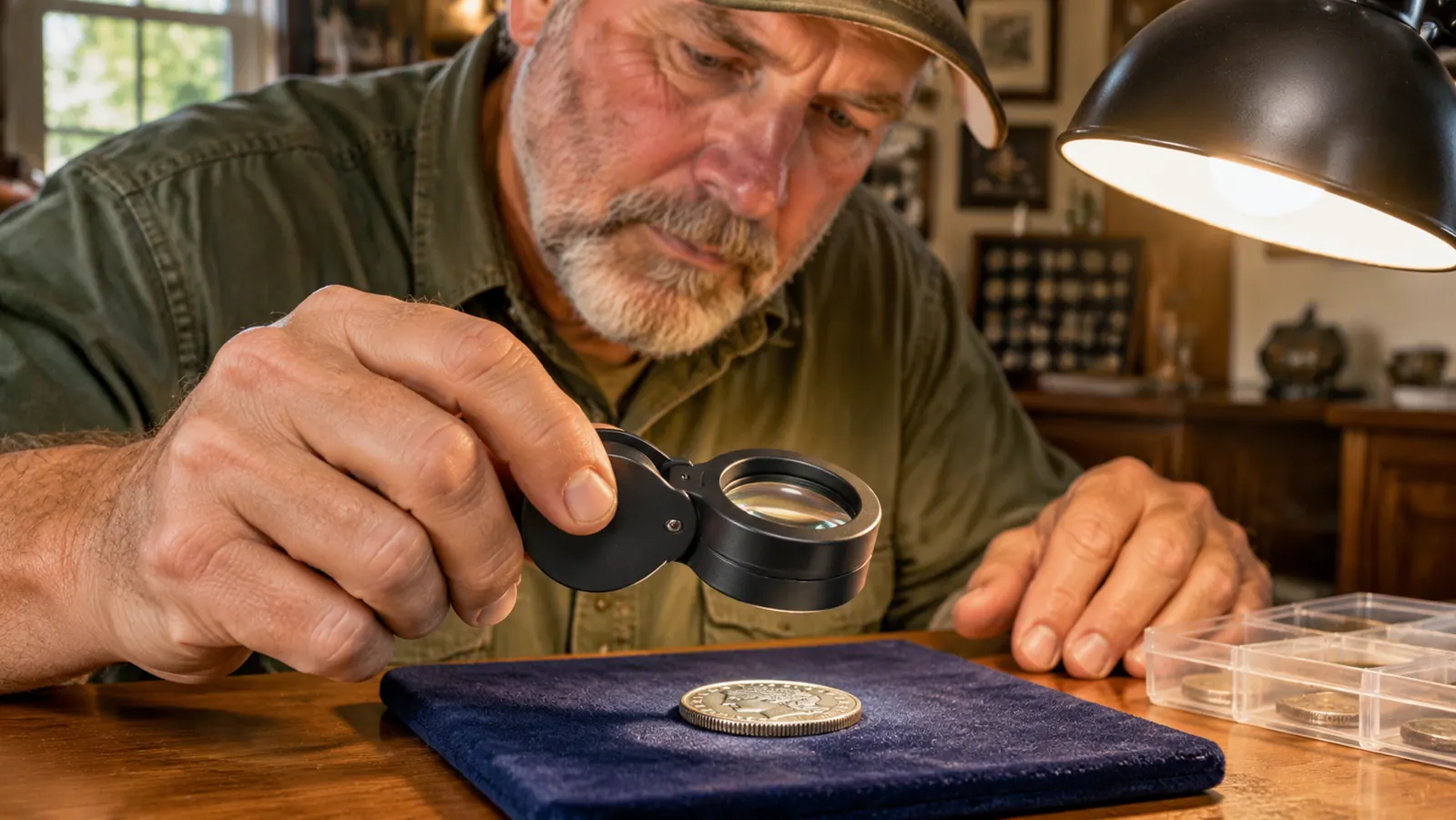
The 30X lens is the one I reach for first. The 22mm lens gives me enough field to see a whole Lincoln cent at once. That matters when I am checking for a doubled die or a repunched mintmark, because I need to compare the date and the lettering in one view. With a smaller lens I end up moving the coin and losing my place. The JARLINK 30X view keeps the coin steady on the felt pad and lets my eye do the comparing.
I also use the 30X lens for a quick pass on a coin before I put it in a flip. I look at the rim for nicks, the field for hairlines, and the high points for wear. I am not trying to grade the coin. I am trying to decide whether it goes in the keeper box or the trade box. The loupe makes that decision faster. Under the desk lamp alone, a small rim nick can disappear. Under the 30X lens with the LED on, it shows up.
The 60X Lens and Its Narrow View
The 60X lens is not a better version of the 30X lens. It is a different tool. The 12mm lens gives a very small viewing area, so I use it for details, not for whole-coin work. On a Morgan dollar, I use it to look at the cotton bolls and the eagle's tail feathers. On a wheat cent, I use it to check the fine lines in the wheat ears. I have to brace my hand on the desk to keep the view steady. If I hold the loupe in the air, the image swims.
This is where some buyers will be disappointed. The title says 60X, and 60X sounds like it should show everything. It does show a lot, but only in a tiny circle. I think of it as a detail lens. If I want to see a whole coin, I use 30X. If I want to see whether a mintmark is repunched, I use 60X. The two lenses together make more sense than either one alone. That is the reason I keep the loupe on the desk instead of in a drawer.
The LED Light and Battery Routine
The LED light is the part that changed my desk routine. My desk lamp is fine for general light, but it throws a glare on a shiny coin. The LED on the loupe lights the surface without washing it out. On a copper cent, that light shows the raised letters and the dirt in the recesses. On a silver dollar, it shows the cartwheel luster without flattening the whole surface. I can use the loupe without the LED, but I usually turn it on.
The package includes three LR1130 button batteries and one small screw. The loupe runs on battery power. I have not had to change the batteries yet, but I keep the spares in the fabric bag. The small screw is the kind of thing I would lose on a rug, so I put it in a little plastic tray in the desk drawer. If you wear reading glasses, as I do, the LED makes the difference between a detail and a shadow. I take the glasses off and hold the loupe close.
Checking Lincoln Cents and Morgan Dollars
Most of my collecting is Lincoln cents. I have a Whitman folder that is maybe two thirds full, and a small box of duplicates. The JARLINK loupe has helped me sort through those duplicates without guessing. I look at the date first, then the mintmark, then the rim. The 30X lens shows the date and mintmark together. The 60X lens shows the mintmark alone if I need to check for a repunched mark. I do not claim to be an expert on every variety. I just want to see what I am looking at before I put it in the folder.
The Morgan dollars are a different test. Silver dollars are large, and the details are spread out. I use the 30X lens to look at the date and the mintmark, and the 60X lens to look at the hair and the eagle. The LED is helpful on a circulated dollar because the surface is not uniform. I have a 1921 Morgan that I have looked at a hundred times. Under the loupe I noticed a small die crack near the rim that I had never seen before. That is not a rare variety. It is just a detail I had missed.
I also check Jefferson nickels and Washington quarters with the loupe. The 30X lens is wide enough for a quarter, but just barely. I have to center the coin on the felt pad and hold the loupe steady. The 60X lens is too narrow for a whole quarter, so I use it only for the lettering. This is not a loupe built for large coins first. It is built for jewelry and small details, and coins are a good fit if you work within its view.
Where It Falls Short
The first shortfall is the 60X field. It is small, and it takes practice to use. If you expect to put the loupe on a coin and see the whole coin at 60X, you will be disappointed. The second shortfall is the battery. The loupe runs on LR1130 button batteries, and the package gives you three. That is fine, but button batteries are not something I want to hunt for on a Sunday afternoon. I keep spares in the bag. The third shortfall is the fabric bag. It keeps dust off, but it is not a hard case. I would not toss the loupe in a toolbox without something more protective.
The lenses are resin, not glass. I have no complaint about the view, and the loupe is light because of it. I do not know how resin will hold up over ten years of Sunday use. I have used it for months, and it still looks the same. I am careful with it because I am careful with my coins. If you are rough on tools, this is not the loupe to leave loose in a drawer with keys.
How It Fits My Desk Setup
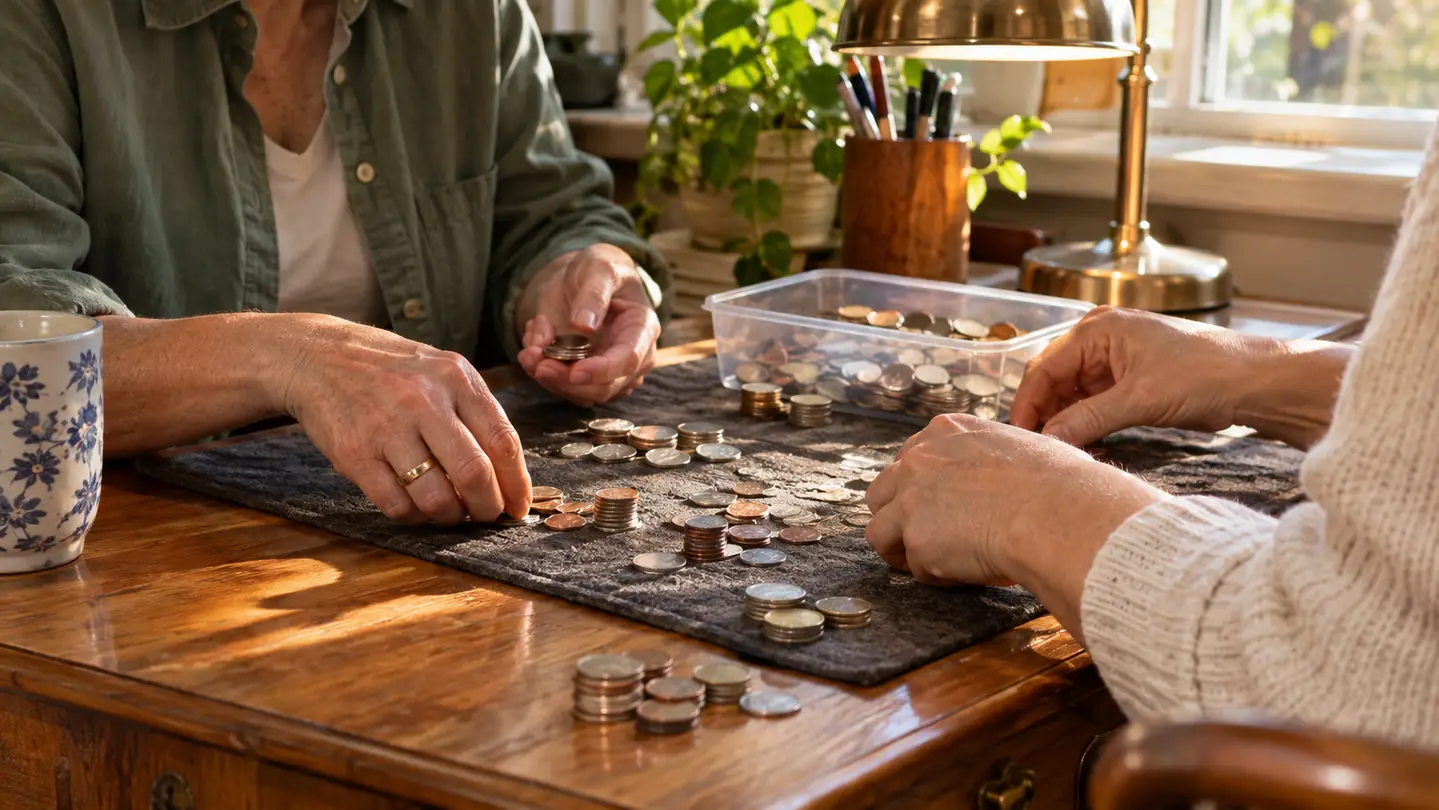
My coin room has a folding oak desk, a desk lamp, a felt pad, and a small plastic tray. The tray is for the coins I am working on, not for the loupe. The JARLINK loupe lives in its bag in the top drawer. When Tyler, my grandson, comes over on Sunday afternoons, we sort pocket change on the felt pad. He is 10, and he likes to look at the dates. I hold the loupe for him because his hands are not steady enough yet. The LED helps him see the date without me turning the desk lamp into a spotlight.
The loupe is 1.6 inches long by 2 inches wide, and it weighs 27.22 g. That makes it easy to keep in the bag and easy to hold. It does not take up much space on the desk. I have a habit of setting it down on the felt pad instead of the bare wood. The felt is softer, and I do not want to scratch the lens. The small screw and the spare batteries stay in the tray. That is the whole setup. It is not complicated, and that is why I use it.
What I Liked
- The 30X lens is wide enough to view a whole Lincoln cent and most of a Washington quarter.
- The LED light is bright enough to show detail without washing out the coin surface.
- The 60X lens shows fine detail such as mintmarks and die cracks in a small area.
- It is light at 27.22 g and comes with a fabric bag.
- The package includes three LR1130 button batteries and a small screw.
Where It Falls Short
- The 60X lens has a 12mm field, so it is not for whole-coin viewing.
- The loupe runs on button batteries, and spares are easy to misplace.
- The fabric bag is not a hard case.
- The resin lens may not suit a collector who wants glass.
The 30X lens showed me a die crack near the rim of a 1921 Morgan that I had walked past for years.
Who This Is For
This is for the collector who already has a desk lamp and a felt pad and wants a closer look without buying a stereo microscope. It is for the person who sorts rolls of Lincoln cents, checks mintmarks, and wants to see a coin before it goes into a flip. It is also for the grandparent who sits with a kid on Sunday afternoon and wants to show him the date on a wheat cent. The JARLINK loupe is a practical tool for that kind of work. It is not a grading service and it is not a substitute for experience.
Who Should Skip It
Skip it if you need a wide field at high magnification. The 60X lens is narrow, and no amount of practice changes the 12mm view. Skip it if you want a hard case or a laboratory-grade glass lens. Skip it if you are looking for a tool to authenticate high-value coins. A loupe can show you a detail, but it cannot tell you whether a coin is genuine. That takes knowledge, reference material, and sometimes an expert. I am not an expert, and I do not play one on the internet.
If your desk lamp is doing all the work, give your eyes a closer look
I still use the desk lamp, the felt pad and the tray. The JARLINK loupe is the part that lets me see what the lamp is lighting.
Amazon Check the JARLINK loupe on Amazon →