
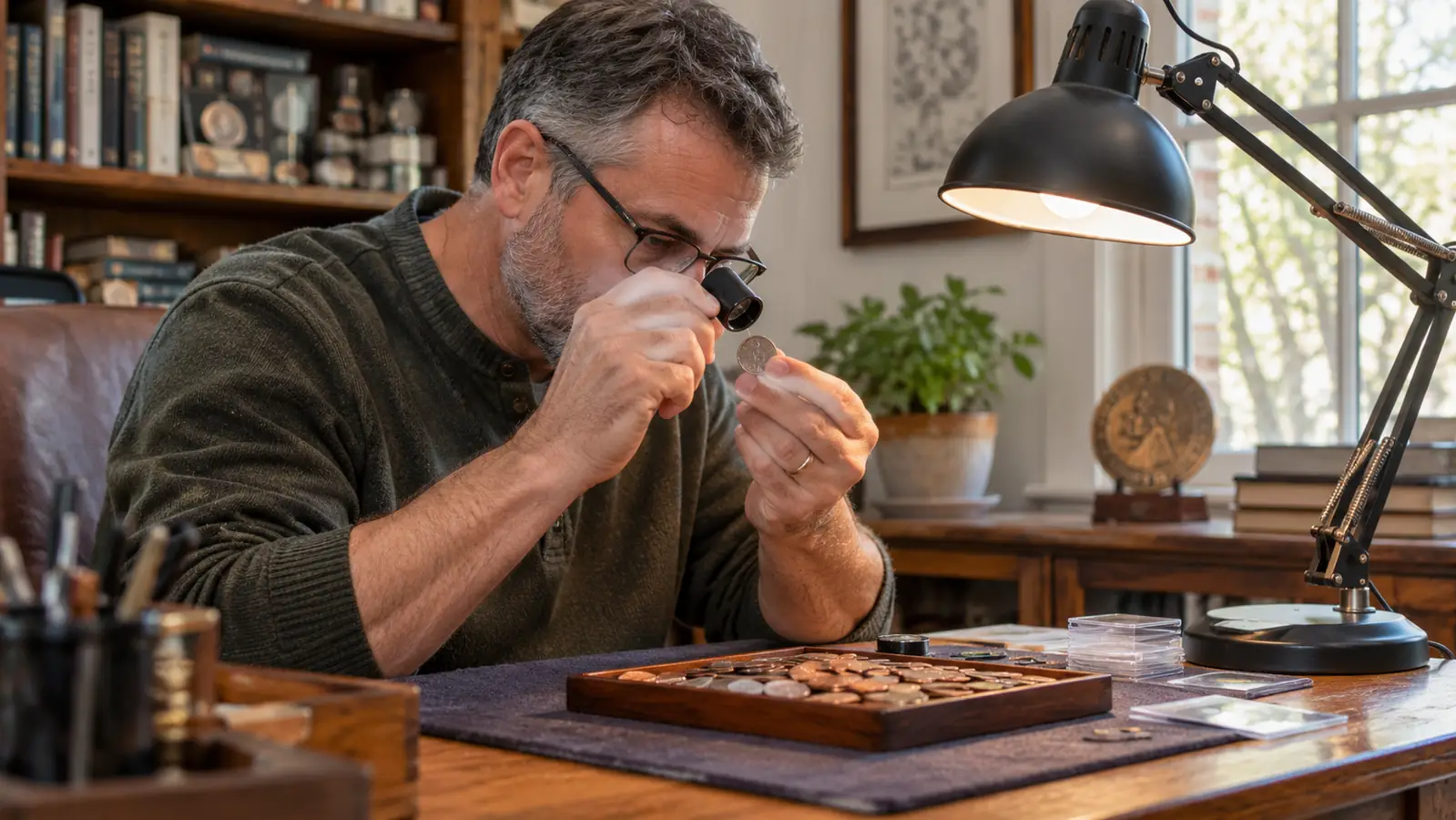
The coin sat in my tray for six years before I actually saw it. A 1972 Lincoln cent, brown and a little worn, filed in the second row of a Whitman folder I bought at a club auction. I had looked at it a hundred times with my bare eyes and once through a drugstore magnifier that made the whole surface look like it was underwater.
Then a JARLINK 30X 60X illuminated loupe showed up in a padded envelope. I ordered it on a Tuesday night after a club meeting where a fellow named Ray spent twenty minutes explaining that most of us are not looking closely enough at anything. The loupe is small, about the size of a matchbook, and it came with a fabric bag, a screw, and three LR1130 button batteries. I put a battery in, sat down at the oak desk in my coin room, and set that 1972 penny under the lens.
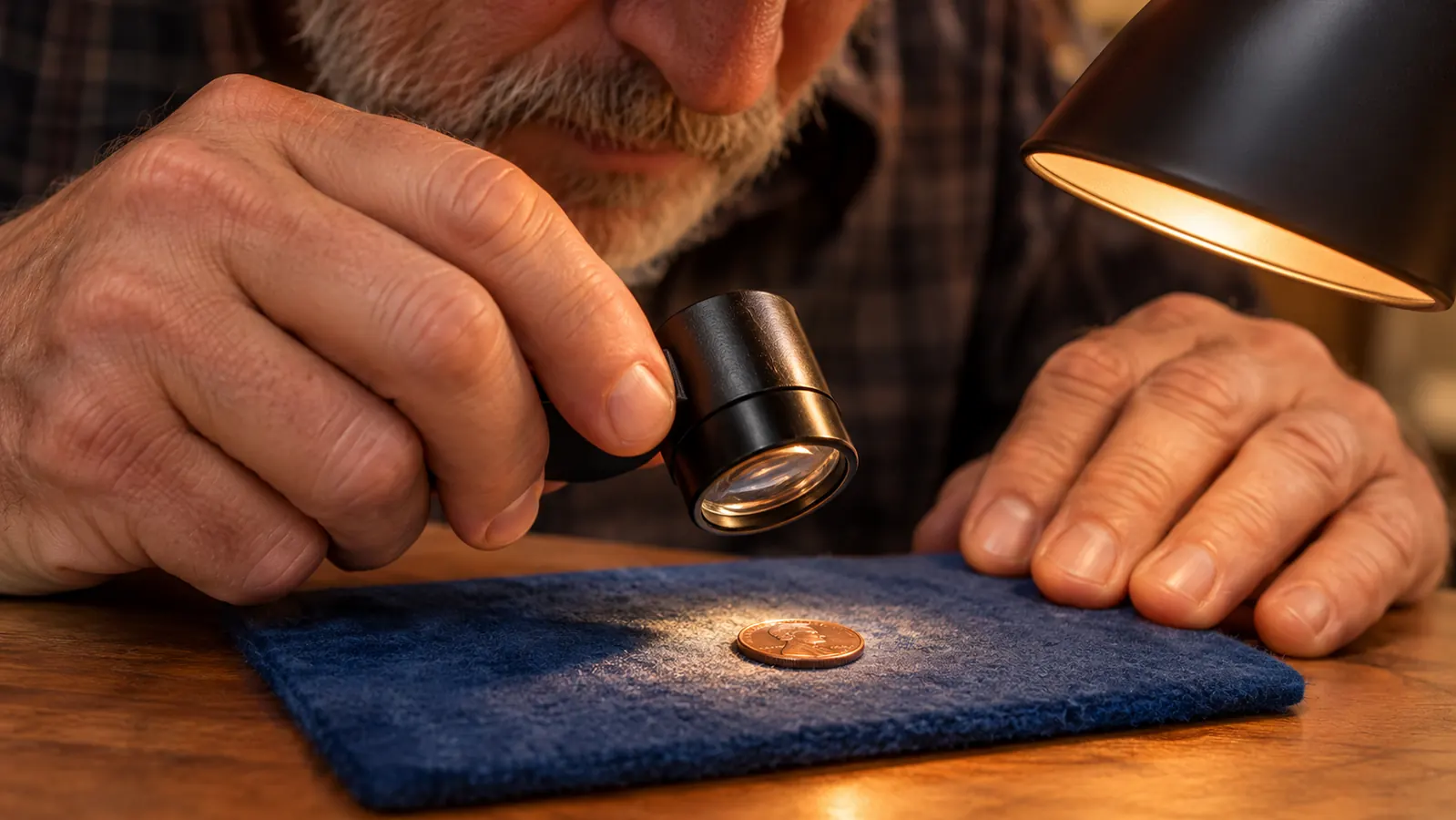
Under 30 power the coin was just a coin. Under 60 power, with the LED tipped so the light raked across the field instead of bouncing straight back, LIBERTY stopped being a word and became a row of cuts in metal. The base of the B and the E showed a shelf. The 2 in the date had a split in its upper curve. I had read about doubled dies for years. Reading about them is nothing like meeting one. I turned the loupe in my hand, checked the same spot three times, then went and found Carol and made her look, which she tolerated.
I am not going to tell you I found a rarity. I took it to the next club meeting and Ray looked at it for about ninety seconds before saying it looked like a minor doubled die and he would not bother sending it in. That is fine. That is most of coin collecting, honestly. What mattered was that the doubling had been sitting there since 2018, the year I filed that folder away, and my eyes had walked right past it.
I had been doing the hobby backwards. Buying coins to look at later, and never getting around to the looking. The loupe was an afterthought tacked onto the end of an order. It changed the order of things anyway.
That doubling had been sitting in my folder since 2018. I just could not see it until the light and the lens were aimed at the same square millimeter.
Look hard at what you already own before you buy another coin
Two lenses, an LED, a fabric bag, and the batteries included. It fits in a desk drawer.
Amazon Check Today's Price on Amazon →Here is what I use it for now. The 30 power lens, the 22 millimeter one, is for the whole coin. I set the coin on the felt pad, rest the loupe against my brow to keep it steady, and sweep across the fields looking for hairlines, old cleaning, and the small abrasions that tell you a coin has rattled around a pocket with keys. The 60 power lens, the 12 millimeter one, is for small things. Mint marks. The steps on a Jefferson nickel. The wheat lines on a cent. On a Washington quarter I can now tell a worn strike from a weak one in a few seconds, which used to be a ten minute argument with myself under a desk lamp.
The JARLINK is light, 27.22 grams by the listing, and measures 1.6 inches long by 2 inches wide, so it lives in the drawer with the felt pad and comes out a dozen times a week. Mine has been knocked onto a hardwood floor twice. The resin lenses are still clear.
It is a loupe, not a grading service and not a stereo microscope. At 60 power the field of view is a few millimeters wide, and if my hands are not steady the coin swims in and out. The LED is bright enough to wash out a proof surface when I hold it straight on, so I tilt it, which taught me more about lighting than any forum thread did. The batteries are the size of a grain of rice, so I keep spares in the bag. None of that makes it a bad tool. It makes it a tool with a job.
I wear cotton gloves for anything uncirculated and handle everything else by the rim. Magnification tempts you to pick a coin up and turn it in your fingers. Resist that. Skin oil and a fingerprint are permanent.
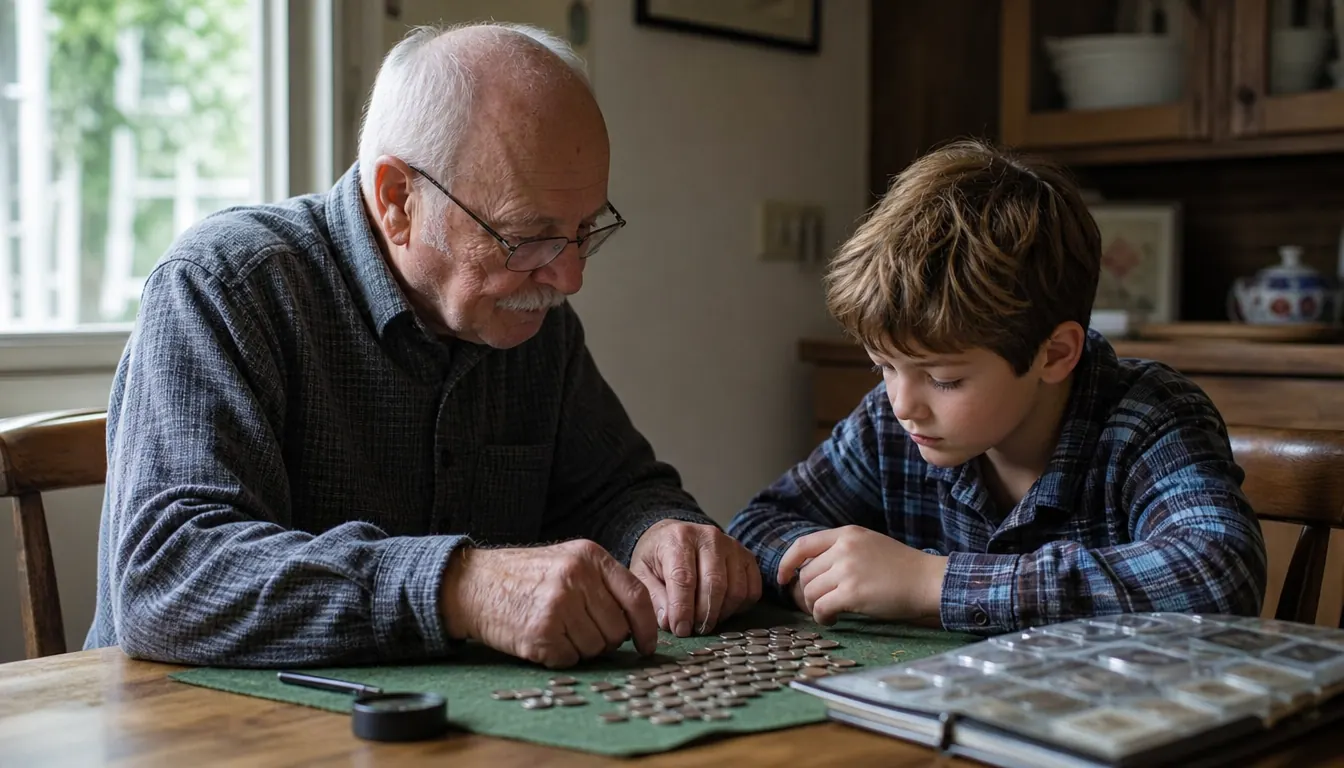
Tyler, my grandson, sorts pocket change with me on Sunday afternoons, and the JARLINK has become his favorite object in the house. He is ten. He holds it over a nickel and announces his findings with total confidence, most of which turn out to be lint. He asked me last month whether the loupe can see inside a coin. I told him no, and he was disappointed, and then he asked if we could look at his whole jar anyway. I let him. He is learning to look, and that is the whole skill.
What I'd Tell You If We Were Sitting at My Kitchen Table
I would tell you the tool is not the hobby. A loupe will not make a coin rare and it will not grade a coin for you, and anyone who says a magnifier puts value into a collection is selling something. What it does is let you see what you already own. That is the upgrade most people skip.
I would tell you the JARLINK lives in a drawer here, not in a display case, and that is exactly right. The tool you keep within arm's reach is the one that gets used. A loupe in a box on a shelf is a purchase. A loupe in the drawer is a habit.
I would also tell you to sort out your light before you buy the next coin. If you set aside a little each month for the hobby, put some toward a loupe and a felt pad first, then save the rest. There will be another coin next week. There always is. And the ones in your folder right now are still waiting for a proper look.
The smallest tool in my coin room is the one I reach for most
30X and 60X lenses, LED illumination, fabric bag, batteries included. No setup, no learning curve.
Amazon Check Today's Price on Amazon →