
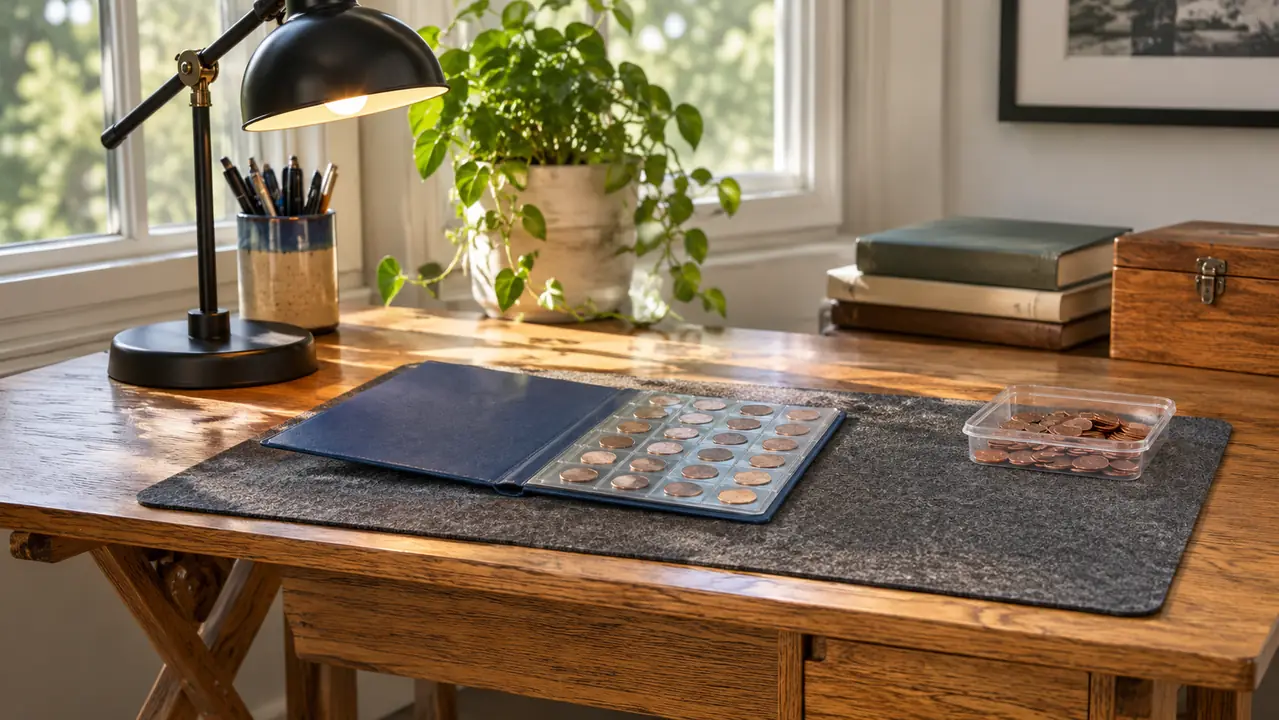
I keep a coffee can on the shelf in the coin room. It is the same kind of can my grandfather left me when I was twelve, and it fills up faster than you would think. Between the grocery store, the hardware store, and whatever Tyler digs out of the couch cushions on Sunday afternoons, there is always a pile of cents waiting to be sorted. Most of them are ordinary. A few are not. The trick is having a place to put the ones that are, and that is where a Whitman Lincoln cent folder earns its keep. I have used envelopes, jars, and one memorable shoebox. None of them lasted. The folder did.
For years I used envelopes. I would write a date range on the front, drop the keepers inside, and tell myself I would organize them later. Later never came. The envelopes got soft at the corners, the cents slid around, and I lost track of what I already had. A folder fixes that. It gives every date a home, so you can see the gaps at a glance. The Whitman folder for Lincoln cents, collection number three, covers 1975 through 2013. That is a useful range for anyone who sorts pocket change, because those are the years that still turn up in circulation. It is also a range with plenty of common dates, so you can fill a page without buying a single coin. I am not going to tell you that every hole will be easy. Some dates are harder to find than others. But the folder gives you a map, and a map is better than a pile.
The 1975-2013 stretch is the one you can fill from ordinary pocket change.
The Official Whitman Coin Folder for Lincoln Cents, Collection #3, gives every date from 1975 through 2013 its own place. Open it on the desk, sort a pocketful of cents, and put the keepers where you can find them again.
Amazon Check It Out on Amazon →Step 1: Sort the change before you spend it
The first mistake I see beginners make is treating pocket change as one pile. Cents, nickels, dimes and quarters all go into the same jar, and then the jar becomes a chore. I use a small plastic tray on the folding oak desk in the coin room. I dump the day's change into it, pull out the cents, and put everything else into the proper rolls. Carol keeps a dish by the door for grocery change, and that dish is usually the first stop. Tyler likes this part because he gets to be the one who spots the odd coin. I like it because it takes five minutes and keeps the coin room from turning into a junk drawer.
Work on a soft surface. A felt pad is enough. Cents that land on a hard tabletop can pick up small dings on the rim, and a rim ding is the kind of thing you cannot undo. I spread the cents out in one layer, face up, and slide them around with one finger. Do not scoop them. Do not let them pile up and rub against each other. Circulated cents are already worn, so you are not protecting a rare treasure, but you are building a habit. The habit is what keeps the uncirculated pieces safe later. It is also what keeps you from losing a coin under the desk, which I have done more than once.
Keep a discard cup nearby. Anything that is bent, corroded through, or so worn the date is gone goes into the cup. You do not need to save every cent. A folder with empty holes is more useful than a folder stuffed with coins you cannot identify. When the cup is full, take it to the bank or spend it. The point is to keep the pile moving. I also keep a second small cup for copper cents that are too rough for the folder but still interesting to Tyler. He likes the dark ones. I do not argue with him. It is his pile too.
Step 2: Check the date against the folder's range
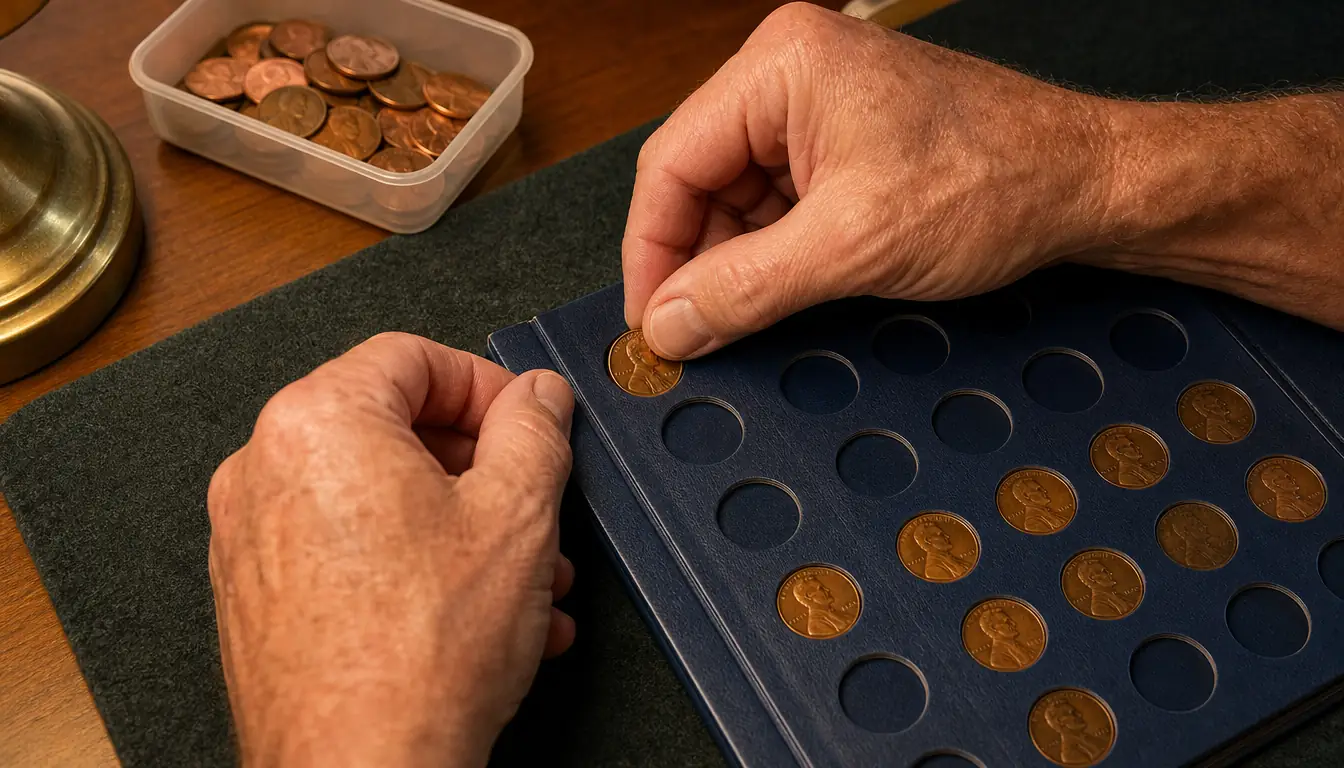
The Whitman folder in front of me is built for 1975 through 2013. That means the first thing you check is the date, not the shine. Hold each cent by the edge, read the date under the lamp, and decide right then. Pre-1975 goes into a separate envelope or a different folder. Post-2013 goes into the spend pile. If the date is hard to read, set it aside in a small maybe stack and come back to it when your eyes are fresh. I use a magnifying glass for the worn ones, mostly because my eyes are sixty-seven years old and the lamp is not as bright as it used to be.
Do not try to fill the whole folder in one sitting. I have done that, and it leads to mistakes. You start rushing, you put a 1998 in the 1989 slot, and then you have to pull half the page apart. Work one page at a time. The folder has three pages, so it breaks the job into three manageable sessions. Tyler and I usually do one page on a Sunday, then put it away. There is no prize for finishing fast. The coins are not going anywhere, and the folder will still be there next week.
A note on the range: 1975 through 2013 is not the whole Lincoln cent series. It is a slice. If you inherit a coffee can with wheat cents, those belong in a different folder. Do not force them into this one. The range is the point of this particular folder. Respect it, and the folder will stay useful instead of becoming a catch-all. I have seen too many collections that started as one careful folder and ended as a drawer full of mixed dates. A little discipline at the start saves a lot of sorting later.
Step 3: Decide what condition you are willing to keep
I am not a grader, and I do not play one on the internet. What I can tell you is that a coin folder is not a grading service. It will not turn a scratched cent into a nice one. What it does is let you keep the coins you like in order. For pocket change, my rule is simple. If I can read the date and the mint mark without squinting, and the rim is not chewed up, it goes in the folder. If it looks like it went through a rock tumbler, it goes in the discard cup. That is the whole test. It is not scientific, but it keeps the hobby moving.
Uncirculated cents are a different story. If you buy a roll or a set, or if someone gives you a coin in a holder, that coin deserves better handling. I wear cotton or nitrile gloves for anything uncirculated. I keep those coins on the felt pad, never on the bare desk. And I do not clean them. No polish, no vinegar, no rubbing. Cleaning strips the surface and leaves tiny scratches, and once that happens you cannot put it back. A dirty uncirculated coin is still uncirculated. A cleaned one is just damaged. I learned that the hard way with a 1955 penny I will not describe further.
For circulated cents, do not overthink it. The folder is supposed to be looked at. Fill it with coins that make you happy to open the page. If you only keep perfect pieces, you will never finish a page, and you will miss the point of the hobby. Some of my favorite cents in the folder are dark, worn, and ordinary. They are there because I found them in change, not because they are special. Tyler once found a 1975 in a parking lot and carried it around for a week. It is in the folder now. That is the kind of coin I mean.
Step 4: Handle the coins by the edges
This is the one habit I wish I had started earlier. Hold a cent by the rim, between your thumb and index finger, not flat between your fingers. The face of a coin picks up skin oil. On a circulated cent you will not notice for years. On an uncirculated cent, a fingerprint can show up under a lamp and stay there. It takes a little practice, but it becomes automatic. I still have to correct myself when I am in a hurry. The coins are patient. I am the one who is not.
Set up your work area before you open the folder. I use the folding oak desk in the coin room. The desk lamp goes on the left, the felt pad in the middle, the small plastic tray on the right. The folder sits on the felt pad. That way, if a cent slips out of your fingers, it lands on something soft. I also keep a clean microfiber cloth nearby, not to rub the coins, but to wipe the pad if it gets dusty. Dust is abrasive. You do not want to slide a coin across it. A clean pad and a steady lamp are most of the battle.
If you are working with a child, show them the edge hold first. Tyler was six when I started him on Jefferson nickels, and he wanted to hold them flat like poker chips. We practiced with a few common cents until he got it. Now he corrects me when I forget. That is the other reason to slow down. Someone is watching, and the habit you show them is the habit they will keep. I am not trying to raise a coin dealer. I am trying to raise someone who knows how to handle other people's things with care.
Step 5: Press each cent into its slot and close the folder
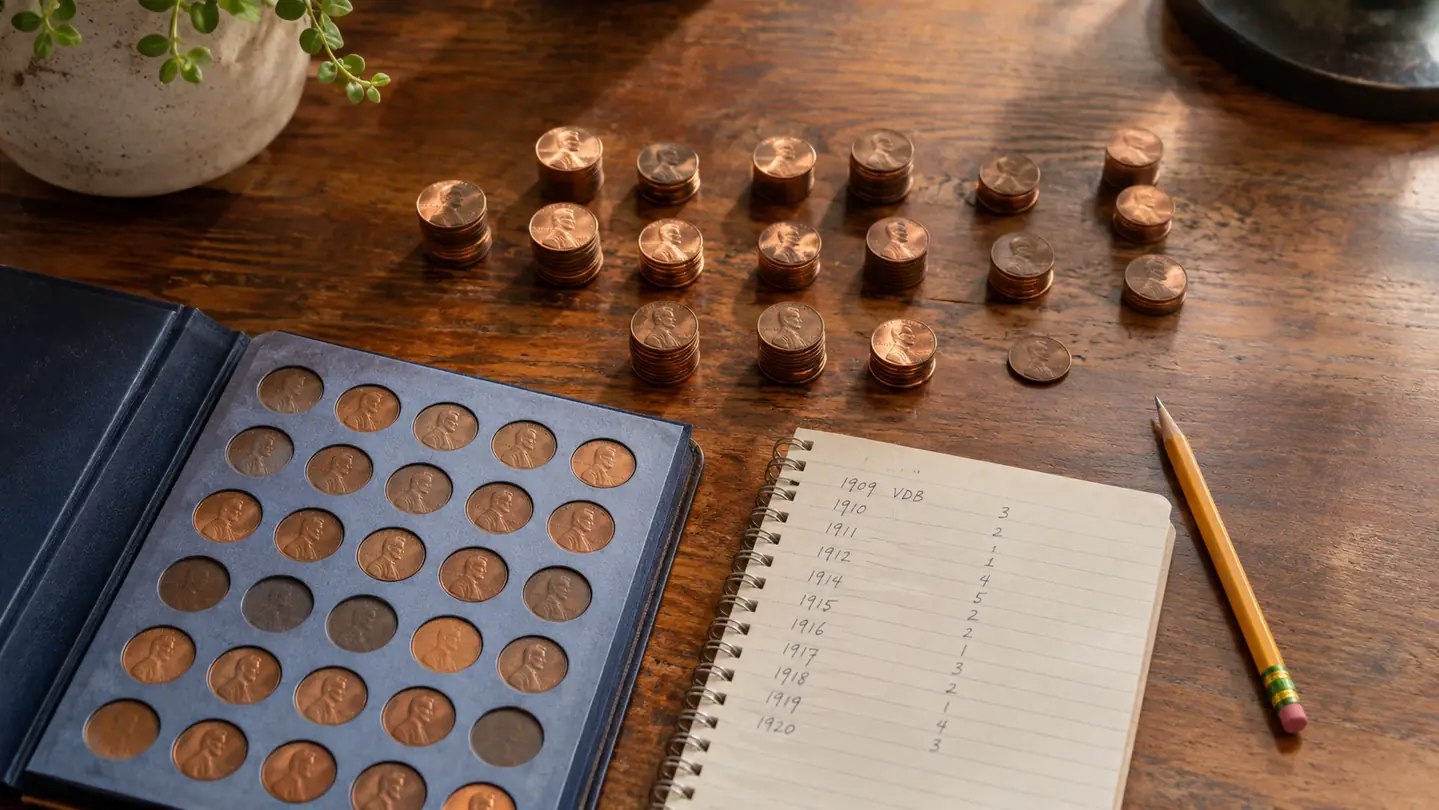
Open the folder to the page that matches the decade you are working on. Line up the cents in date order first, outside the folder, so you are not hunting for a 1987 while holding a 1992. Then take the first coin by the edge, place it over the opening, and press gently with your thumb. It should sit flat. If it does not, stop. Check the date again. Check that you are on the right page. A coin that will not sit right is usually a coin that belongs somewhere else. The folder is not going to bend itself around a mistake.
Do not force it. The folder is paper and board. If you push too hard, you can bend the page or tear the opening. I have seen people try to make a coin fit with the heel of their hand. That is how you ruin a folder and put a crease in a coin at the same time. A gentle press is enough. If the opening feels tight, rock the coin slightly, but keep your fingers on the rim. If the page is already full of coins, work from the top down so your hand does not drag across the finished rows.
When the page is full, close the folder and put it back on the shelf. Do not leave it open on the desk overnight. Dust, sunlight, and a curious ten-year-old are all real risks. I keep mine in the coin room, away from the window, in the same spot. The folder is 7.75 by 5.93 by 0.28 inches and weighs 3.53 ounces, so it does not take up much room. That is part of why I like it. It fits on a shelf without becoming a project. The other part is that it closes. A folder that closes is a folder you can put away, and a folder you can put away is one you will actually use.
What Else Helps
A folder is a start, not a whole system. I keep a small notebook with each page's missing dates written down. When I am at the coin club or a local show, I know what to look for. Tyler keeps his own list on a folded piece of paper, and his handwriting is better than mine. The list does not need to be fancy. It just needs to be accurate. I also write down where I found a coin if there is a story worth keeping. The folder holds the coin. The notebook holds the rest.
A second folder is useful for duplicates. When you sort a lot of pocket change, you will find the same dates over and over. I put the extras in another Whitman folder for trading or for a young collector who is just starting. If you are not sure whether a folder or an album is the right format for you, that is a fair question. A folder is for looking at one date at a time. An album is for a broader collection. Start with the folder if you are working from change. It is easier to live with, and it takes up less room on the shelf.
The other thing that helps is patience. I have been filling Lincoln cents on and off since I was twelve, and I still have gaps. That is normal. The folder is not a race. It is a record of what you have found. Some pages will fill in a month. Some will take years. The point is to enjoy the sorting, not to finish. If you get stuck, put the folder away for a while and come back when you have a fresh pile of change. The hobby will wait. It always does.
One more thing: keep your coin club friends in the loop. I have filled more holes through trades at the monthly meeting than I ever did by buying rolls. Someone else is always looking for a date you have three of. That is the part of the hobby I did not understand when I was twelve. The coins are the excuse. The people are the reason I still go. Tyler comes with me sometimes, and he is learning that too.
The 1975 to 2013 range is the stretch of Lincoln cents that still turns up in ordinary pocket change, which makes it the most practical place to start.
Start with the cents you already have in your pocket.
The Official Whitman Coin Folder for Lincoln Cents, Collection #3, covers 1975 through 2013 and gives every date a place. Sort one page this Sunday, and see how much of it you can fill from change.
Amazon See It on Amazon →