
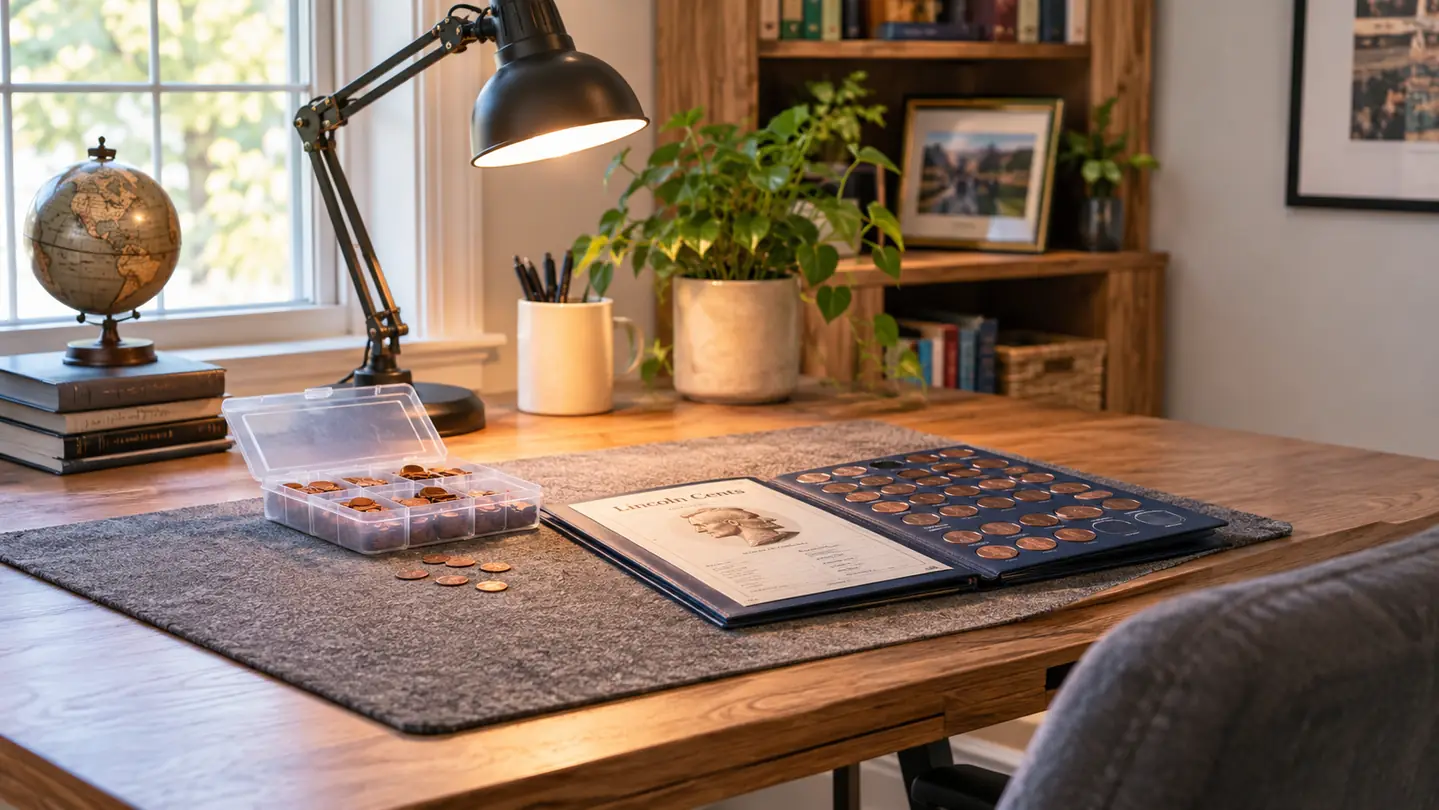
My grandfather handed me a coffee can of wheat pennies when I was 12 and told me to sort them. That was the entire instruction. No book, no album, no plan. I sorted them on the kitchen table for two hours and then had no idea what to do next, because a pile of pennies is not a collection. Fifty-five years later I still think the fastest cure for that stuck feeling is a folder with a start date and an end date printed on it, and the one I hand to new collectors at the club meeting is a Whitman.
The Whitman Official Lincoln Cents Collection number 3 covers 1975 through 2013, which happens to be the stretch most of us can still pull out of pocket change. It measures 7.75 by 5.93 by 0.28 inches and weighs 3.53 ounces, so it lives in a desk drawer without complaint. That is the whole pitch, and it is enough. Here is why it beats the alternatives a beginner usually gets talked into.
The cheapest finish line in the hobby is a folder with a date range on it
1975 through 2013, one place for every coin in the run, and it drops in a desk drawer. Start with the pennies already in your change jar.
Amazon See the Lincoln Cents folder on Amazon →Starts with the change already sitting in your pocket
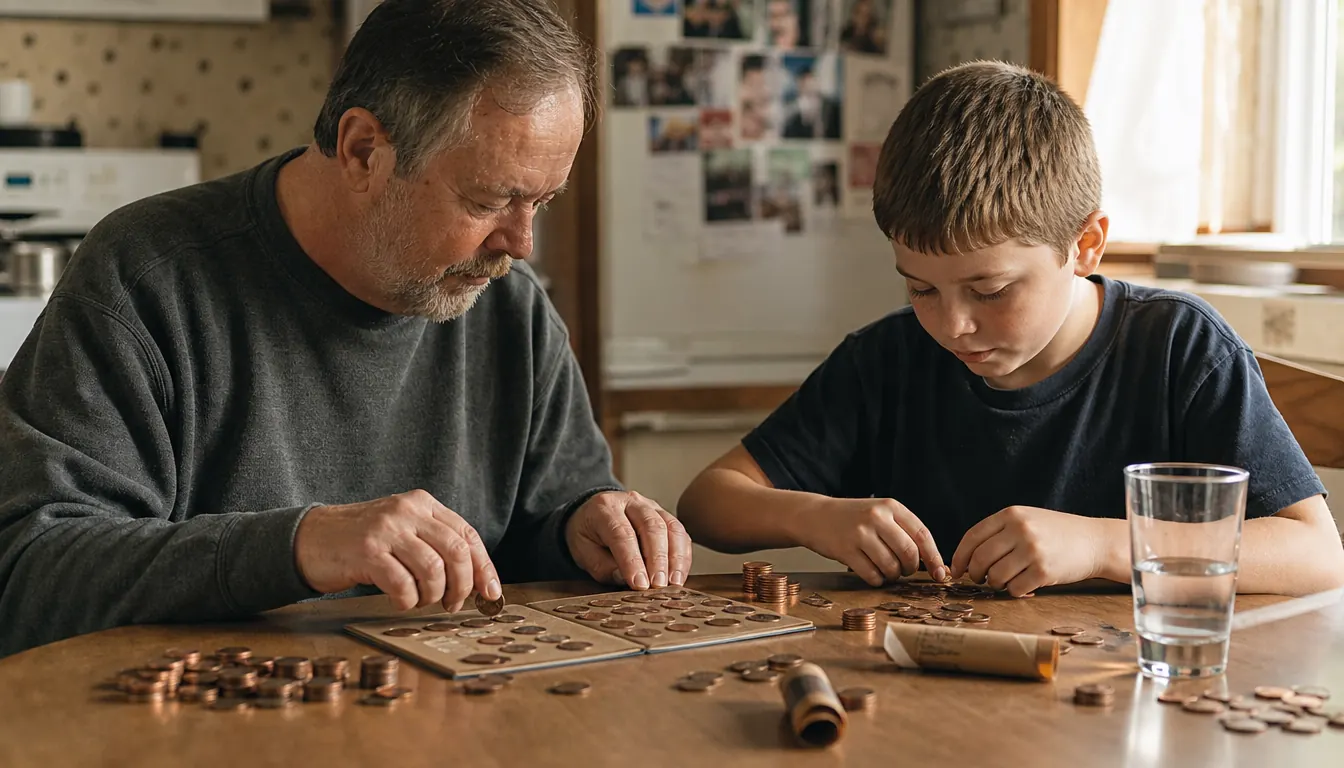
Most hobbies open with a shopping trip. This one opens with a jar. The 1975-2013 window means the coins you need are still circulating, and I regularly pull good ones out of the change I get at the hardware store. Tyler and I go through a roll of pennies on Sunday afternoons and he sets aside anything that fills a spot. You do not need a dealer, a loupe, or a second opinion. You need a roll of pennies and somewhere to put the ones that matter.
The 1975-2013 run is a real finish line, not a forever project
Plenty of beginners quit because the set they picked can never be finished. A complete Lincoln run from 1909 is a lifetime and a half of work, and the early dates are the ones that get uncomfortable. The Whitman run I recommend stops at a place you can actually reach. When the last position is filled you close the cover and you have done a thing completely. That feeling is what carries you into the next set instead of out of the hobby.
You learn mint marks before you spend a dime on grading
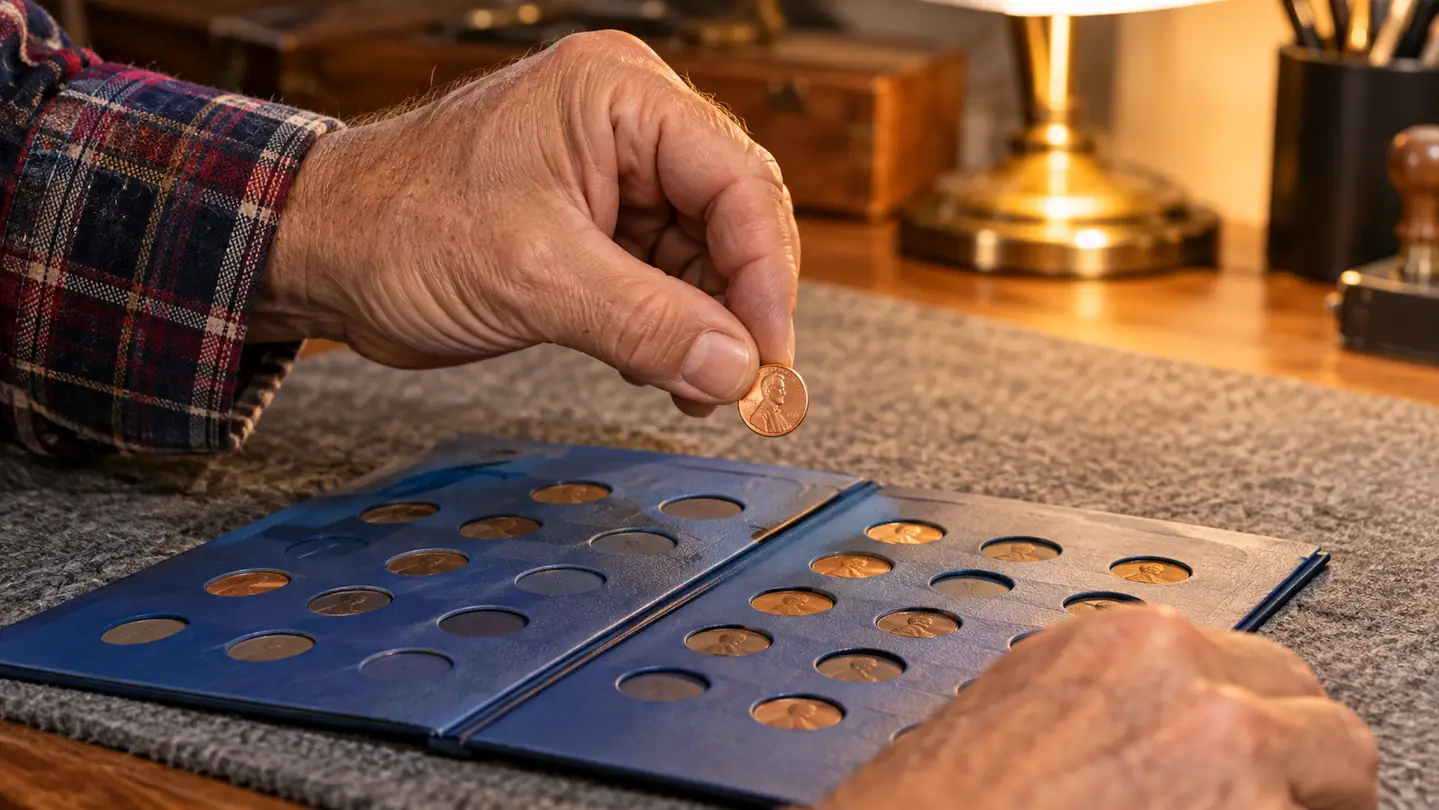
Before you send anything off to a grading service, you should be able to tell a Denver cent from a Philadelphia cent at a glance. A folder forces that. You read the date, you flip the coin, you find the letter, you place it. Do that two hundred times and it stops being work. I have watched grown men at shows squint at a mint mark for a full minute. A ten year old with a folder in the house does not need the minute.
Coins stay put instead of sliding around a drawer
A pile on a felt pad is fine for a photograph and terrible for six months of collecting. Things get knocked over, things get stacked, copper gets scratched against copper by nobody in particular. A folder keeps the run in one place and stops you from handling the same coin forty times because you keep picking it up to read the date. Fewer touches, fewer marks. That is most of what careful storage amounts to.
It weighs less than four ounces and fits in a desk drawer
Three and a half ounces. Seven and three quarter inches by a hair under six. That means it goes in a desk drawer, a shoebox on the closet shelf, a safe deposit box if you keep one. I have watched beginners buy an album the size of a briefcase and then never take it out because it does not fit anywhere convenient. Convenience beats elegance when you are starting, every single time.
Handling stays consistent because the routine is fixed
I hold circulated cents by the rim and I skip the gloves unless a coin is uncirculated. What I do insist on is a routine: same lamp, same felt pad, same small tray. A folder gives you that routine, because there is a correct place for each coin and a correct order to work in. When the routine is fixed, careful handling happens without you having to remember to be careful.
It gives a kid an hour of sorting that is not a screen
Tyler is 10. He can pick a 1982 out of a pile about seven times out of ten, which is better than I could manage at his age. The folder is the reason. There is a spot for the coin, it is either filled or it is not, and he can see his own progress without asking me for a verdict. If you have a grandchild who likes sorting things, hand them a roll of pennies and this folder and then leave the room.
You find out what a completed set actually feels like
Completion is a skill, and it is learned in order. The first set you finish teaches you how long it takes, what you pay attention to, and where you get lazy. A 1975-2013 penny run is short enough to complete in a season or two of casual searching. That is a cheap education in finishing something. The collectors I know who stayed with the hobby are almost all people who finished a small set early and remembered the feeling.
It teaches the difference between a keeper and a filler
Every position gets filled eventually, and a few of those fills will be placeholders you plan to replace. That is a good lesson to learn on copper cents instead of silver dollars. You pull a coin, look at it under the lamp, decide it is not good enough, and drop it in the duplicate pile. Ten decisions like that and you can look at a coin and know what you are seeing. That skill does not come from reading about grading.
Upgrading later is a decision you will actually understand
When you outgrow this folder you will know exactly why. You will want different storage, or a wider date range, or something that carries two coins per date. But you will be making that choice with a finished set behind you and a year of handling in your hands. That is a much better position than asking a stranger at a show what to buy in your first month, which is how most people end up with a briefcase album and no pennies in it.
What I'd Skip
I would skip the everything-album that starts at 1909 and has a page for every date and mint mark. It looks like ambition and it behaves like a wall. I would skip the single expensive coin somebody talks you into in your second month, because you will not be able to judge it yet. I would skip submitting anything for grading before you can identify a mint mark without a magnifier. And I would skip any seller who tells you a folder will make your coins worth more, because it will not. A folder protects coins and organizes them. It does not change what they are.
Tyler is 10 and he can pull a 1982 out of a pile about seven times out of ten. He learned it from a folder with a place for every date.
One more thing, on the handling side. Wash your hands first, work over the felt pad so a dropped coin lands soft, and hold cents by the rim. The folder cannot do that part for you. It just makes the part you can control a little more automatic.
Sort the coffee can this weekend instead of leaving it in the closet
1975 through 2013, 3.53 ounces, 7.75 by 5.93 by 0.28 inches. A place for every coin in the run and a finish line you can see from here.
Amazon Check today's price on Amazon →