
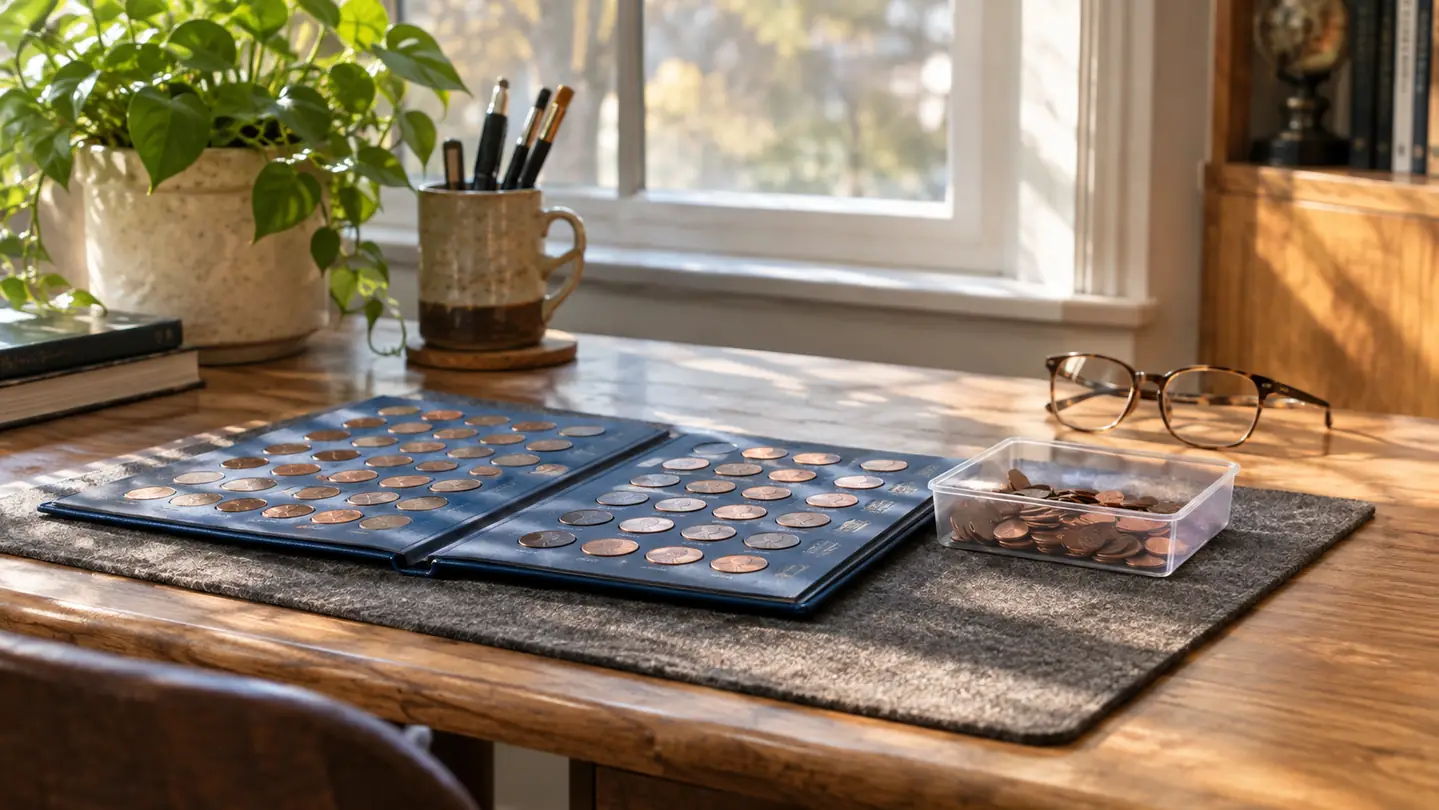
At the last club meeting a fellow set a shoebox of Lincoln cents on the table and asked whether he should keep them in a Whitman folder or move the whole run into a proper album. I have kept cents both ways, and I have moved sets from one to the other more than once. The short answer is that the Whitman Folder for Lincoln Cents, 1975 to 2013, is the better starting point for anyone still building that date run, and a full album is the better home once the set is finished and the coins have stopped moving in and out. Those are two different jobs. Most of the trouble I see comes from buying the one that does not match the job.
Here is the difference in practice. A folder is a working tool. You buy it, you pour a roll of cents onto the felt pad, and you push coins into openings until the run is filled. An album is a storage system. You buy the binder, then buy pages for the series you are serious about, then move finished sets into it. If you are still hunting dates, an album slows you down, because every new coin means opening a binder, lifting a page, and pushing a coin down into a recessed hole. If you are done hunting and the coins are sitting in a folder that gets opened every Sunday afternoon, the folder is not doing those coins any favors. Same collection, different stage of it.
| Whitman Folder | Full Coin Album | |
|---|---|---|
| What it holds | Lincoln cents, 1975 to 2013, in one folder | Any series you buy pages for, several series per binder |
| How the coin sits | In a cut opening, pressed against the board by the fold | In a recessed hole, sitting below the surface of the page |
| Seeing the reverse | You see the obverse only, the reverse rests against cardboard | Lift the page out and the coin can be turned over |
| Getting a coin back out | Bend the fold back and pry, easy to mark a rim if you hurry | Push from behind through the hole, no fold to fight |
| Buying it | One item covers the entire date run | Binder plus pages, and page stock comes and goes |
| Space it takes | 7.75 by 5.93 by 0.28 inches and 3.53 ounces, fits in a shoebox | Shelf space for a binder and its slipcase |
| Seeing what you are missing | Every empty hole is visible at a glance | You flip pages to find the gaps |
| When the run is finished | Still a folder, with every coin under tension | The finished set has a permanent home |
| Best for | A set still being built out of pocket change | A set that is done and staying done |
Where Whitman Wins
The first thing the folder gets right is that it ends the shopping. You buy one item and you have a home for every date and mint mark in the 1975 to 2013 run. No page decisions, no checking whether the pages for the years you still need are in stock this month, no half-filled binder sitting on the shelf waiting on a restock. For a collector who is still filling holes, that single fact outweighs most of the rows in the table above.
The second is size and weight. The folder measures 7.75 by 5.93 by 0.28 inches and weighs 3.53 ounces. Mine lives on the folding oak desk in the coin room next to the felt pad and the small plastic tray, and when Tyler comes over on Sunday to sort pocket change it is the thing he can handle on his own without me hovering. A binder with a slipcase is a two-hand object that belongs on a shelf. A folder is a one-hand object that belongs where the work happens. When you are sorting forty pennies out of a coffee can, that difference decides whether you bother at all.
And there is the matter of seeing your own gaps. A folder lays the run out in front of you, hole by hole, and an empty hole is a specific errand. You know what you need because you are looking at the space where it goes. An album holds the same information, but it is spread across pages and you flip instead of scan. I can find the three holes left in my folder in about four seconds. In a binder that same search takes me a minute and a half and I usually get distracted halfway through.
Where the Album Wins
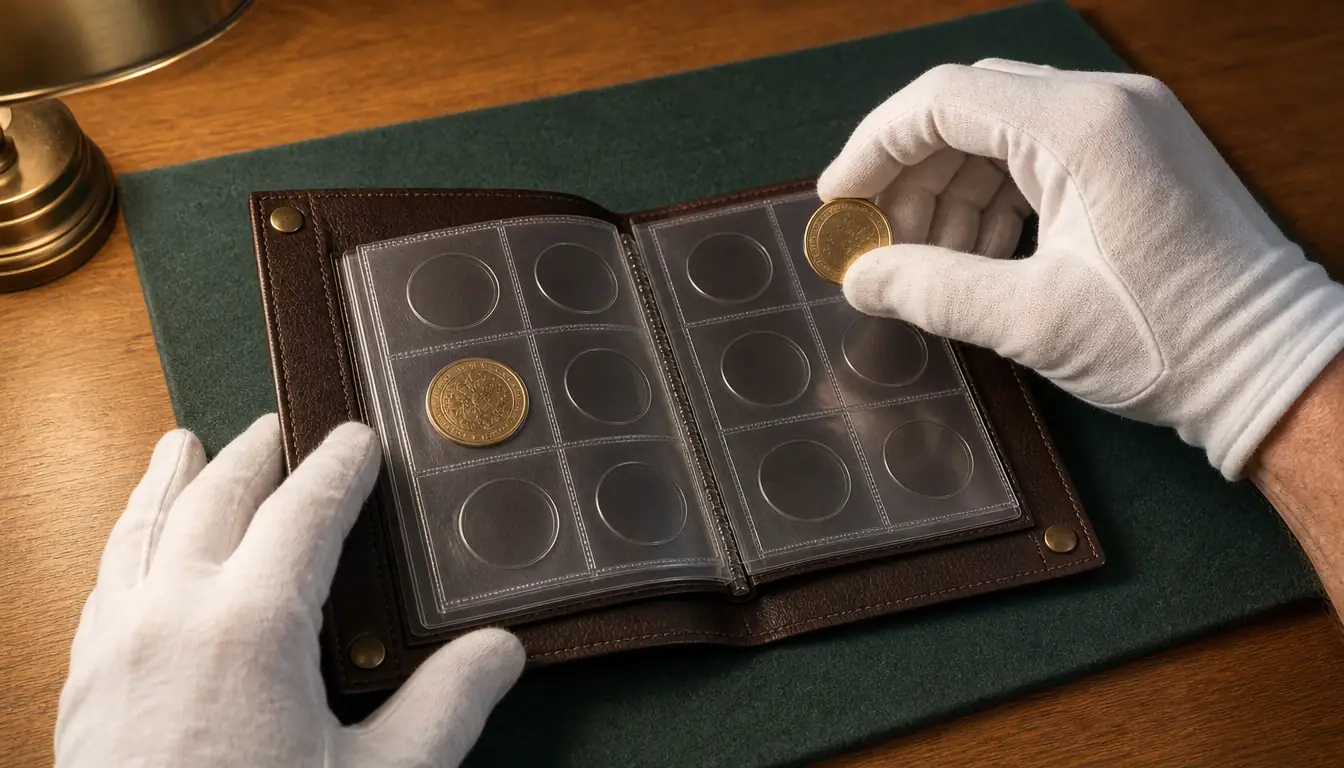
Protection is where the album earns its place, and it is the row I will not argue about. In a good album the coin sits down inside a recessed hole, below the surface of the page, so nothing rubs the face when the page above it closes. In a folder the coin sits in a cut opening with the board pressed flat against it, and the reverse of the coin rests against cardboard you cannot see without taking the coin out. For circulated cents that difference is small. For an uncirculated roll that came out of a bank wrapper, I would not put those coins in a folder and leave them there for twenty years.
Handling is the second win, and it is the one that costs people coins. To get a coin out of an album page you push from behind through the hole, or lift the page and tip it out. To get a coin out of a folder you bend the fold back and pry. That fold is holding the coin under tension against the board, and the tension is the whole point, so removing the coin means working against the thing that protects it. Do that in a hurry on a cent with a decent rim and you leave a mark you cannot take back. I did it twice in my thirties. I keep those two cents in a flip to remind myself.
An album also grows in a way a folder cannot. Pages come per series, so a nickel set, a quarter set and a cent set can all live in one binder in whatever order makes sense to you, with a slipcase over the lot. I collect four series. One binder in a slipcase on the shelf is a tidier answer than four folders stacked in a shoebox, and it is the reason my Morgan and Peace dollars have a home at all instead of a canvas bag.
The Folder That Ends the Shopping for the 1975 to 2013 Run
One item, every date and mint mark from 1975 through 2013, and an opening for every coin you still need. If the set is still being built, this is where it gets built.
Amazon Check Today's Price on Amazon →What the Whitman Folder Actually Is
It is a folded board folder with cut openings sized for Lincoln cents, with the date and mint mark printed under each opening, covering 1975 through 2013. That is the entire product, and it is enough. The listing gives the dimensions as 7.75 by 5.93 by 0.28 inches, a weight of 3.53 ounces, three pages, and a 1987 publication date under the Whitman-CDN imprint. The reading age is listed as 14 and up, which is a publishing formality rather than a comment on who can use it. A ten-year-old can use it. My grandson does, every Sunday, with clean hands and a reminder to hold coins by the edges.
What it is not: it is not a display piece, it is not airtight, and it is not a long-term home for anything you would call uncirculated. It is built to be used and handled and opened, and everything about it, from the weight to the fold, says so.
The date range is worth a note before you buy. This is Collection #3 in the Whitman line, so it covers the later run and not the early dates. If your coffee can still has wheat pennies in it, this folder will not hold them and you will need one of the earlier Lincoln folders in the same line. Check which run you actually have first, because the most common complaint I hear at club is a fellow who ordered the wrong folder in the right line and only found out when it arrived.
What a Full Album Actually Is
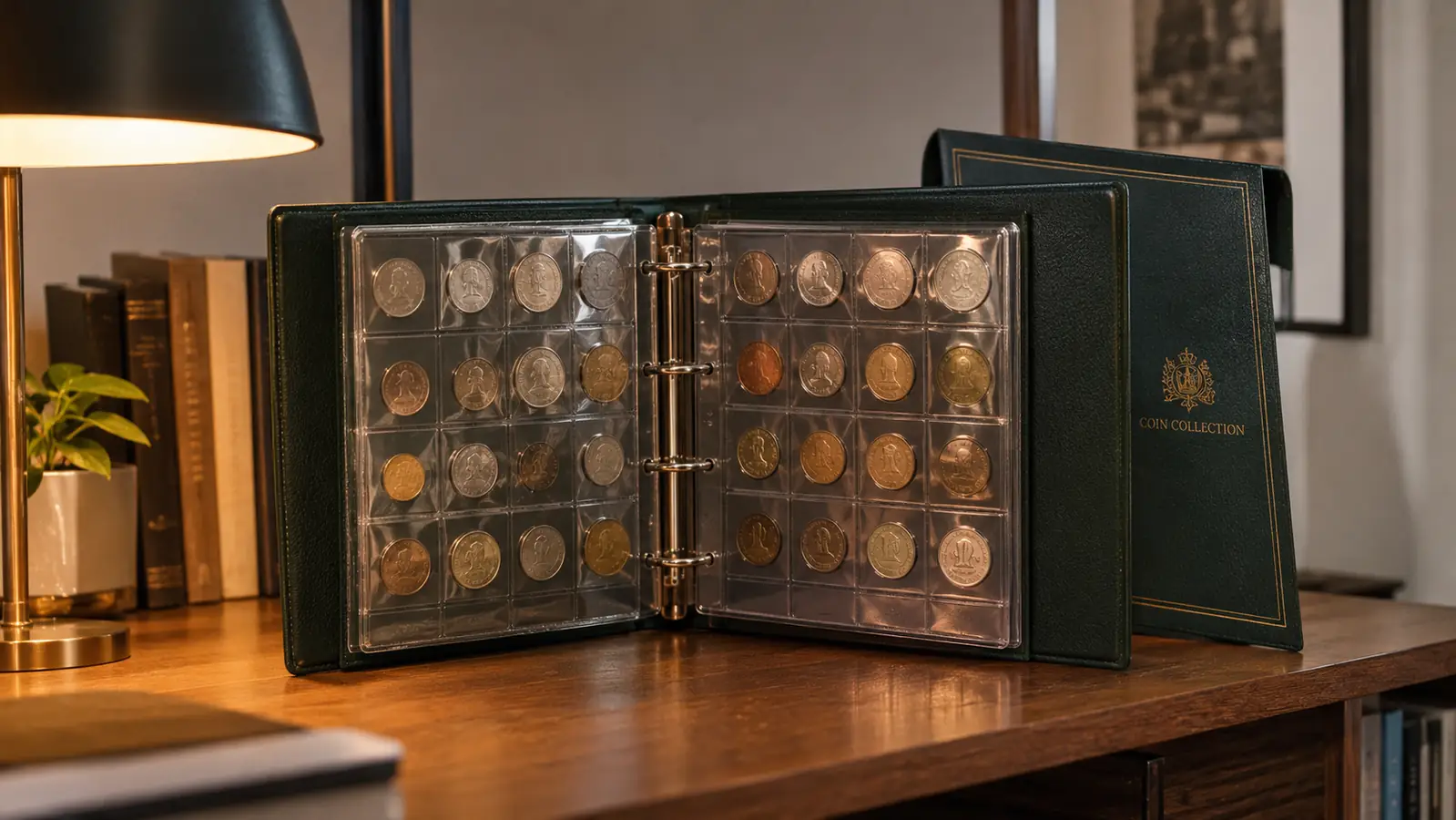
An album is a binder plus a set of pages. You buy the binder once, then buy pages per series, and the pages carry holes punched for the coins with the date and mint printed beside them. The coin sits recessed below the page surface. Most binders take a slipcase, and the pages lift out and can be rearranged, which matters if you are the sort who reorganizes when a better coin comes along.
The tradeoff is that you are buying a system rather than a product. Pages for a given series run in and out of stock, and if you start an album before you have decided which series you are serious about, you end up holding pages for sets you never finished. I have a binder with three unfinished series in it. I am not proud of that. A folder would have kept me honest, one run at a time, all the way to the end.
The folder is 7.75 by 5.93 inches and weighs 3.53 ounces. It lives on the desk with the felt pad, not on a shelf behind glass, and that is exactly why the set got finished.
The Handling Question, Which Is Really the Whole Question
Nearly every difference between these two comes down to how the coin is held. Folders hold coins by tension against a board. Albums hold coins in a recessed hole. If you handle coins by the edges, wear nitrile gloves for anything uncirculated, and keep a felt pad under your hands, a folder is fine for circulated coins and perfectly adequate for most of what a beginner will own. If you are buying uncirculated rolls, or you inherited a set that has sat undisturbed since the 1970s, the folder is the wrong last stop.
There is a practical middle that I use and recommend. Build the set in the folder while you are still hunting. When the run is done and you have decided you are keeping it, move the coins into album pages over the felt pad, one coin at a time, oldest to newest. Then leave the empty folder on the shelf as a record of what the set looked like while it was being built. It sounds fussy. It takes one evening. It also keeps the heavy handling years off the coins, which are the years when the wear actually happens.
One more thing on handling that nobody mentions. A folder that gets opened every week gets opened with thumbs on the fold, and after a few years the fold softens. The coin still sits there, but the tension that held it is gone and the coin starts to shift when you carry the folder to a meeting. An album page does not develop that problem because there is no fold to wear out. It is a small thing until it happens to a set you have been working on for six years.
What I Liked
- One item covers every date and mint mark from 1975 through 2013
- 7.75 by 5.93 by 0.28 inches and 3.53 ounces, small enough to leave on the desk
- Nothing on it can break, jam or come apart
- Every empty hole is visible at a glance, so your want list writes itself
- Cheap and simple enough to replace without a second thought
Where It Falls Short
- Only the obverse shows, the reverse sits against cardboard
- Coins rest under tension from the fold, which is not where an uncirculated piece belongs
- A hurried lift can mark a rim, and the fold softens with years of use
- One folder, one date run, no room to add another series
- Does not hold the earlier Lincoln dates, so wheat pennies need a second folder
Who Should Buy Which
Buy the Whitman folder if you are starting the 1975 to 2013 Lincoln run, if you sort pocket change on a Sunday afternoon, if you want one item that covers the whole date range today, or if the coins you are housing are circulated and will stay circulated. That is most of the people reading this. The folder is the right first purchase, and for a lot of collectors it stays the right purchase for years.
Buy the album instead if the run is already finished, if you are holding uncirculated pieces, if you collect more than one series and want them in one place, or if the set came to you already built and you have no intention of handling it often. And if you are somewhere in between, buy the folder now and plan on the album later. That is not a dodge. It is the order most collectors I know actually did it in, myself included, and it means the coins only get moved once.
Build the Run in the Folder, Then Decide About the Album
Start with the item that covers 1975 through 2013 in one go, and put the coins where you can see them and reach them while the set is still growing.
Amazon Check Today's Price on Amazon →