
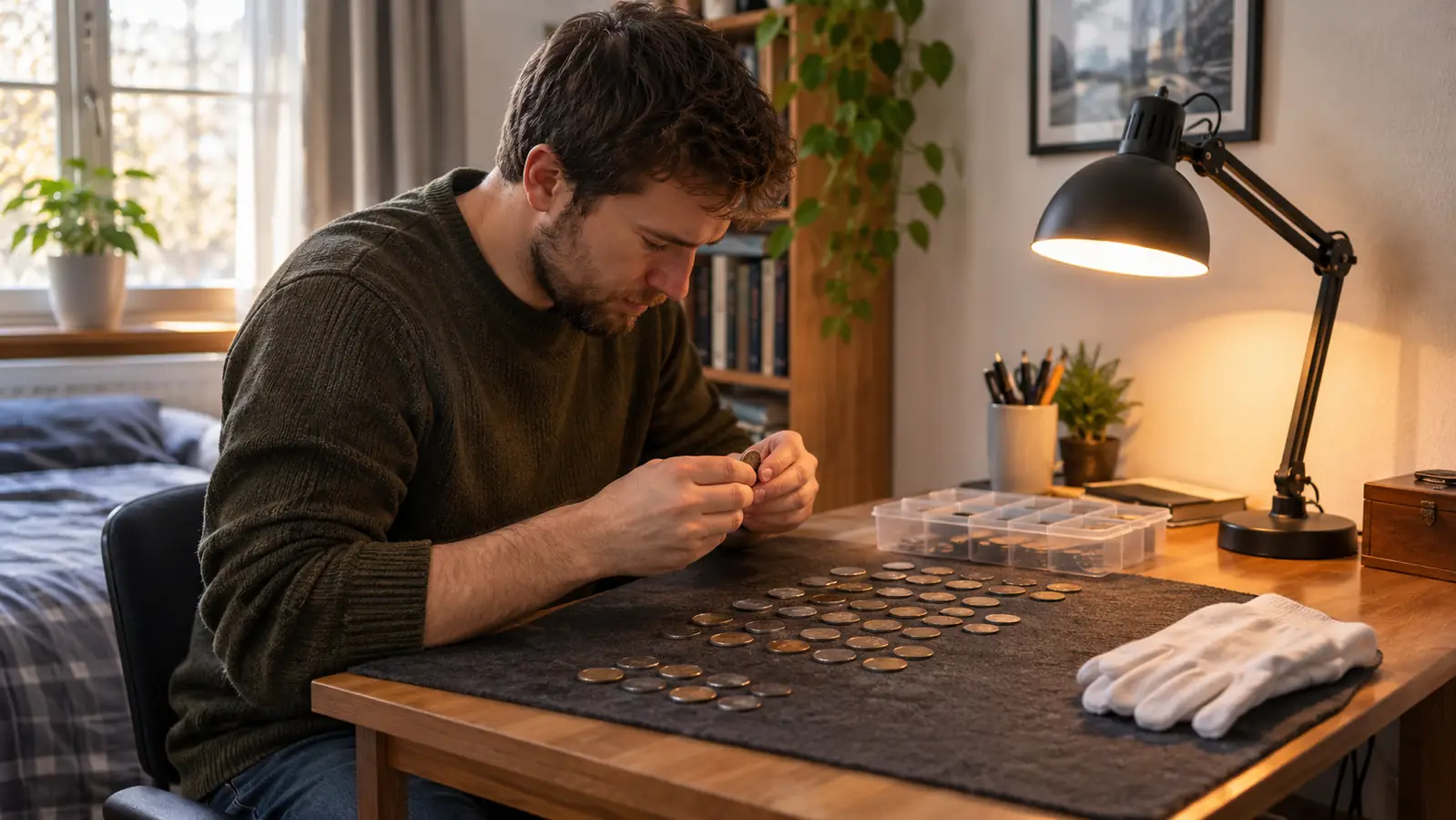
I dropped a 1909 VDB Lincoln cent on the felt pad in my coin room because my thumb was sweating and I was holding it with a bare hand like a man who had learned nothing in nine years of collecting. Nothing happened to that coin. That is not the point. The point is that for years I had been telling myself cotton gloves were for dealers and museum people, not for a retired shop teacher in Toledo with a folding oak desk, a desk lamp, and a plastic tray. Then I bought a bag of Zealor cotton gloves, mostly to stop arguing with myself, and I have now used that same bag for a year.
This is what a year of actually wearing them looks like. Not the listing photos, not the claims on the package. The wear pattern, the laundry, the fit on a 67-year-old hand, the moments they helped, and the handful of moments they got in the way. If you handle uncirculated coins or you sort pocket change on the kitchen table and you have been putting off the glove question, this is the review I wish somebody had handed me in plain language.
The Quick Verdict
Cheap, washable, and good enough for daily coin handling. Buy them for volume, not for a single prized piece. Sizing runs roomy and the fingertips wear through first.
Amazon Check Today's Price →The gloves that ended my bare-hands habit
Twelve pairs, cotton and polyester, size large at 9.2 inches long, washable in a mesh bag. I keep one pair folded by the tray and one in the truck for shows.
Amazon Check Today's Price on Amazon →How I've Used Them for a Year
My coin room is a spare bedroom with a folding oak desk, a desk lamp, a dark felt pad, and a small plastic tray. That is the whole setup. Most of what I handle is Lincoln cents, Jefferson nickels, Washington quarters, and a modest run of Morgan and Peace silver dollars that I am careful with but do not treat like glass. The Zealor gloves live folded on the corner of the desk, and I put them on for anything that is uncirculated or anything I am about to put into a holder.
The heaviest use is Sunday afternoons. My grandson Tyler is ten, and he sorts pocket change with me on the kitchen table. He gets the circulated pile and the plastic tray. I get anything that looks like it came out of a roll and never circulated, and that is where the Zealor gloves come out. A year of Sundays, plus a monthly local coin club meeting, plus two regional shows, is a real workload for a piece of cloth that costs less than a sandwich. I have worn through one pair completely and I am partway through a second.
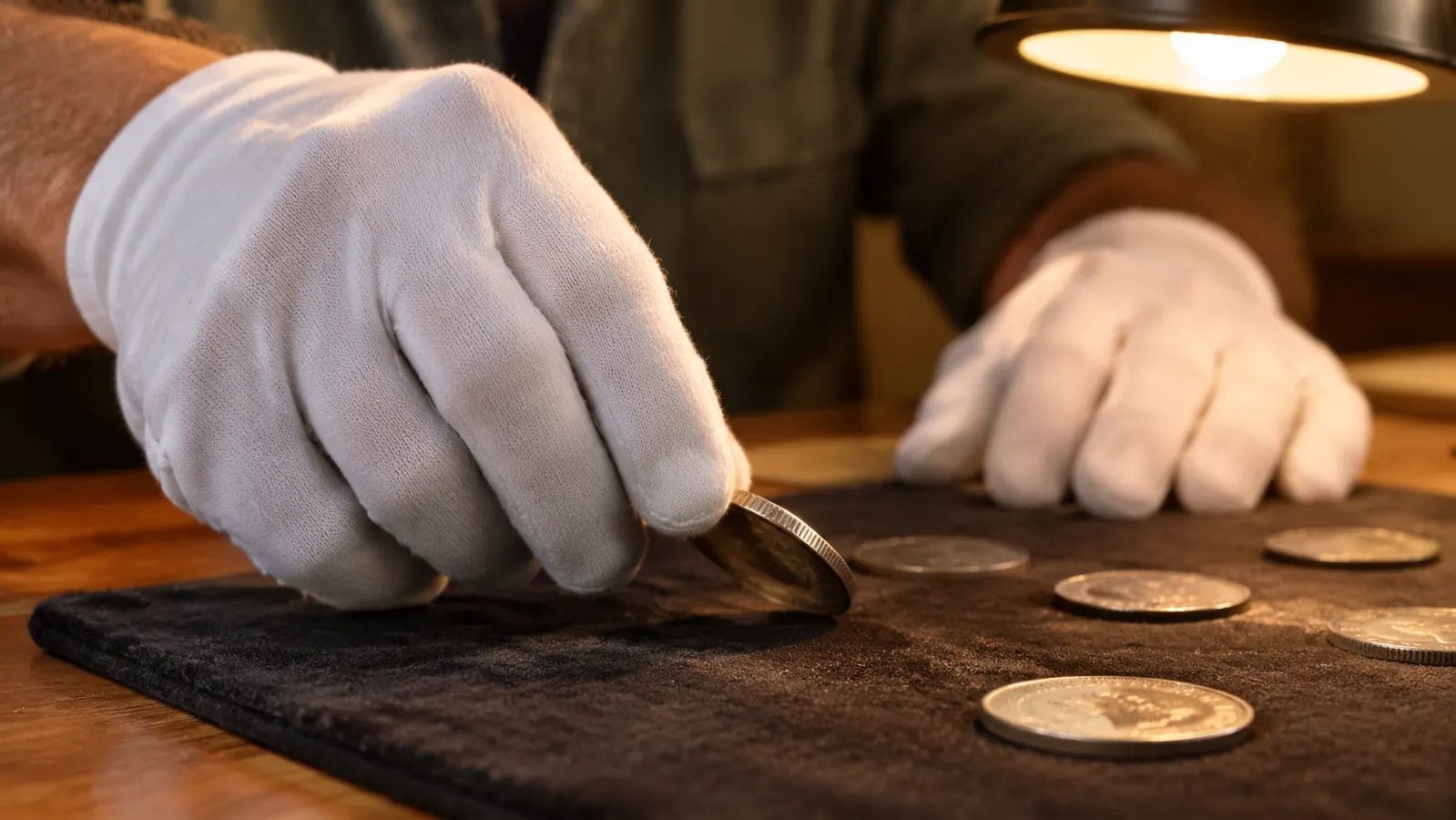
The first pair came out of the bag on a Saturday in late September, the day before a club meeting, and I remember it because I spent twenty minutes on the Friday night before sorting a roll of 1964 Kennedy halves into a tray and kept the gloves on the whole time. By the end of that evening my hands were warm and I had decided the whole thing was fussy. Then I looked at the tray. No thumbprints on any of them. I had been leaving faint smudges on uncirculated silver for years and simply not looking closely enough under the lamp to notice. That is the moment the gloves stopped being a costume and became part of the desk, same as the lamp and the felt pad.
I also use them for things that have nothing to do with coins, which surprised me. Handling a silver dollar is one job. Wiping down the glass on a display case, holding a photograph by the edges while I put it in an album, dusting the top of a bookcase in the coin room. The listing puts archiving, inspection, cleaning and crafting on the recommended uses, and after a year I understand why the list is that long. They are just thin cloth gloves. The value is in having twelve pairs of them, so there is always a clean one within reach.
What 12 Pairs Actually Gets You
The number on the package is the whole reason this product works for a collector. You get 12 pairs, 24 gloves total, and that changes how you use them. When you own one pair of cotton gloves, you baby them. You wear them past the point where they are doing anything, you feel guilty about the grubby fingertips, and you keep them in a drawer because washing one pair seems like a waste of a load.
With twelve Zealor pairs, the math goes the other way. I keep one pair folded by the felt pad. One pair lives in the pocket of the canvas bag I take to club meetings. One pair is in the glovebox of the truck for shows. The rest sit in a drawer in the coin room. When a pair gets dirty enough that I would not want it near an uncirculated coin, it goes into the mesh bag and eventually into the wash, and I do not think about it again for a month.
I tried the one-pair approach first, and I want to be specific about why it failed, because it failed in a way the package does not advertise. Back before this bag I had a single pair of cotton gloves from a craft store, and I wore them for about three months. The problem was not that they wore out. The problem was that I stopped trusting them. After enough Sundays the fingertips had gone grey and stiff, and I no longer knew what was on them. So I would take them off mid-session, handle a nice 1938 nickel bare-handed, and put them back on. I was wearing gloves roughly half the time and telling myself I was being careful. Twelve pairs fixed that by removing the decision. If a pair is questionable, it goes in the bag and I put on a fresh one without a second thought.
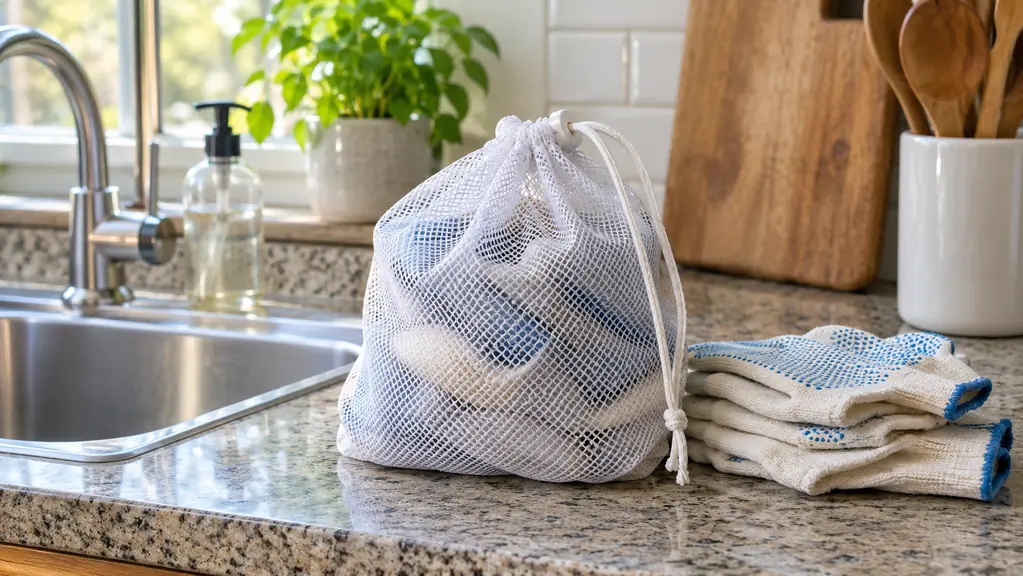
Washing is simple enough. The manufacturer says to put them in a mesh bag and launder them, and that is what I do, on a normal cycle with the rest of a light load. They come out soft and they have not come apart at the seams. What they do not do is come out looking new. After three or four washes they soften up and start to look tired, and the fingertips thin out. Twelve pairs is roughly a year of steady use for me, which is the honest way to describe it, because the alternative is pretending one pair lasts forever and it does not.
The pair I wore every Sunday for eleven months wore through at the right index fingertip first. I put it in the rag bin and did not think about it again, because there were eleven more in the bag.
Fit, Feel, and What the Fabric Does to Your Fingers
The Zealor gloves are size large, 9.2 inches from the base of the wrist to the tip of the middle finger, 3.4 inches across the palm, and the fabric is about 0.15 of an inch thick. That thickness number sounds small, and it is, but the practical effect is that I can still feel a reeded edge through the cloth. I can pick a single cent off the felt pad without pinching it against the surface first. For coin work that matters more than anything else on the spec sheet, because a glove that turns your fingers into sausages just means you drop things more slowly.
On my hands they run a touch roomy. I wear a large work glove and these fit me with a little slack across the palm and maybe a quarter inch too much at the fingertips. That slack is not a problem when I am lifting a coin by its rim. It becomes a problem when I am trying to separate two stuck-together nickels, because the extra cloth bunches at the tips and I lose the fine control I would have bare-handed. My wife Carol has smaller hands, and when she tried a pair they were noticeably loose on her, which is what one size fits most means in practice. It means they fit most people adequately.
The fabric is cotton and polyester, lightweight, and it does not breathe quite like pure cotton, so on a warm afternoon my hands get a little damp inside them. Not a dealbreaker, but worth knowing if you run hot. They are not waterproof, obviously, and I would not wear them near a drink on the desk. The other thing I noticed in the first month is that a new pair sheds a few loose fibers. Shake them out once before the first use and that stops. I made the mistake of skipping that shake on pair number four and spent five minutes with a soft brush lifting fibers off a felt pad, which is five minutes I will not get back.
The Limits I Ran Into
The biggest one is grip on smooth surfaces. Cloth against a coin is fine. Cloth against the outside of a hard plastic capsule is slick, and I have fumbled a capsule across the desk more than once. That started on a Tuesday night in February with a Morgan dollar in a snap-together holder. I got two inches of air under it and it landed flat on the felt, which was luck, not skill. My fix was simple. I take the glove off to handle the capsule and put it back on to handle the coin inside it. That sounds fussy, but it costs two seconds and it stopped me from launching a silver dollar across the coin room.
The second is that these are not a substitute for nitrile when you want a barrier. Cotton absorbs. If your hands are damp or you have been eating or you have lotion on, the cloth picks that up and holds it against whatever you are touching. For anything uncirculated that I genuinely care about, I wash and dry my hands first, then put the cotton on. The glove is a second layer, not the only one. Anyone who tells you a cloth glove alone makes a coin safe to handle is skipping a step.
The third is the wear pattern. Fingertips go first, always the right index finger for me. There is no seam failure, no shrinking, no discoloration that will not wash out, just a slow thinning until one Sunday the cloth gives and your finger comes through. That is the whole lifecycle. It is not a defect. It is what thin cotton does when you use it every week for a year. Pair one went at right around the eleven-month mark. Pair two is at about four months now and there is already a faint soft spot forming in the same place, so I expect the same result on the same schedule, and I have ten more pairs in the drawer to absorb it.
What I Liked
- Twelve pairs means you always have a clean pair within reach, which is the actual reason this works
- Washable in a mesh bag and they come through the laundry with the seams intact
- Thin enough at 0.15 inches that you can still feel a reeded edge and lift a coin by its rim
- Size large at 9.2 inches fits an average adult hand with a little slack
- Useful well beyond coins, including photographs, glass, inspection and light crafting
Where It Falls Short
- Sizing runs roomy, so smaller hands will find them loose at the fingertips
- Slick on smooth plastic capsules, which cost me a fumble or two early on
- New pairs shed a few loose fibers until you shake them out
- Cotton and polyester hold moisture, so warm hands get damp on long sessions
- Fingertips wear through after roughly a year of weekly use, one pair at a time
Who This Is For
If you handle coins in any volume, this is the easy version of the answer. Someone who sorts rolls, who goes to a monthly club meeting, who puts together albums, who wants a clean glove by the desk without thinking about it. It also suits anybody doing archival work with paper, photographs, or documents, because the same thin cloth that lets you feel a coin edge lets you feel a page corner. And it suits the person who has been handling uncirculated coins bare-handed and knows better. Twelve pairs removes the excuse, because the reason people skip gloves is that they only own one pair and it is never clean when they need it.
It suits a ten-year-old sorting wheat cents on the kitchen table, too, with a caveat. Tyler wears a pair when I hand him a penny that looks like it never circulated, and they are enormous on him, so he mostly uses them as a bag to carry things around in. That is fine by me. It costs nothing, it keeps his fingers off the coin, and it establishes the habit early, which is more than anyone did for me at ten. I would rather he sees the glove sitting there than hears me lecture about it.
Who Should Skip It
If you are handling one specific high-value coin and you want the best possible barrier, go get nitrile and keep these as a backup. If your hands are on the small side, expect to fold the fingertips back or live with the slack. And if you are the sort of collector who wants a single beautiful pair of gloves that lasts a decade, this is not that product and it is not trying to be. This is a working bag of twelve, and its whole argument is that you use them freely because there are more where those came from.
The other person who should skip it is the one who wants gloves to make a coin worth more. They do not. Nothing in this bag will improve a coin, change a grade, or protect you from bad judgment about what to buy. All a glove does is keep oil and salt off a surface that has been clean for eighty years. That is a small thing and it is the entire thing. If you want a shortcut to value, this is not the aisle to be standing in.
A year in, I am still working through the same bag
One pair by the felt pad, one in the show bag, ten in the drawer. Cotton and polyester, size large, twelve pairs to a pack, washable in a mesh bag.
Amazon Check Today's Price on Amazon →