
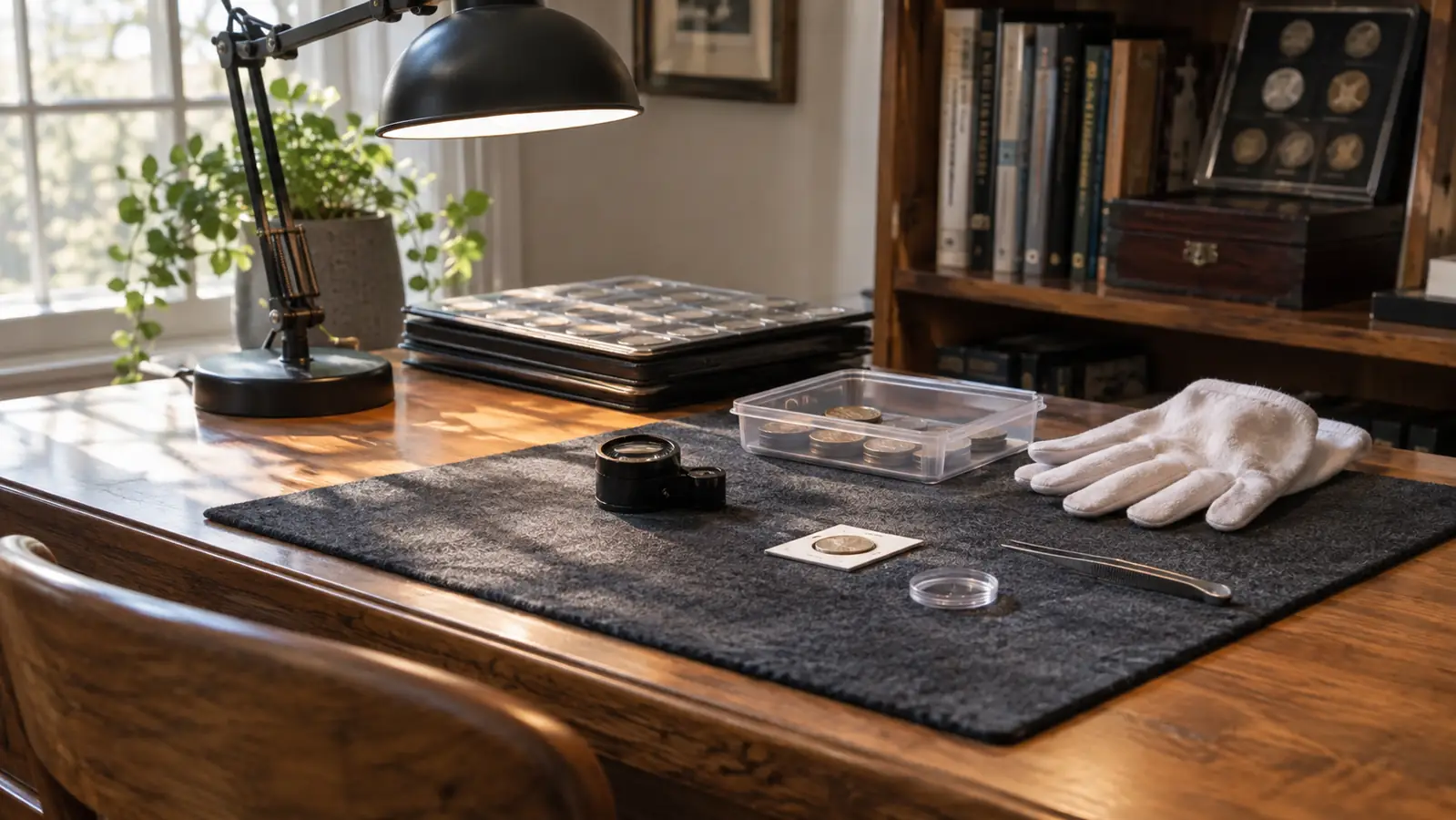
Last March I nearly put a thumbprint on a proof Washington quarter. Not a rare coin, not a key date, just a 1968-S proof I had set aside because the fields looked clean under my desk lamp. I had it by the edges, turned to answer the phone, and my bare thumb came down flat on the mirror surface. I saw the smudge before I set it down. I knew better. I had known better for fifty years.
A thumbprint is not just a mark. It is oil and salt from your skin sitting on a surface that was struck to be looked at, not touched. On a proof coin the field is the whole point. You cannot wipe it off with your shirt and make it right. I tried a microfiber cloth, gently, the way I had been taught. The smudge went from sharp to hazy. That was worse. I put the coin back in its flip and sat there feeling like a man who had backed over his own mailbox.
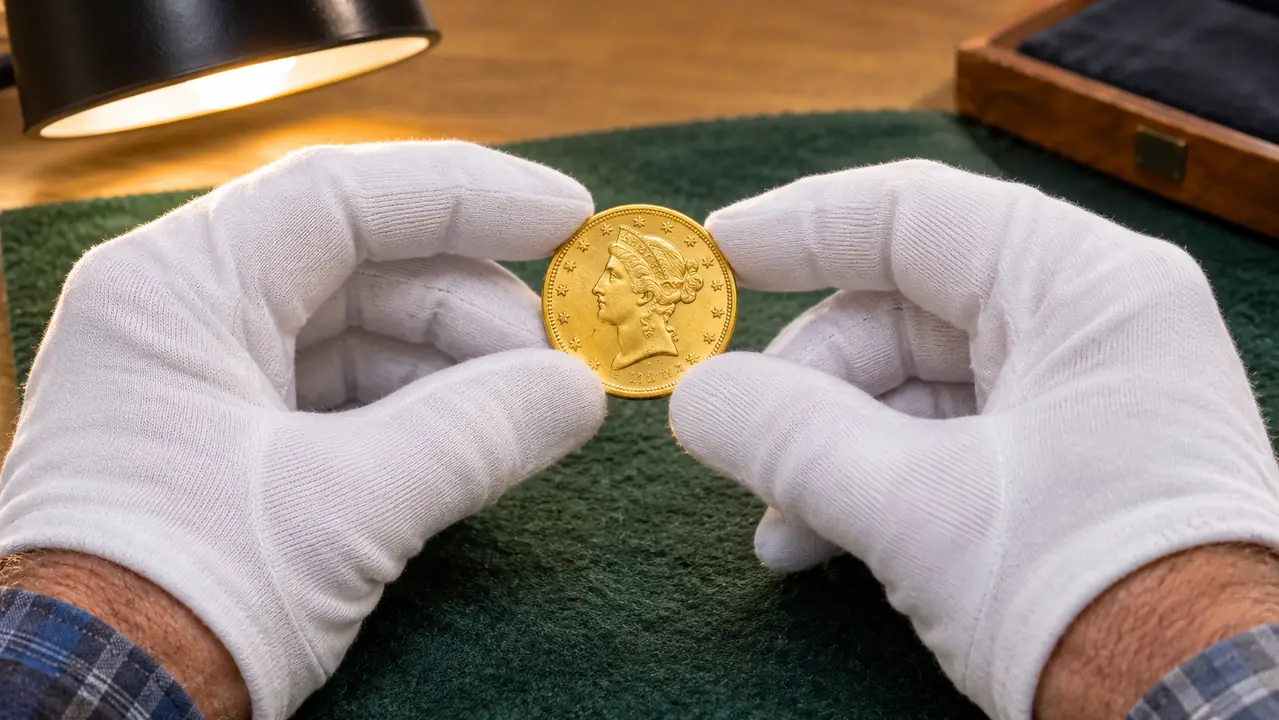
That afternoon I ordered a pack of Zealor cotton gloves. Twelve pairs in a bag, the kind of thing I would have called unnecessary twenty years ago. I am 67, retired from teaching shop, and I have handled tools my whole life. I thought my hands were careful. They are not careful enough for a proof field. No hands are. The gloves were not a collectible purchase. They were a handling purchase, and there is a difference.
The Zealor gloves are cotton and polyester, lightweight, and they come in a large size that measures 9.2 inches long and 3.4 inches wide. The set is 12 pairs, 24 pieces. The listing says one size fits most, and on my hands that held true. They are washable and reusable. I put a pair through a mesh laundry bag after a sorting session and they came out ready for the next one. I am not going to tell you they are fancy. They are plain work gloves for delicate work.
Here is what changed. I stopped thinking about the coin and started thinking about the surface. When I sit at the folding oak desk in my coin room, the gloves go on before the flip comes open. Not after. Before. That one order of operations has kept every thumbprint off every proof I have handled since.
The gloves did not make the coin better. They kept me from making it worse.
Keep Your Fingers Off the Field
A proof coin does not need help. It needs hands that are not bare. Zealor cotton gloves are the simple barrier I keep on the desk.
Amazon Check Today's Price on Amazon →My grandson Tyler is ten. He sorts pocket change with me on Sunday afternoons, mostly looking for wheat cents and any nickel that looks older than he is. For a while he watched me put on the gloves and asked why I did not just wash my hands. I told him washing helps and it is not enough. Soap strips some oil. It does not stop the next half hour of handling from putting new oil back on. The glove is not a cleaning step. It is a barrier that stays there.
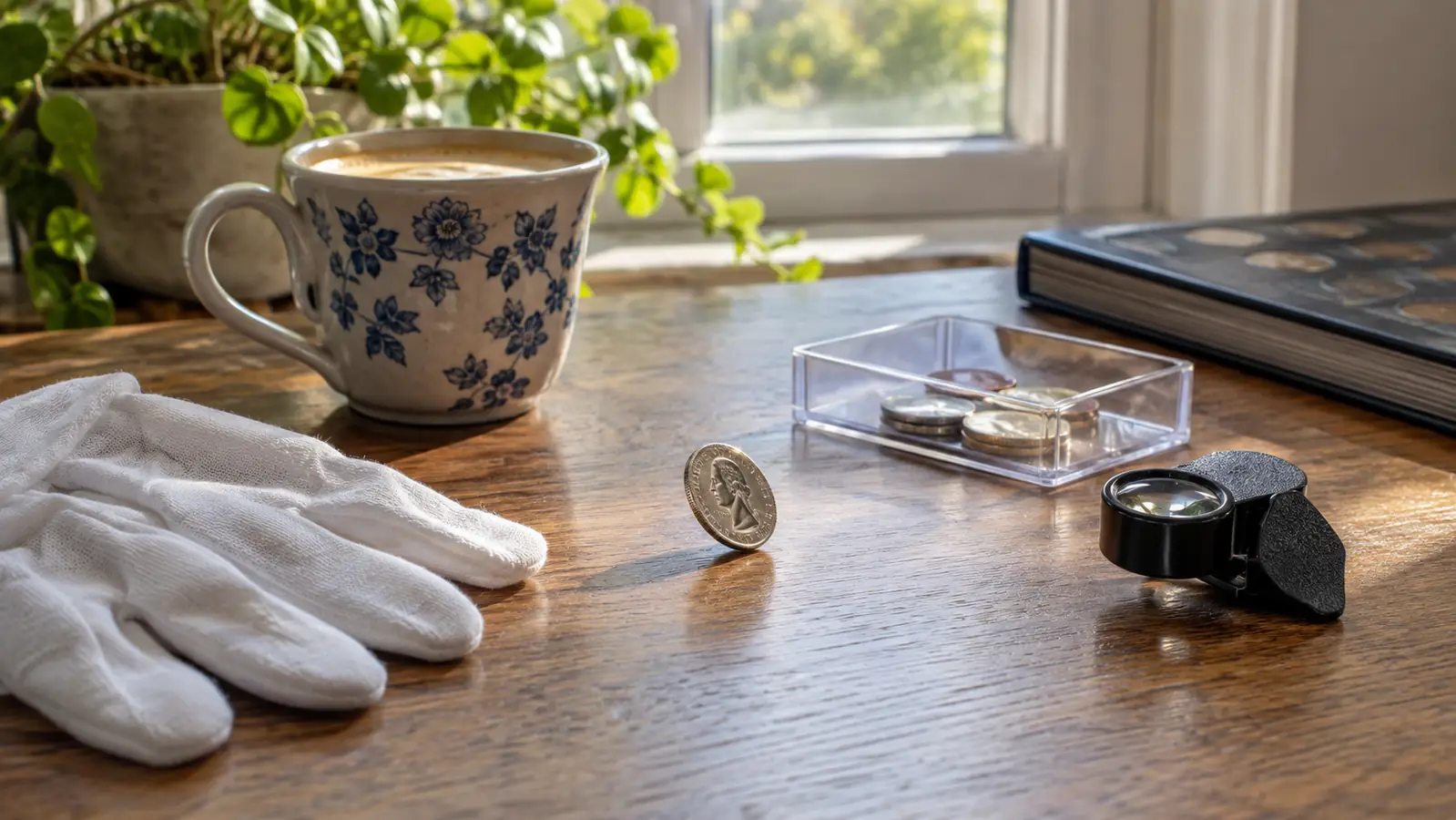
Tyler wears a pair now when we go through the uncirculated stuff. They are too big on him, which is fine. He bunches the fingers and works slowly. The point is not fit. The point is that he learns the habit before he learns the regret. I wish someone had put a pair in my hand at twelve, back when my grandfather gave me that coffee can of wheat pennies and old nickels.
I still use bare hands for circulated coins. A worn Lincoln cent that has been through a thousand pockets is not going to be hurt by my thumb. I use the Zealor gloves for anything uncirculated, anything proof, and anything I am putting in a flip for the long haul. That is the line I draw. It is not complicated. It is just a decision I make before I sit down, not after I see a smudge.
At the monthly coin club meeting I have heard every version of this argument. One fellow says gloves make him clumsy. Another says cotton can catch on a reeded edge. Both are true if you rush. I do not rush with a proof coin. I hold it by the edges, I set it on a felt pad, and I use the glove as a second skin, not as an excuse to be careless. The glove does not replace technique. It backs it up.
I keep three pairs in the coin room now. One in the desk drawer, one in the bag with the flips, and one in the kitchen where Tyler and I sort. That sounds fussy. It is not. It is the same reason I keep a pencil at every bench I ever built. If the tool is not within reach, you will do the job with your bare hands and tell yourself it will be fine. It will not be fine with a proof coin.
What I'd Tell You If We Were Sitting at My Kitchen Table
If we were sitting at my kitchen table with a cup of coffee between us, I would tell you to buy gloves before you buy another coin. Not because the gloves are valuable. Because the coin is. I would tell you to get a size that fits, keep a pair in the coin room, and wash them when they get dirty. I would tell you not to trust your hands just because they feel clean. I would tell you that a proof coin is a surface first and a piece of history second, and the surface does not forgive a thumb.
Protect the Surface, Not the Story
The story is yours to keep. The surface is the part that needs a barrier. Keep a pair of Zealor cotton gloves with your flips and use them before the coin comes out.
Amazon Check Today's Price on Amazon →