
The Favourde 300-piece cardboard coin flip assortment arrived in a box that weighed more than I expected. Fifteen ounces of cardboard does not sound like much until you pick it up. I ordered it in the spring of 2023 because I had run out of quarter flips two weeks before a club show and did not want to make a special drive across town for one small pack. What came was a compact carton, 8.66 by 5.91 by 2.2 inches, packed with six bundles of flips and a fair amount of empty space at the top. My first thought was that I had overbought. Two years later, I am not so sure.
This is not a review that calls a box of cardboard exciting. It is the review I wish I had read before I stapled a few hundred coins into place and learned a couple of things the hard way. I have put somewhere near 900 coins through this box, mostly circulated Lincoln cents and Jefferson nickels, with a smaller run of Washington quarters. What follows is the honest version. What the Favourde flips do well, where they fall short, and the two mistakes I made in the first month that cost me a handful of flips and one small mark on a common nickel.
The Quick Verdict
A plain workhorse for circulated US coins. The staples are the weak point and the size split will not match your collection evenly, but the card is stiff, it labels well in pencil, and 300 flips go a long way.
Amazon Check Today's Price →300 Flips, Six Sizes, One Box That Outlasts a Show Season
If most of what you sort is circulated cents and nickels, this is the box to keep on the shelf behind the desk. Six sizes, 50 of each, and a card stiff enough to hold a coin flat.
Amazon Check Today's Price on Amazon →How I've Used Them
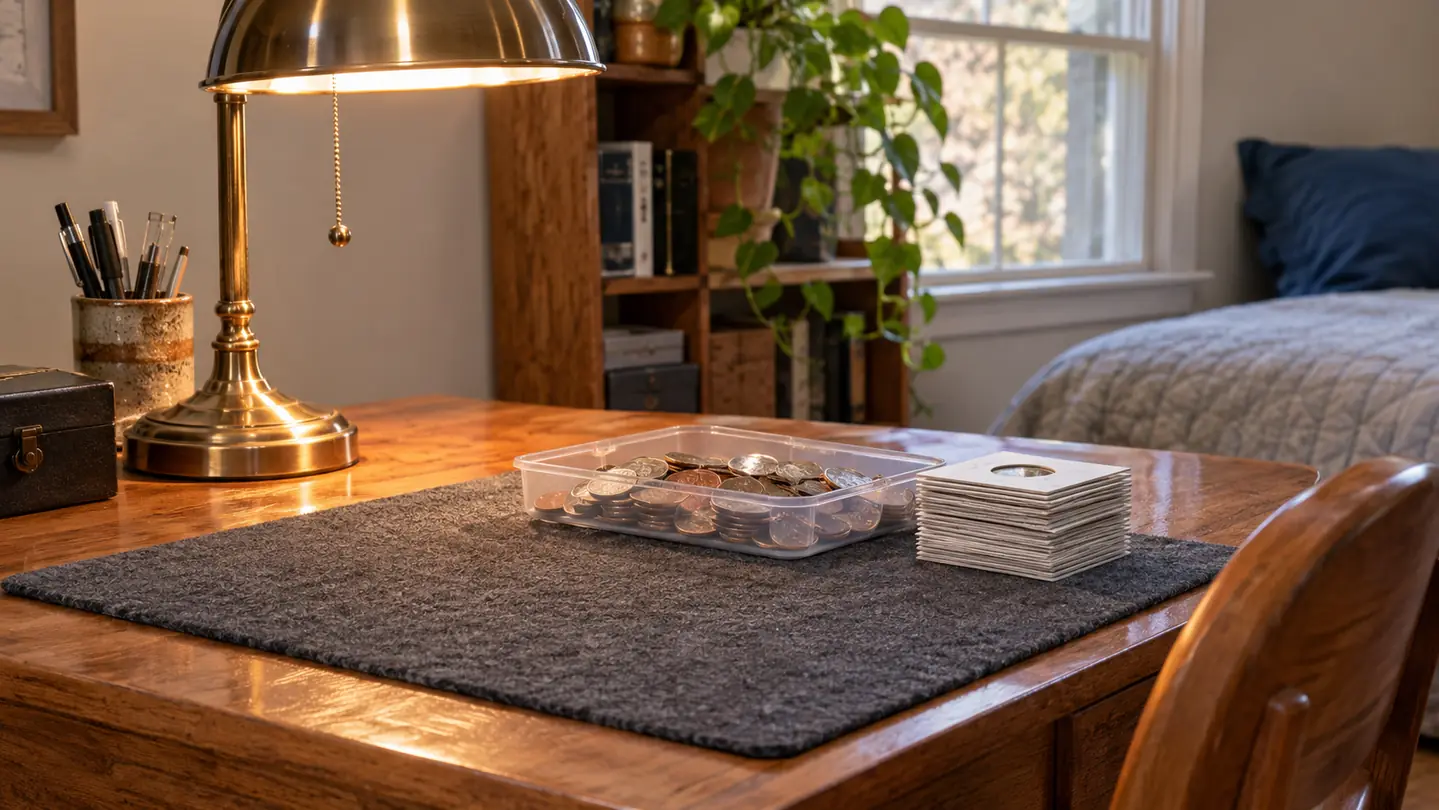
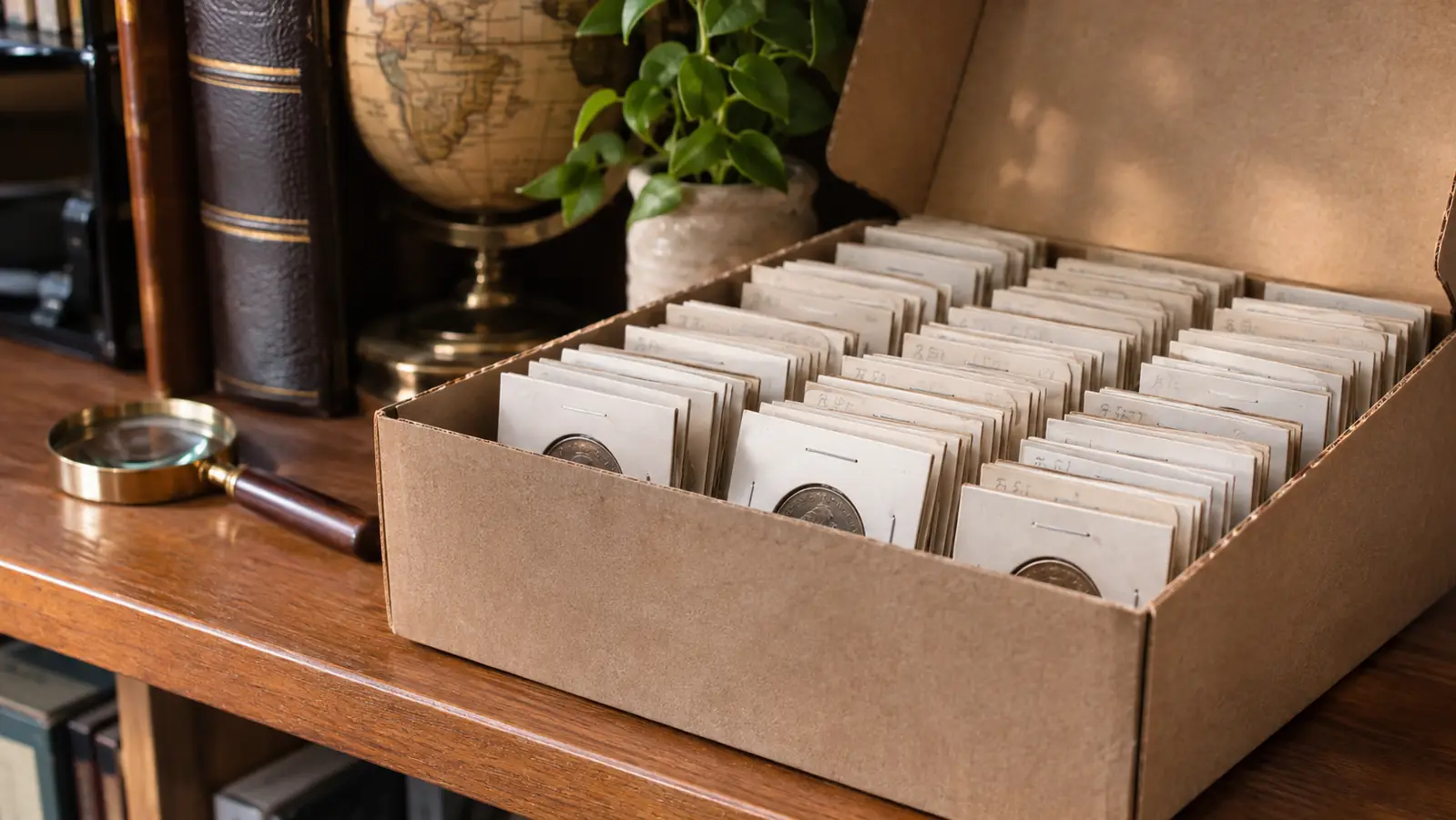
My setup is nothing special. A folding oak desk in the spare bedroom I call the coin room, a desk lamp, a felt pad, and a small plastic tray for the coins I am working through. I hold circulated coins by the edges, and I put on nitrile gloves for anything uncirculated. The finished flips live in a shoebox-sized storage box on the shelf behind the desk, standing upright like files.
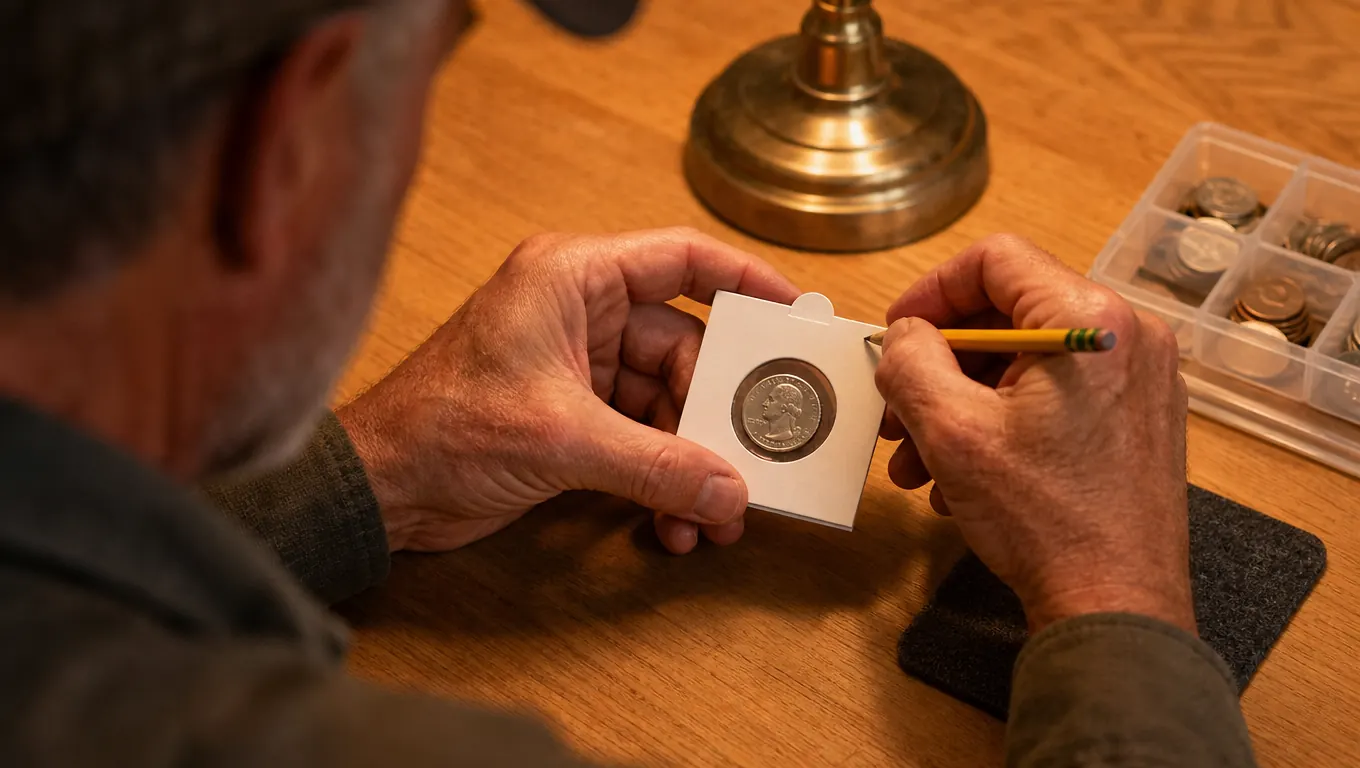
The routine is simple. I sort a roll of cents into the tray, check dates and mint marks, and write the label on the flip before the coin goes in, not after. Pencil only. Ink and marker solvents have no business anywhere near a coin's surface, and pencil rubs off clean if I get the attribution wrong. Date, mint mark, a short note on where it came from, and a grade I am willing to defend. That is the whole system.
One thing I like about this cardboard: it takes pencil well. The surface has enough tooth that a soft pencil writes a clean line instead of skating across it. I have used cheaper flips that felt slick, and labeling them was a chore. These do not have that problem. The unfolded card measures about 3.94 by 1.97 inches, so there is room above the window for a decent label without crowding the coin.
Folded, they come out at roughly 1.97 by 1.97 inches, which is the size every 2x2 storage box is built for. They drop into the slots without catching on the dividers. If you have ever fought a slightly oversized flip into a tight box, you know that is not a small thing.
A typical Saturday for me is one roll of cents and one roll of nickels, maybe 80 coins, worked through in about an hour and a half with the radio on. That is roughly four flips a minute once I am in rhythm, folding and stapling as I go. The card folds along the crease without cracking, which is more than I can say for a batch of no-name flips I bought at a show years ago. Those split at the hinge after a single fold. I have not had one Favourde flip split at the crease in two years of use.
The Staples Are the Whole Story
Here is the part I would want a friend to tell me. The cardboard is decent. The staples are the weak link, and they are not stainless. In August of 2024 I pulled a run of nickels out of the storage box after two humid Toledo summers and found small rust blooms on the staple heads of maybe a dozen flips. Nothing had reached a coin. But the rust was there, and rust does not improve with another five years of sitting in a box.
The fix is not complicated. If you are storing anything you care about for the long haul, pull the original staples and re-staple with stainless. It takes about ten seconds a flip and it is the cheapest insurance in this hobby. I now do it on anything that goes into the silver box, and I leave the original staples alone on common circulated cents where a rust bloom is an annoyance rather than a problem.
The second staple lesson is orientation. Staple so the crimped legs end up on the back of the flip and the flat side of the staple faces the coin. Do that and no metal ever sits proud over the coin's face. Get careless and staple from the front, and a leg can leave a faint line on a coin that sits in a tight box for months. I learned that on a 1941 nickel that is now a 1941 nickel with a small mark on the cheek. It is a common coin. It still annoyed me.
I also staple top and bottom now instead of once in the middle. A single staple lets the two halves hinge, and a hinged flip lets a coin migrate toward the edge of the window where it catches on the next flip in the box. Two staples cost nothing and the flip sits flat.
Removing the factory staples is easy enough. A small flathead screwdriver slid under the crimp lifts them without tearing the card, and the cardboard is stout enough to take a fresh staple in a slightly different spot. I have re-stapled a few hundred of these now and I have torn exactly one, and that one was my fault for rushing. If you are going to do this, do it over the felt pad with the coin still in the flip and your thumb on the window so nothing shifts.
Six Sizes, and You Will Run Out of One First
The box gives you 300 flips across six sizes, 50 of each. The listing names a penny and dime size and a nickel size among them, and the rest you match by eye. My advice is to sort by fit rather than by the label on the bundle. Hold the flip face down over the felt pad and see whether the coin drops. If it slides, the size is wrong. A coin should sit snug enough that it does not move when you turn the flip over, and loose enough that you are not forcing cardboard against the rim.
Fifty of each size sounds balanced. It is not balanced against a real collection. If you collect Lincoln cents, which is most of what I do, you will burn through the small size in a few months and be left with a stack of larger flips you have no use for. I ran out of the penny size in about four months of steady sorting. The nickel size lasted a year. I still have most of the largest two sizes sitting in the bottom of the box.
That is not a defect exactly. It is what happens when one box tries to serve every collector. But it does mean the 300 count is not 300 flips you will use. For me it worked out closer to 180 useful flips and 120 that will sit until I inherit somebody's quarter collection. If you collect one denomination seriously, buy a box of that size specifically and keep this assortment for the mixed material that comes in a coffee can.
One more size note, and this is not Favourde's fault. A 2x2 flip is a 2x2 flip. It will not hold a Morgan dollar or a Peace dollar, and if you try, the coin will bow the card and sit half out of the window. Dollars need 2.5 by 2.5 holders. My silver dollars live in those, in inert holders, and they never touch this box. Know which coins are 2x2 coins before you start loading.
Cardboard Is Not Archival, and That Is the Trade
I want to be straight about this because I see it argued badly on both sides. Cardboard is not an archival material. Paper and paperboard can carry sulfur compounds, and sulfur is what tones silver over time. The window film on a cardboard flip is not the same thing as an inert plastic holder, and no cardboard flip on the market is a substitute for one. Anyone who tells you otherwise is selling something.
So I do not keep my Morgan and Peace dollars in these. Those live in inert holders and I expect to leave them there. What I do keep in Favourde flips is circulated material: wheat cents, common Jefferson nickels, the Washington quarters I pull from pocket change and roll. For that material the flips are more than adequate, and the convenience of a stiff card that labels well and files in a standard box beats a softer holder I have to fight with.
If your collection is uncirculated, or anything you would hate to see tone, skip the cardboard and pay for the inert material. That is not a knock on this product. It is just what cardboard is and is not. Buying 300 cardboard flips for a run of uncirculated silver is using the wrong tool, and no review is going to change the chemistry.
The coin room itself matters as much as the holder. I run a small dehumidifier in the summer and keep the storage box on a shelf away from the outside wall. That is not a scientific setup, and I am not going to pretend it is. It is what a retired shop teacher does with a spare bedroom and a sixty dollar dehumidifier. It has kept my cardboard from going soft and it is part of why the rust bloom I found was small.
Two Years In: What Held Up
After two years and roughly 900 coins, here is the condition report. The cardboard corners on the busiest bundles have softened a little from handling. None have delaminated. The windows are still clear enough to read a date through without pulling the coin out, which matters more than I expected, because pulling a coin out is how coins get dropped.
The flips that sit in the storage box stay flat. The ones I have carried loose in a bag to club meetings have picked up bent corners. That is on me, not on Favourde. If you haul flips around, put them in a rigid box, not an envelope.
The 15-ounce package weight is a fair description of what you get. This is not a flimsy assortment and it is not a heavy archival product either. It is somewhere in the middle, which is where most of us live.
Standing them upright in the box was the right call. Flips laid flat in a stack compress over time and the bottom ones take on the weight. Standing them like files, with the labels facing up, lets me flip through a run of cents in a few seconds and pull the one I want. That is the whole reason I bothered to label them in the first place.
What I Liked
- The cardboard has enough tooth for a clean pencil label, and the unfolded 3.94 by 1.97 inch card leaves room above the window
- Folded size of about 1.97 by 1.97 inches drops into standard 2x2 storage boxes without catching
- Six sizes and 50 of each means one box covers the common circulating US coins
- Stiff enough to hold a coin flat, and the crease has not split on any flip in two years
Where It Falls Short
- The staples are plain steel, and rust blooms showed up after two humid summers in storage
- 50 per size is not a realistic split. The small size runs out long before the large ones
- Cardboard is not archival, so it is the wrong holder for uncirculated or silver coins
- No size guide in the box beyond the bundle labels, so you match coins to openings by eye
The staples are plain steel, not stainless. Two Toledo summers and a dozen of them bloomed. That is the one thing I would change about this box.
Who This Is For
This box suits a collector who works in circulated material and wants a lot of flips at once. If you sort pocket change with a grandchild on a Sunday afternoon, if you are filling a folder and want the duplicates labeled, if you are the person at club who ends up with everyone else's stray wheat cents, the Favourde assortment does the job without fuss. It also suits a beginner who does not yet know which sizes he needs, because one box gives him all six to try before he commits to a single-size order.
Tyler, my grandson, is ten and sorts nickels with me on Sundays. He can fold a flip and staple it straight, and the cardboard is forgiving enough that a crooked staple pulls out without tearing the card. That is a decent test of how stout the material is.
Who Should Skip It
Skip it if your collection is uncirculated, if you own silver you care about, or if you want a holder you can leave alone for twenty years without thinking about staples. Skip it if you collect one denomination only, because you will buy 300 flips and use a third of them, and a single-size box makes more sense. And skip it if you want an airtight seal, because cardboard does not give you one.
If you fall into one of those groups, that is not a knock on Favourde. It is a matter of matching the holder to the coin. I keep a box of these on the shelf and I will buy another when this one runs out, but I do not put everything I own in them.
The honest summary is this. I have bought flips that cost more per piece and were not meaningfully better for the job I was doing. I have bought flips that were cheaper and were genuinely worse, with creases that split and windows that wrinkled in a month. Favourde sits in the sensible middle. Buy it for circulated coins, re-staple anything that matters, and put your silver somewhere else.
The Box I Would Buy Again, With One Change
300 flips, six sizes, and a card that holds a pencil label. Plan on a stainless staple swap for anything long term and it will serve you for years.
Amazon Check Today's Price on Amazon →