
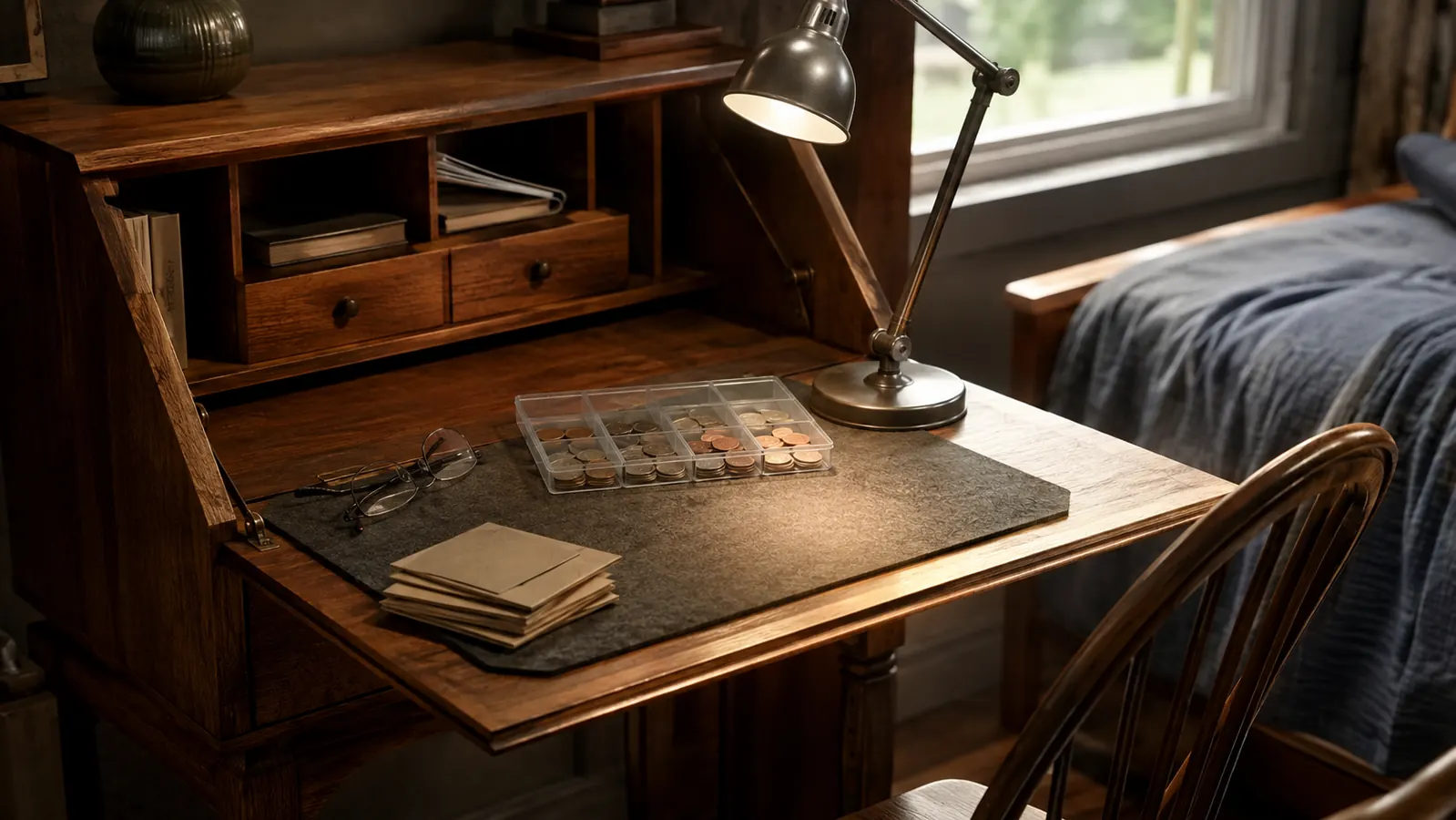
Twenty-some years ago I kept my coins in paper envelopes and old film canisters, and I learned my lesson the afternoon I dropped a shoebox on the coin room floor. Since then I have used flat cardboard 2x2 flips for nearly everything, with a small tray of plastic capsules set aside for the few coins I do not want to handle more than once. The flips I buy now are the Favourde 300 piece assortment, six sizes, fifty holders to a size. That split, flips for the bulk and capsules for the few, is the short answer to the whole comparison. The rest of this page is the reasoning, because the reasoning is what keeps you from buying the wrong thing twice.
Here is why these two products keep getting argued about as if one of them has to lose. A cardboard flip is a filing system that happens to hold a coin. A plastic capsule is a display case that happens to hold a coin. Judge a filing system by whether you can find things in it, judge a display case by whether it keeps air off the surface, and the argument mostly dissolves. Most of the collectors I sit with at the monthly club meeting use both, in different drawers, for different coins. The mistake is picking one and forcing it to do the other job.
Side by Side
| Favourde cardboard flips | Plastic capsules | |
|---|---|---|
| Coins covered out of the box | 300 holders in six sizes, fifty to a size | Sold in small packs, usually one diameter per pack |
| Writing on the holder | Flat cardboard face takes a pencil or a fine pen | Rounded shell with no flat surface to write on |
| Space in the drawer | Folds to about 1.97 x 1.97 inches and stacks flat | Rigid and thick, so one row of capsules eats the room of several flip rows |
| Air and moisture | Cardboard and a film window, but not a seal | Hard shell closes around the rim and holds still air |
| Metal near the coin | Two staples at the ends, set outside the window | No fasteners at all |
| Reusing the holder | Once the staples come out the cardboard is creased | Opens and closes again for a closer look |
| Seeing both faces | The film window shows both sides | The shell shows both sides |
| Best for | Circulated coins stored in volume | Uncirculated coins and proofs |
Where Cardboard Flips Win
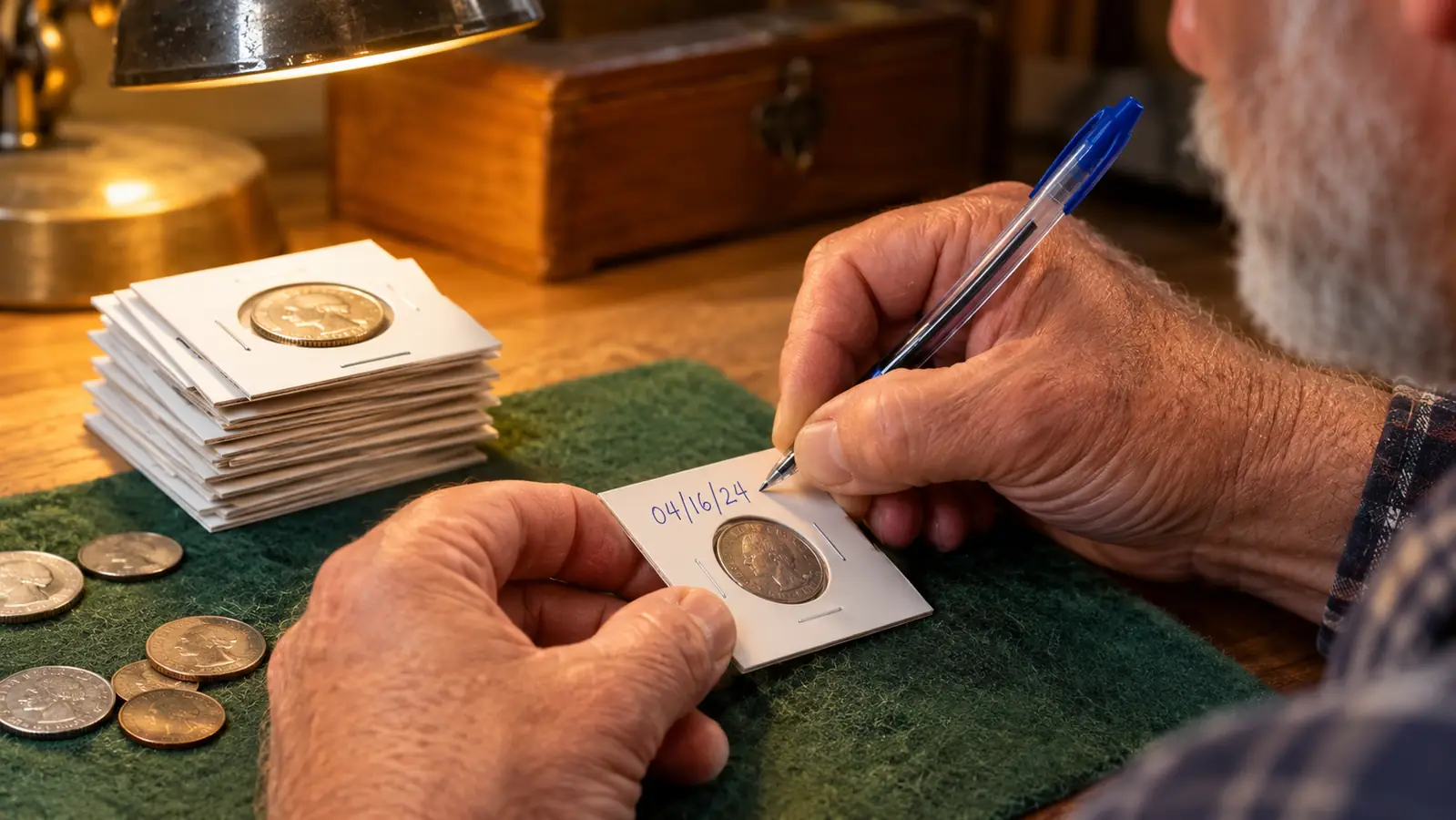
The first win is labeling, and it is not close. A flip gives you a flat cardboard face roughly 1.97 inches square, and a pencil writes on it without skipping. Date, mint mark, where it came out of, what you noticed when you found it. I write across the top and down one side and still have room left. A capsule gives you a curved shell and nothing else, so the label has to live on a tray, a sleeve, or a note in a spreadsheet, which means the label is now somewhere other than the coin. Twenty years from now, the coin with the writing on it still answers questions.
The second win is space, and the third is plain coverage. A folded flip measures about 1.97 by 1.97 inches, and 300 of them arrive in a package not much bigger than a hardback book, around 15 ounces in the hand. They stack. They stand on edge in a box with dividers. You can fit a decade of Lincoln cents into a single shoebox and still close the lid, which you cannot do with capsules without buying a shelf. The Favourde box also ends the sizing argument before it starts, because six sizes at fifty apiece means the odd nickel does not send you back out to the store on a Saturday.
Where Plastic Capsules Win
Capsules win on the thing that matters most for a small number of coins, which is the seal. A hard shell closes around the rim and the coin sits in still air. A cardboard flip is cardboard. It breathes, and it will take on moisture from the room and hold it against whatever it is touching. In a dry house with a furnace running all winter that difference does not show up in a season. Over twenty years in a damp basement it can, and I am not going to pretend otherwise just because I happen to like flips.
They also win on metal near the coin and on reuse. A flip is held shut by two staples. I set mine well outside the window and have never scratched a coin that way, but the staples are still there, fifteen years later, in the same box as the coin. A capsule has no fastener anywhere near the surface. And when you want a proper look under the lamp with the loupe, a capsule opens and closes again without damage. Unfold a stapled flip and the cardboard is creased, and you are reaching into the box for a fresh one.
Most of your coins are not display coins. Buy holders for the ones that are not.
The Favourde assortment covers the common diameters from cents and dimes on up, fifty holders to a size, and it fits the boxes and album pages you probably already own.
Amazon See the 300-Piece Assortment on Amazon →What the Favourde Assortment Actually Gives You
Three hundred holders, six sizes, fifty to a size. The listing pairs cents and dimes into a single size because the diameters are close enough to share one window, then works up from there through the rest. What that means in practice is that you stop rationing. When the holder is not a scarce resource, you stop making the small lazy decisions, like putting a clean 1930s cent in with three common ones because that was the envelope you had within reach.
The cardboard outer measures about 3.94 by 1.97 inches before you fold it and about 1.97 by 1.97 after, which is the size that standard coin boxes and 2x2 album pages are built around. That is not a small thing. The 2x2 format has been the working standard for a long time, and a holder that drops straight into the boxes and pages you already own saves you from rebuilding your whole storage setup around a new dimension. The whole package arrives at 8.66 by 5.91 by 2.2 inches, so it stores on a shelf until you need it.
One practical note on durability. The manufacturer lists a recommended age of 8 to 10 years, which tells you what the cardboard is built to survive. My grandson Tyler is 10, and he sorts pocket change with me on Sunday afternoons. He has folded and stapled a few hundred of these now using my desk stapler, and the ones he did back in September are still flat and still square. These are not delicate. Handle them like index cards, not like glass.
The one thing to watch is the window itself. A coin that is bent, or has a burr on the rim, will rub against the film every time the flip moves in a stack. I sort those into a separate pile and give them a slightly loose fit or a capsule, rather than forcing them into a window that pinches. A tight fit feels secure and is not always kind.
Three hundred holders in six sizes changes your behavior. You stop saving the good holder for a good coin.
How I Sort a Box of 300 on a Sunday
Tyler dumps the change jar onto the felt pad and I sort by diameter into the small plastic tray, one compartment per size. Cents and dimes go to the smaller holders, nickels next, quarters after that, and the half dollars and dollars get their own stack because there are never many. Then we fill, fold, staple, and stack in date order, and we write the date on the top edge rather than the middle, so that a stack of fifty reads like a filing cabinet when you riffle through it with a thumb.
The rule in this house is hands off the faces. I keep cotton gloves in the desk drawer for anything uncirculated and handle circulated coins by the rim with bare fingers only. A flip helps here more than people give it credit for, because you fill it, close it, and then never touch the coin again. The capsule tray is for the Morgans and the handful of proofs, and those get the gloves every single time, no exceptions and no shortcuts.
The Moisture Question
If you live somewhere humid, read this part twice. Cardboard takes on moisture from the air and holds it against whatever it touches, which is exactly the behavior you want in a sponge and not in a coin holder. In a dry house with forced air running all winter, I have had no trouble in nine years of steady collecting. In a basement that sweats in July, I would not store a better coin in cardboard, and I would not argue with anyone who chose capsules for the whole collection.
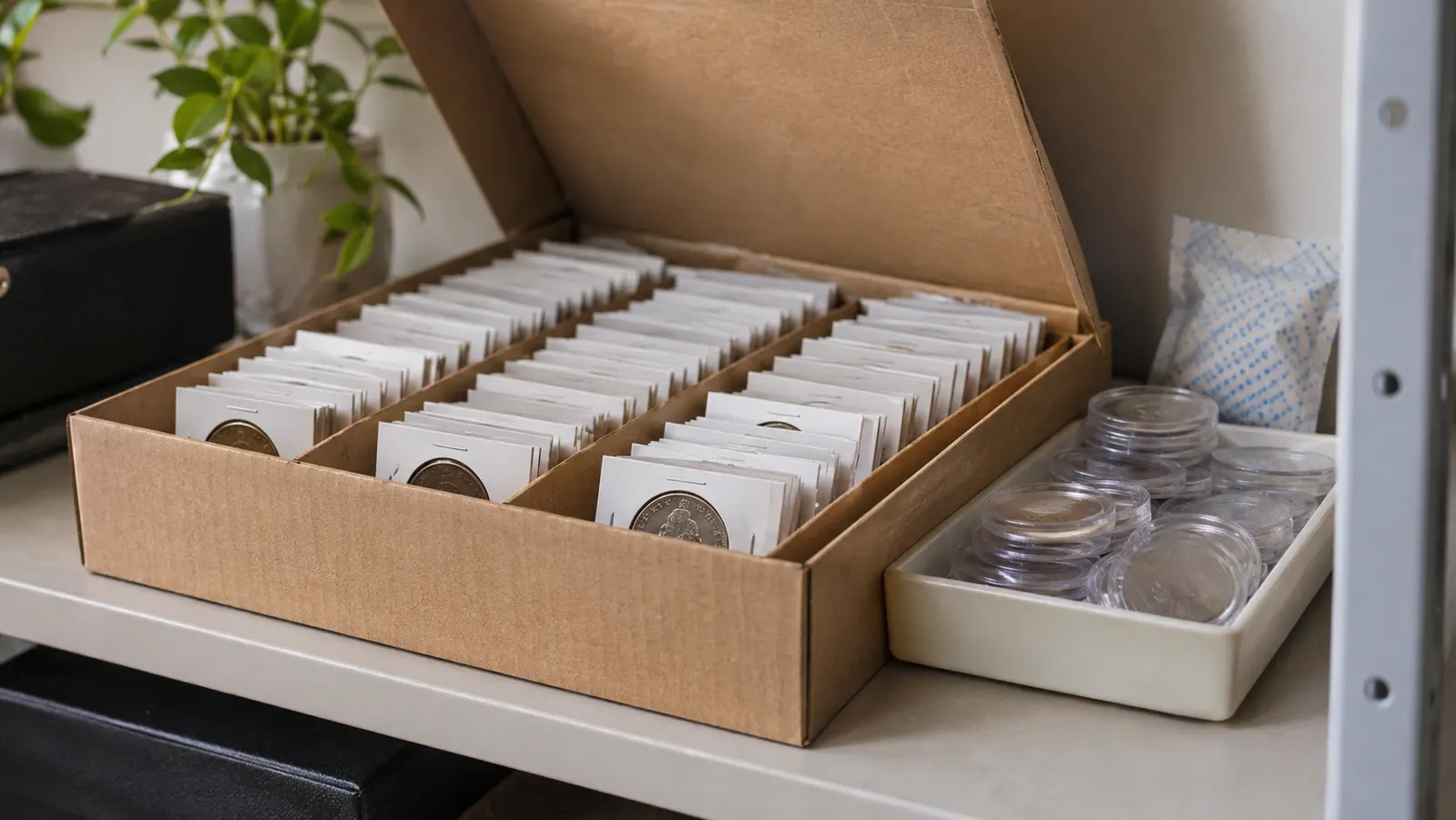
The practical middle ground is a sealed bin with a desiccant packet, opened and checked twice a year, which is a job I do in April and again in October. The bulk cents and nickels live in flips inside that bin. The better silver lives in capsules in a shallow tray on the shelf at eye level, where I can see it and where it stays out of the damp. That is not a laboratory protocol. It is just what a retired shop teacher does when he has a free Saturday and a label maker.
What Neither Holder Does
Neither holder changes what a coin is, and I want to be plain about that before anyone reads more into this than it deserves. A capsule does not turn a circulated coin into an uncirculated one. A flip does not drag a grade down. What both of them do is slow the wear that comes from hands, pockets, and the bottom of a drawer, and keep the coin where you can find it again. That is a smaller claim than some listings make. It also happens to be the true one.
What I will say is that handling is where most of the damage in an average collection actually happens, and both products cut handling down. A coin that lives in a flip gets picked up by the cardboard instead of the face. A coin in a capsule gets turned toward the lamp without being touched at all. If you do nothing else this year, get the coins out of the paper envelopes and the film canisters and into something flat that you can write on.
Who Should Buy Which
Buy the Favourde flips if your collection is mostly circulated coins in volume, if you want to write on the holder, if you are working out of shoeboxes and standard 2x2 boxes, or if you are sorting pocket change with a kid on a Sunday and do not want to think hard about the holder every time a coin turns up. That describes most of the people reading this page, and it describes most of what sits in my coin room tonight.
Buy capsules if the number of coins you genuinely care about is small, if they are uncirculated or proof, if you want to look at them without opening anything, or if the air where you live is wet enough that cardboard makes you uneasy. A capsule per coin is a real commitment in space and in patience. It is worth it for twelve coins. It is miserable for three thousand.
Sort the bulk in flips. Capsule the dozen that deserve it.
The Favourde 300 piece assortment is the box I reach for when the unsorted pile gets away from me. Six sizes, fifty to a size, and it fits the storage you already have.
Amazon Check Availability on Amazon →