
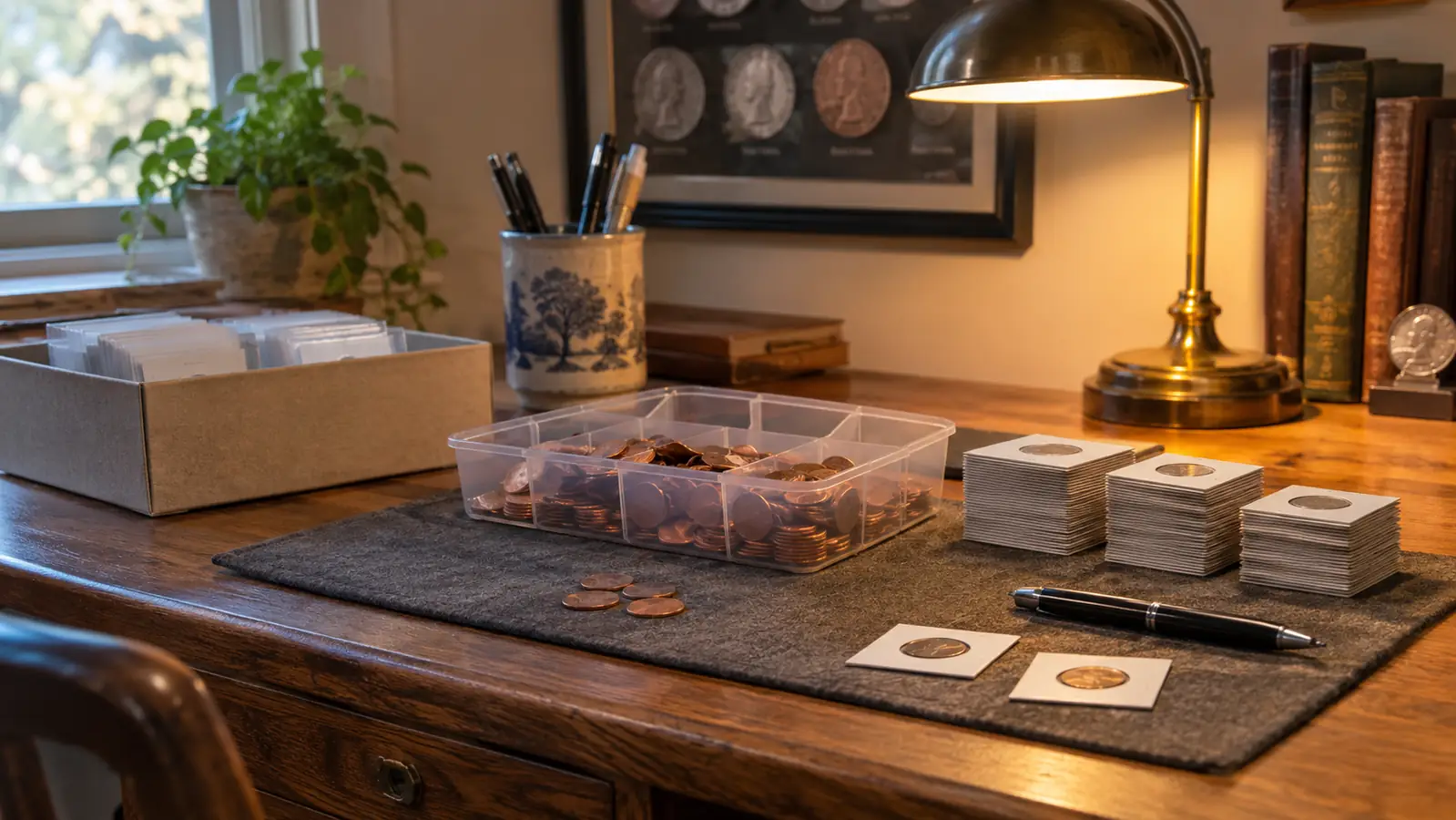
I kept my grandfather's wheat cents in a coffee can for the better part of thirty years. Not from neglect. More from not knowing where to start. When I finally carried that can into the coin room, sat down at the folding oak desk, and poured it onto the felt pad, what I needed was not a grading guide or a loupe. It was somewhere to put four hundred pennies so I could look at one without spilling the other three hundred and ninety nine. That is how the Favourde cardboard coin flips ended up on my desk, and it is what I have been reaching for ever since.
I am not going to tell you a flip makes a coin better. It does not, and nobody who knows what they are doing will say otherwise. A two by two holder does one job: it keeps a coin in one place, off its face, and labeled so that ten years from now you still know what you are looking at. Everything past that is decoration. Judged on that one job, the Favourde box of three hundred does it, and it does it cheaply enough that saving holders for special occasions stops making sense. It also has a few rough edges, which I will get to, because a review that finds nothing wrong is not a review.
The Quick Verdict
Three hundred flips in six sizes, enough to move a loose collection off the shelf and into labeled storage in a few evenings. The sizing takes trial and error and the cardboard makes no archival promises, but in six months of handling nothing has split, torn or come unfolded on me.
Amazon Check Today's Price →Get the wheat cents out of the coffee can
Three hundred Favourde cardboard flips, six sizes, fifty of each, folded size about 1.97 by 1.97 inches. Enough to sort a full run of cents, nickels and quarters in one evening instead of rationing holders.
Amazon Check Today's Price on Amazon →How I've Used It
My collection is not fancy. Lincoln cents, Jefferson nickels, Washington quarters, and a small run of Morgan and Peace dollars I picked up at a regional show. Nothing in it is going to make the news. What it is, is loose. A coffee can of cents, a sandwich bag of nickels, and a cigar box of quarters Carol has been after me to deal with since we finished the back room. I had been meaning to sort it for years and had been doing what most people do, which is move the can from one shelf to another and feel productive about it.
The project was straightforward: get every loose coin into a holder, label it, and store it by series. I started with the cents, partly because there were the most of them, and partly because Tyler, my grandson, sorts pocket change with me on Sunday afternoons and cents are what he can handle without me hovering. The Favourde box arrived as three hundred flat cardboard flips in six sizes, fifty of each, in a carton about 8.66 by 5.91 by 2.2 inches and fifteen ounces on the kitchen scale. Nothing to assemble. I opened it on the desk, spread the six stacks out, and started matching coins to flips by trying them.
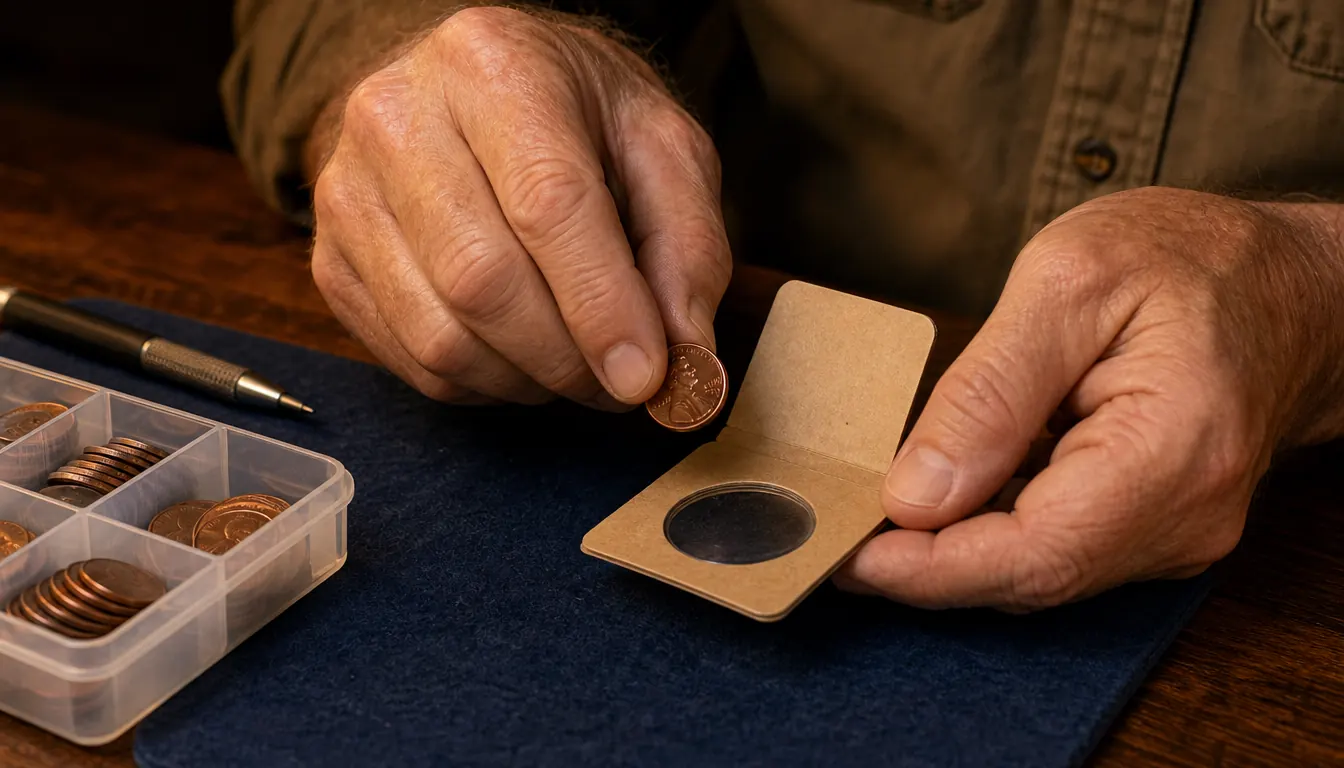
Once I found a rhythm it went quickly. Sort a handful into the small plastic tray. Set aside the ones I want to keep separate. Fold one into a flip, write the date and what it is on the cardboard with a fine pen, and drop it in the finished pile. The flat piece measures about 3.94 by 1.97 inches, and it folds down to roughly 1.97 by 1.97, so a finished coin is a two inch square that stacks and files like an index card. Gloves for anything uncirculated, bare hands on the circulated material as long as I am handling it by the rim. Four hundred and some coins went through that routine over three evenings, and I still had better than a hundred flips in the bag.
What Six Sizes Actually Gets You
Six sizes at fifty apiece is the reason to buy this box instead of a hundred flips in one size. A cent and a dime want a small holder. A nickel takes a step up. A quarter takes another. If you have ever bought a pack in a single size and then found a pile of quarters that will not sit flat, you know why the assortment matters. The listing says the Favourde set suits most popular coin sizes, and for cents, nickels and quarters that held up in my hands. I sorted by series as I went, which also let me see how fast each size was leaving the bag.
Two honest notes on sizing. First, nothing on the flip itself tells you what size it is, so on the first session you are sorting by eye and by trial. That took me about ten minutes to get past, and after that my fingers knew. Second, if you collect large silver, do not expect an assortment built around common sizes to be the answer for a whole dollar run. Buy a small pack in the size you need first, test it, then commit. I test fit every silver dollar before it went in, and I did the dollars last, once the smaller material was out of the way and the desk was clear.
On quantity, three hundred is more than it sounds and less than you think. Against a coffee can of cents and a bag of nickels, three hundred will get most of the job done and leave you a little short. Against a collection that is already roughly sorted, three hundred is a couple of years of ordinary accumulation. I would rather have too many on hand than be rationing them, which is exactly what I did for years with the small pack I kept in the desk drawer.
Folding, Labeling, and Handling Coins by the Edges
The fold is the whole mechanism and there is nothing clever about it, which is what I like. You set the coin in, bring the cardboard over, and the two inch square stays square. There is no adhesive to dry out and nothing plastic to go brittle in a cold room. I write on the cardboard with a fine point pen before I fold, not after, and I give the ink a moment, because a wet line on cardboard will smear if you are in a hurry and then you have a flip you cannot read.
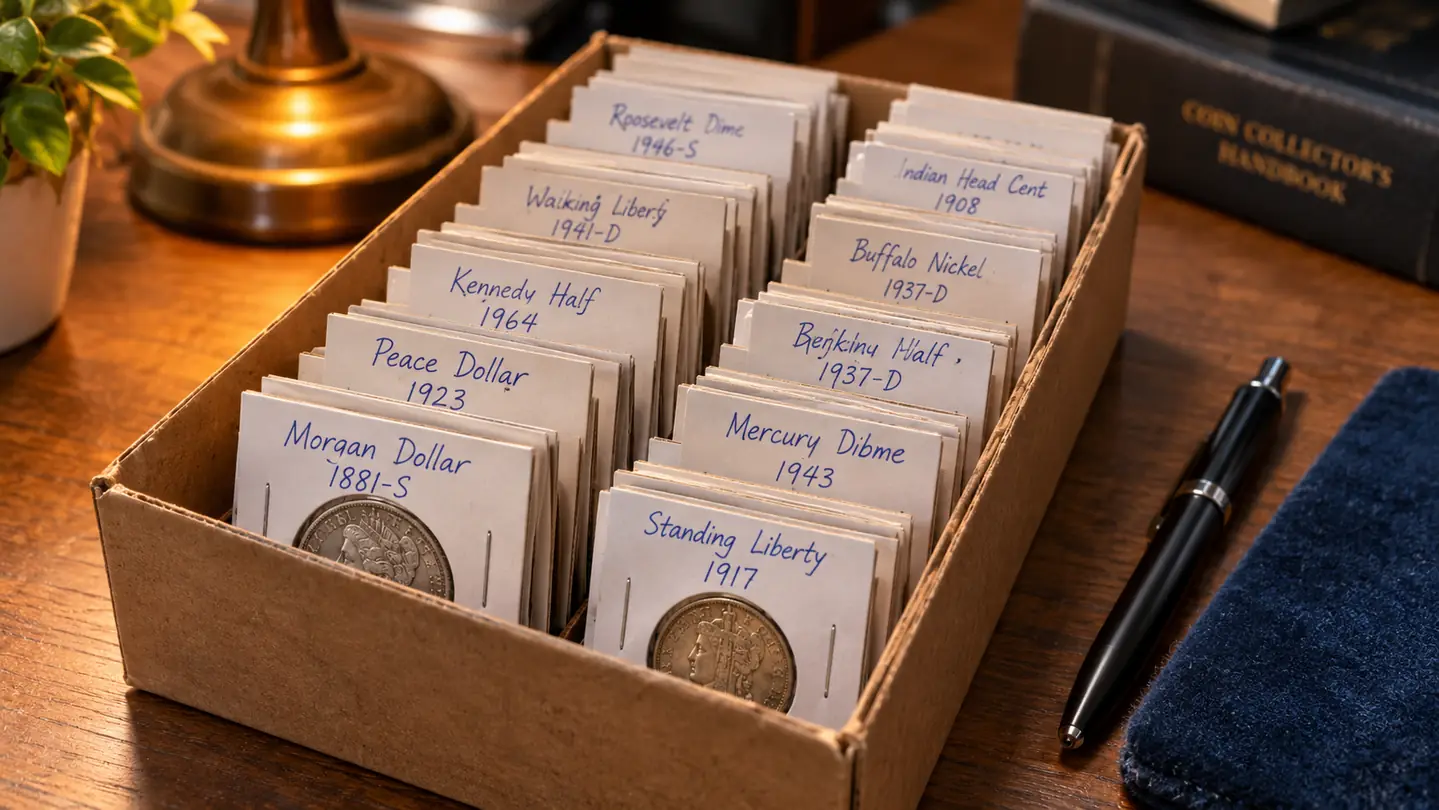
What I write is short: the date, the mint mark if I can read it, and where the coin came from. Grandfather's can. Club auction in March. Pocket change from Tyler on a Sunday. You get one line of handwriting on a flip and that is the whole record, so decide now what you will actually want to know in ten years. A date and a source will do more for you than a grade you guessed at under poor light with a loupe in one eye.
The one thing I will say plainly is that this is cardboard, and cardboard is not a promise. The listing makes no archival claim and neither will I. If you are storing uncirculated coins and you want a barrier against humidity, that is a different conversation and a different product. What a flip does is keep a coin from rattling against its neighbors and keep the label with the coin. That is worth having. It is not the same as protection, and I would not let anyone tell me otherwise, including myself on a good day.
Six Months In: What Held Up
Everything in the coin room has been through six months of Sunday afternoons and one club meeting where I brought a box along to trade out of. No splits at the fold. No corners curling up. The cardboard has stayed flat, and the ink has stayed legible on every flip I have pulled out and looked at. At the club meeting two fellows went through the box with me looking for nickel dates, and the flips came back out of their hands in the same shape they went in. That is a better test than anything I could do at the desk alone.
I counted the first stack out of the bag and it was fifty. I did not count the other five. Say what you like about that, but I have bought enough loose hardware in my life to know counting is a habit that disappoints you either way. A few Favourde flips had a bent corner from packing. They still folded and still held a coin, so I used them for the common cents and saved the flat ones for anything I cared about. Fifteen ounces of cardboard sounds like nothing until it is stacked in a box on a shelf.
The honest downside is that a box of cardboard flips is a filing system, not a display. You are not going to set this on a shelf and admire it, and if you want to look at both faces of a coin you are opening the flip. For a working collection that is fine. For the four or five coins I actually want to look at, I keep them in something else, and I will get into that next.
How the Favourde Box Compares to What I Used Before
Before this I was using a small pack of flips in one size, bought years ago at a club meeting, and a handful of plastic capsules for the coins I thought were special. The single-size pack is what taught me the sizing lesson. Half of what I owned would not sit flat in it, so those coins stayed in the cigar box and got handled loose every time I went looking. The capsules are fine for four or five coins and hopeless for four hundred. The Favourde assortment is the first thing I have bought that matched the shape of the problem, which was volume.
I also looked at the more expensive holders, the ones with the clear windows and the archival paper. They are a better product for a better class of coin and I would not argue otherwise. But I was not sorting a dozen key dates. I was sorting a coffee can. Paying premium holder money to store common wheat cents would have been a way to spend a lot and still not have the job done, because at that kind of money I would have bought twenty and stopped.
Where Cardboard Flips Stop Being the Right Answer
Cardboard flips are for volume. Anything you would send off for grading, anything uncirculated that you are holding long term, anything with a key date you would hate yourself for handling badly, those want a hard holder and a dry box. I am not going to pretend a piece of cardboard is the same thing. I also would not store silver in a basement in flips and expect it to look the same in five years. Humidity does not care what your intentions were, and Ohio summers are not gentle.
The other case is the collector who wants to see the coins. Some people get real pleasure out of a display case and a row of capsules, and there is nothing wrong with that at all. If you are the sort who pulls a coin out once a week to look at it under the lamp, a flip is a small annoyance every single time. Know which kind of collector you are before you buy three hundred of anything. That advice would have saved me a closet full of things I bought for the collector I thought I was.
What I Liked
- Three hundred holders in six sizes, fifty of each, so one box covers a mixed pile of cents, nickels and quarters
- Folds to a two inch square that stacks and files with everything else in the box
- Inexpensive enough to use freely on circulated coins instead of saving holders for a rainy day
- Six months of handling, including a club meeting, with no split folds and no smeared labels
Where It Falls Short
- Plain cardboard with no archival claim, so it is not what I would use for uncirculated silver
- Sizes are not marked on the flips themselves, so the first session is trial and error
- Three hundred sounds like a lot until you have a coffee can of cents in front of you
- It is not a display. You look at a box of these, not at the coins inside them
A finished coin is a two inch square that stacks and files like an index card, and after six months not one fold has let go on me.
Who This Is For
If you have a can, a bag or a shoebox of circulated US coins and you have been meaning to deal with it, this is the box I would hand you. It suits a general collection of cents, nickels and quarters. It suits a club member making up trade boxes for a monthly meeting. It suits anyone who has been putting off sorting because they did not want to spend an evening rationing holders. It suits a beginner too, with one caveat. The manufacturer recommended age on the listing is 8 to 10, and that lines up with what I have seen with Tyler at ten. He can sort and he can fold. He still hands me anything that looks like it might be silver.
Who Should Skip It
Skip it if your collection is a dozen coins. Skip it if what you own is uncirculated silver you plan to hold for a decade. Skip it if the pleasure for you is looking at coins, because you will be opening a flip every time you want a look. And skip the three hundred count if you know exactly what you need, because a smaller pack in one size is the smarter buy for a single series. None of that is a knock on this product. It is a knock on buying the wrong product, which is the more common mistake by a wide margin.
Three hundred flips is a Saturday, not a project
Six sizes, fifty of each, folded to a two inch square that files with everything else you own. Get the loose coins labeled and boxed, then get back to the coins you actually enjoy looking at.
Amazon Check Today's Price on Amazon →